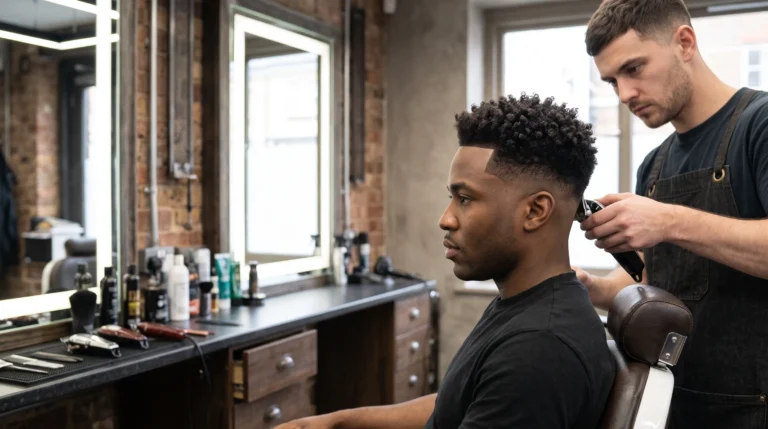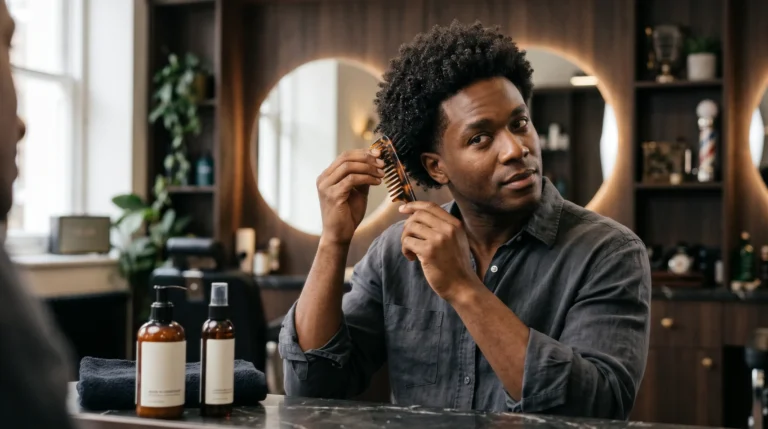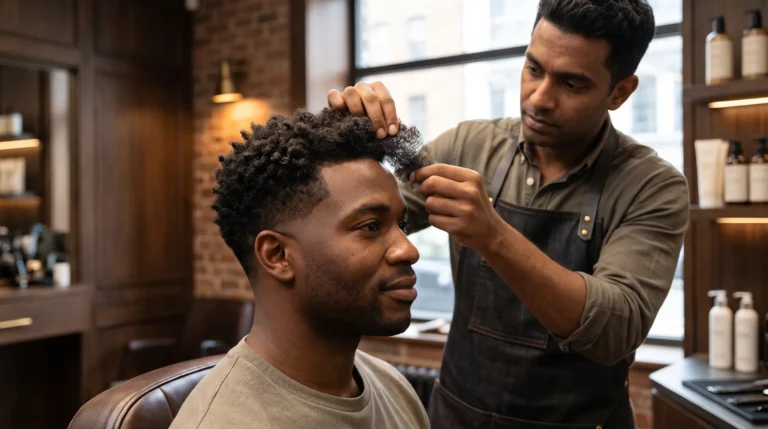

A hair system can be beautifully made and still look wrong. Usually it’s not the quality that gives it away. It’s the match. A base that’s a shade too pale shows up as a pale halo along the hairline. A wavy system sitting on top of tightly coiled natural hair looks like two different people’s hair stitched together.
The good news is that matching is a skill, not a gamble. Once you know what’s being matched and why, you can ask better questions, spot a poor match before you’ve paid for it, and walk out with a hair system that looks like it grew there.
This guide covers the two things people ask about most: skin tone and curl pattern. We’ll also touch on colour, density and the little details that tie it all together.
Why Matching Matters More Than Almost Anything Else
You can spend a lot on a hair system and get a mediocre result if the match is off. You can also spend sensibly, match it carefully and get a result most people would never question.
That’s because the eye is very good at spotting patterns that don’t belong. We notice a hairline that’s too sharp, a scalp tone that doesn’t quite fit the face, a texture that behaves differently from the hair next to it. Often we can’t say what’s wrong, only that something is.
A good match removes those clues. The base disappears into your skin, the hair moves like your own, and the whole thing reads as natural from a metre away and from ten centimetres.
Matching a Hair System to Your Skin Tone
Skin tone matching is about the base, the foundation layer of the system that sits against your scalp. This is the part people see at the hairline, along the parting and through any thinner areas of hair. If it doesn’t blend, the hair on top can’t save it.
What “Skin Tone” Really Means Here
When people say skin tone, they usually mean how light or dark their skin is. But there are two things going on.
Depth. How light or dark the skin is overall, from very fair through to very deep.
Undertone. The warmth or coolness underneath. Skin can lean golden or yellow (warm), pink or blue-red (cool), olive (a mix with a green-ish cast), or neutral. Two people with the same depth can have very different undertones, and a base that matches depth but not undertone can still look slightly off.
Your scalp is also not the same colour as your face. It’s often lighter, because it rarely sees the sun, and it can show more pink or blue from the blood vessels underneath. That’s why matching to your face alone can lead you astray. A good fitter looks at the scalp itself, and at how it meets your forehead and temples.
Common Base Materials and How They Affect Colour
The base material changes how colour appears.
Thin skin bases (polyurethane or similar) are translucent and take on the colour of the scalp underneath. They’re very good at blending, though the base colour still matters, since it sits between your skin and the hair.
Lace bases are fine and breathable, and they come in different colours and shades. The lace picks up some of your skin tone, but a poor shade match can still show. Lace is often tinted to suit the wearer.
Mono and other mixed bases sit in the middle. They can look very natural on the scalp but may need careful colour work.
Our guide to the types of hair replacement systems explains how the different bases work, and our non-surgical hair replacement systems guide gives the wider picture.
How Skin Tone Gets Matched
A careful match usually involves a few steps.
1. Look in natural light. Indoor lighting can mislead. Daylight, or a good daylight-balanced lamp, shows the real colour of your scalp and skin.
2. Compare against the scalp, not just the face. The scalp tone, especially where the hairline will sit, is what the base has to blend with.
3. Consider undertone. Is your skin warm, cool, olive or neutral? A fitter will often test swatches against the skin to see which looks seamless and which stands out.
4. Think about seasonal change. Skin tone can shift through the year. Someone who tans in summer may find a base that matched in February looks pale by August. Your fitter can discuss how to handle this, whether by choosing a slightly adaptable shade or by planning a refit.
5. Check the hairline and parting. These are the places where the base is most visible, so they get the most attention.
6. Test it in photos. Cameras, flashes and screens change how colour looks. A hair system that seems perfect in the mirror can look different in a photo. Our guide on why a hair system might not look natural in photos explains what causes it and how it’s fixed.
Signs the Skin Tone Match Is Off
You can usually tell if something’s wrong.
- A visible pale or dark outline along the hairline.
- A scalp area under thin hair that looks a different colour from your forehead.
- A greyish, yellowish or pinkish cast that wasn’t there before.
- The base looks fine indoors but wrong outdoors.
- It’s more obvious in photos.
If you notice any of these, it’s worth raising with your fitter. Some can be adjusted, and some need a different base shade.
Matching a Hair System to Your Curl Pattern
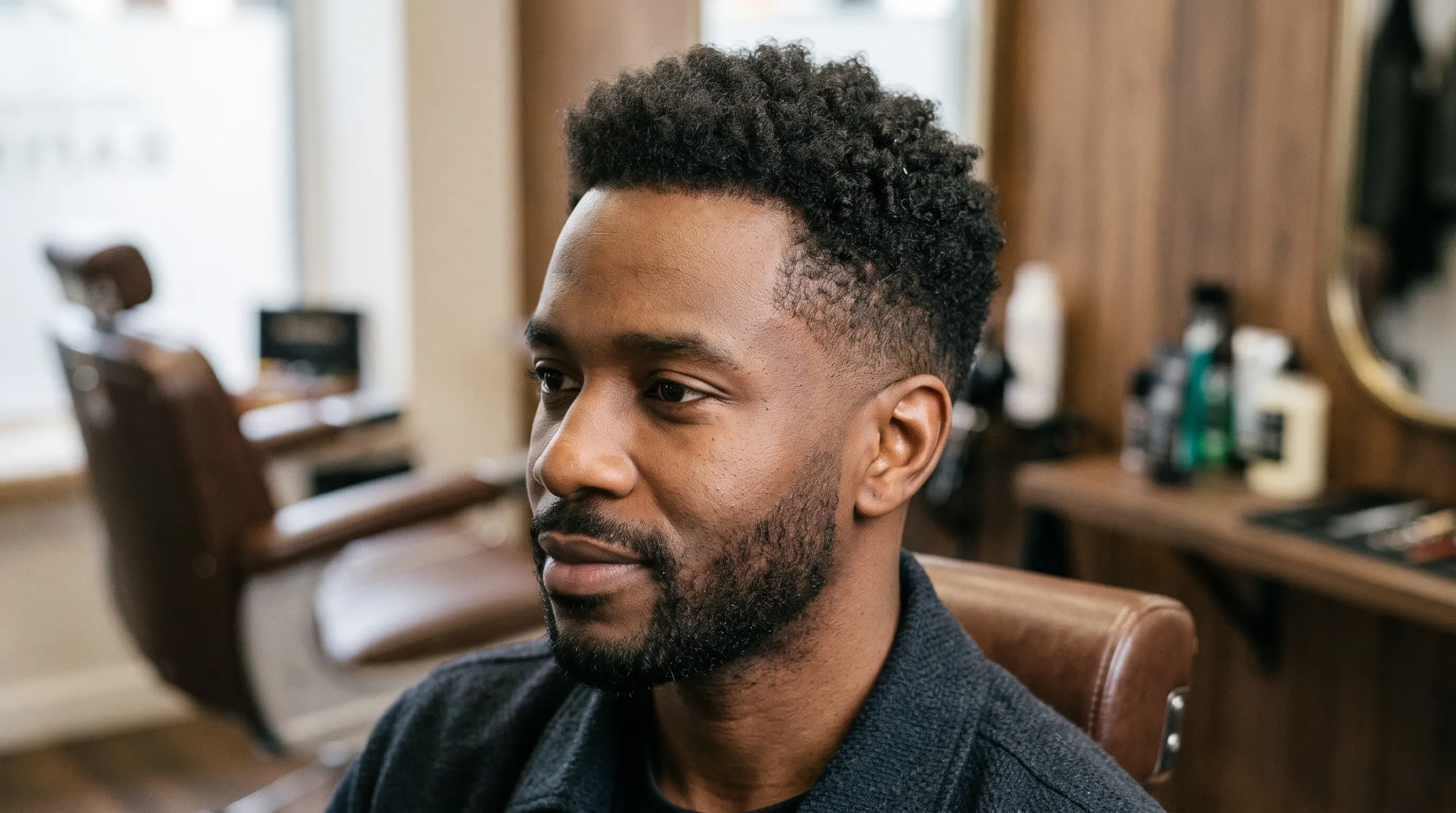
If skin tone is about the base, curl pattern is about the hair. It’s one of the trickiest parts of matching, and one of the most important, particularly for people with wavy, curly or coily natural hair.
Understanding Curl Patterns
Hair types are often described on a scale from straight to tightly coiled. The usual breakdown goes like this.
Type 1: straight. No natural curl.
Type 2: wavy. Loose S-shaped waves, from subtle bends (2A) to more defined waves (2C).
Type 3: curly. Springy spirals and ringlets, from loose curls (3A) to tighter corkscrews (3C).
Type 4: coily. Tight coils and zigzag patterns, from soft coils (4A) to very tight, densely packed coils (4C).
Not everyone fits neatly into one category, and many people have a mix of patterns on their head. The labels are a starting point, not a rulebook. What matters is how your hair actually looks and behaves.
Why Curl Pattern Is So Important
Texture is one of the first things people notice, even if they don’t realise it. A smooth, straight-looking system on top of tight coils stands out immediately. The same goes in reverse: a very tight curl pattern on someone with soft waves.
Beyond the look, there’s the practical side. Curl pattern affects:
- How the hair sits and moves
- How much volume it has
- How it blends at the edges with your natural hair
- How you style and care for it
- How it responds to water and humidity
A match that works in the chair but ignores how the hair behaves in daily life will disappoint. That’s why curl matching needs to account for washing, drying and weather, not only how it looks when freshly styled.
Matching Curl Pattern: What to Think About
Bring photos and be specific. A picture of your natural hair, ideally at different lengths and states (wet, dry, styled), tells a fitter far more than words. If you’re matching to hair you used to have, photos of that help too.
Consider your natural hair, if you still have some. The system needs to blend with it. The closer the curl pattern, the less obvious the join. If you’re keeping existing hair, ask how it will be blended.
Think about how you want to wear it. Do you wear your hair in its natural texture, or do you straighten it or style it differently? A system might be matched to your natural pattern or to a styled look, and these aren’t always the same.
Understand human hair vs synthetic. Human hair can be washed, styled and sometimes re-curled, and it ages more like natural hair. Synthetic hair holds its shape differently, and some types hold a set curl well but can’t be restyled with heat. Our comparison of human hair versus synthetic hair replacement systems explains the trade-offs.
Check how the curl behaves when wet and dry. Some curl patterns shrink, expand or change shape depending on moisture. Your fitter should explain what to expect.
Think about long-term change. Curl patterns can loosen with washing and wear, particularly in permed or chemically set hair. Understanding how and when that happens helps you plan maintenance and replacement.
Afro-Textured and Tightly Coiled Hair
Matching coily and afro-textured hair deserves its own mention. It’s often done poorly, because many systems and fitters are used to straighter textures. Tight coils have particular qualities: a lot of shrinkage, a distinctive way of catching light, a certain density and a way of forming shapes that straight-haired systems can’t imitate.
A convincing match needs hair that genuinely behaves like afro-textured hair, a fitter who understands blending at the hairline and an approach to maintenance that suits the texture. Our afro-textured hair system London page explains how we approach this, and it’s well worth reading if this is relevant to you.
Don’t Forget Colour, Density and Hairline
Skin tone and curl pattern are the headline matches, but a few other things make or break the finish.
Hair colour. Natural hair is rarely one flat colour. It has highlights, lowlights, a bit of grey and variations from root to tip. A good match often blends several shades. If you have greying hair, it needs thought, because grey isn’t a single shade either.
Density. How thick or sparse the hair is. Too dense and it looks heavy and artificial. Too sparse and it doesn’t give the coverage you want. It needs to match both your age and your remaining hair.
Hairline. The shape, position and softness of the front edge. A hairline that’s too low, too straight or too sharp is one of the quickest giveaways. It should reflect how your own hair grows, with a little natural irregularity.
Length and cut. The cut should suit your face, your hair type and the way the curls fall. A skilled fitter will cut and blend it in place.
Parting and crown. If you have a parting, it should look natural, and the crown should whirl and fall as real hair does.
Our guides on how to make a hair system look more natural and why a hair system might look fake cover the common pitfalls, and if fading is a concern, see why a hair system loses colour.
Matching for Different Hair Loss Patterns
The way a system is matched changes depending on where you’ve lost hair.
Receding hairline. The front edge is the most visible part, so hairline design, base blending and colour are crucial. Our receding hairline hair system London page explains how we approach it.
Crown thinning. The system often blends with surrounding hair, so matching curl, density and colour with your own hair matters most. See our crown thinning hair system London page and our guide on a hair system for crown thinning.
Alopecia. With extensive or complete hair loss, the base colour, scalp tone and overall natural look take centre stage. Our alopecia hair system London page explains how we work, and our guides on alopecia totalis, alopecia areata versus male pattern baldness and traction alopecia go deeper.
Early-stage thinning. If you still have a lot of natural hair, the blend is everything. See our guide on getting a hair system before you’re completely bald.
If you have a sensitive scalp, base choice and attachment need extra thought. Our guide on wearing a hair replacement system with psoriasis or eczema covers what to consider.
What Happens at a Fitting
A proper fitting is where all this matching comes together. It usually includes:
A consultation. You talk through your hair loss, your goals, your lifestyle and what you’ve worn before. It’s a chance to ask questions and show photos.
A scalp and hair assessment. The fitter looks at your scalp tone, your natural hair, your hairline and your curl pattern.
Choosing the base and hair. Colour, texture, density and hair type are selected or ordered.
Cutting and blending. The system is cut and styled to suit you, with attention to the hairline and where it meets your natural hair.
Checking in natural light. Colour and blend are checked in daylight, not just under salon lights.
Aftercare advice. You’re shown how to wash, style and look after the system.
Our hair system fitting page explains what to expect, our process page shows how we work from consultation to fitting, and our guide to getting your first hair system is a good place to start if you’re new to all this.
Questions to Ask Before You Commit
A few questions help you judge whether a match will really work.
- How will you match my scalp tone, and what happens if my skin tone changes with the seasons?
- Can you show me examples of similar skin tones and hair textures?
- How will the hair behave when it’s wet, dry or in humid weather?
- Will the curl pattern last, and how will it change over time?
- How will you blend it with my natural hair?
- Can I see it in daylight before I decide?
- What adjustments are possible after fitting?
- What does maintenance involve for this type of hair?
A good fitter will welcome these questions. If you get vague answers, that’s worth noticing.
Keeping the Match Looking Right
A match that looks great on day one can drift if it isn’t looked after. These habits help.
Keep up with maintenance. Regular upkeep keeps the colour, curl and base looking fresh. Our guide on how to maintain a hair replacement system covers a routine that works, and our hair system maintenance London page explains our aftercare service.
Clean it properly. Washing the wrong way can loosen curls, dull colour and tangle hair. See our guide on how to clean a hair system, and if you want to know about washing routines, our guide on showering with a hair system helps.
Look after the curls. Curly and coily hair needs moisture and gentle handling. If it starts to tangle, our guide on fixing a matted hair system is worth reading, and if it’s shedding, see why a hair system might shed.
Protect it at night. Sleeping in a system takes some care, especially with curls. See our guide on sleeping in a hair system.
Watch the weather. Rain, wind and humidity affect curl and bond. Our guide on wearing a hair system in winter covers practical tips.
Keep the bond secure. A lifting edge exposes the base and ruins the blend. See why a hair system might not be sticking, what to do about a lifting hairline and our guide on whether hair systems come off easily.
Check for discomfort. If something feels tight or itchy, see why a hair system might feel tight and why it might itch.
Plan for how long it lasts. Our guide on how long hair replacement systems last gives a realistic picture of when a refresh or replacement is due.
Planning Ahead for Special Occasions
If you’ve got a wedding or event coming up, matching deserves extra attention, because cameras are unforgiving. Our guide on getting a hair replacement system fitted for a wedding explains how far ahead to plan and how to prepare.
Not Sure It’s the Right Route?
If you’re still weighing things up, these guides give a balanced view:
- Do hair replacement systems work?
- Are hair replacement systems good?
- Is a hair system worth it for male pattern baldness?
- Hair system vs hair transplant
- Hair system, hair unit, hair patch or toupee: what’s the difference?
If a smaller option appeals, our guides on non-surgical hair extension patches, discovering non-surgical patches and patches for instant volume explain more.
You can browse our hair systems, check hair system prices in the UK and read our client reviews. Learn more about us on our about page, or browse more guides on our hair replacement blog.
Where We Fit a Hair System in London
We fit, style and maintain hair systems for clients across London, with matching at the heart of every fitting. Our non-surgical hair replacement London page covers our core service in the capital, and our hair system maintenance London page explains aftercare, refits and the regular upkeep that keeps a match looking right.
We also offer specialist pages for particular needs: afro-textured hair systems in London, alopecia hair systems in London, receding hairline hair systems in London and crown thinning hair systems in London.
If you’d like to see what’s on offer locally, our guides to hair replacement systems for men in London and the best hair systems in London are a good place to start. London is wonderfully diverse, and so are the skin tones and hair textures we work with every day. When you’re ready to talk, get in touch through our London contact page.
FAQs: Matching Skin Tone and Curl Pattern
How do you match a hair system to your skin tone?
By choosing a base colour that blends with your scalp and the skin around your hairline, taking account of depth, undertone and lighting. A fitter will usually test shades against your skin in natural light.
Is my scalp the same colour as my face?
Not usually. Scalps are often lighter and can look pinker or bluer. That’s why a good match focuses on the scalp itself, not only the face.
What if my skin tone changes in summer?
Tanning can make a base look paler than your skin. Your fitter can advise on choosing an adaptable shade or planning a refit as your skin changes.
How do you match a curl pattern?
By choosing hair with a texture and curl that matches your natural hair and how you wear it, then cutting and blending it at the hairline. Photos of your natural hair help a great deal.
Can a hair system match tight coils and afro-textured hair?
Yes, with hair that genuinely behaves like afro-textured hair and a fitter who understands blending that texture. Our afro-textured hair system page explains how we approach it.
Will the curl pattern change over time?
It can. Washing, wear and moisture can loosen or alter curls, especially in some hair types. Your fitter can explain what to expect and how to keep the pattern looking good.
Is human hair better for matching curls?
Human hair blends and behaves more like natural hair, and can often be restyled, but it needs more care. Synthetic hair can hold a set curl but is less flexible. The right choice depends on your needs.
Do I need to bring photos to my fitting?
It’s very helpful. Photos of your natural hair, in different states and lighting, give your fitter a clear target to match.
How do you match hair colour if I have grey?
Grey isn’t one shade, so a good match blends several tones to reproduce the natural mix in your hair. Your fitter will look at your colour in daylight.
Will a hair system look different in photos?
Sometimes. Flash, screens and lighting can change how colour and texture appear. Checking the match in natural light and testing it in photos helps avoid surprises.
Can I adjust the colour or curl after fitting?
Often, small adjustments are possible. It depends on the system and hair type, so ask your fitter what can be changed afterwards.
How do I keep the match looking right?
Keep up regular maintenance, clean and condition the hair properly, protect the curls, keep the bond secure and book refits when the colour or texture starts to drift.
A Good Match Is a Conversation
Matching a hair system to your skin tone and curl pattern isn’t something that happens by accident. It’s the result of careful looking, good questions, honest feedback and a fitter who takes the time to get it right.
If you’d like to talk through what a match would look like for you, get in touch through our contact page to book a consultation in London. We’ll look at your skin, your hair and the way you live, and show you what’s realistic.