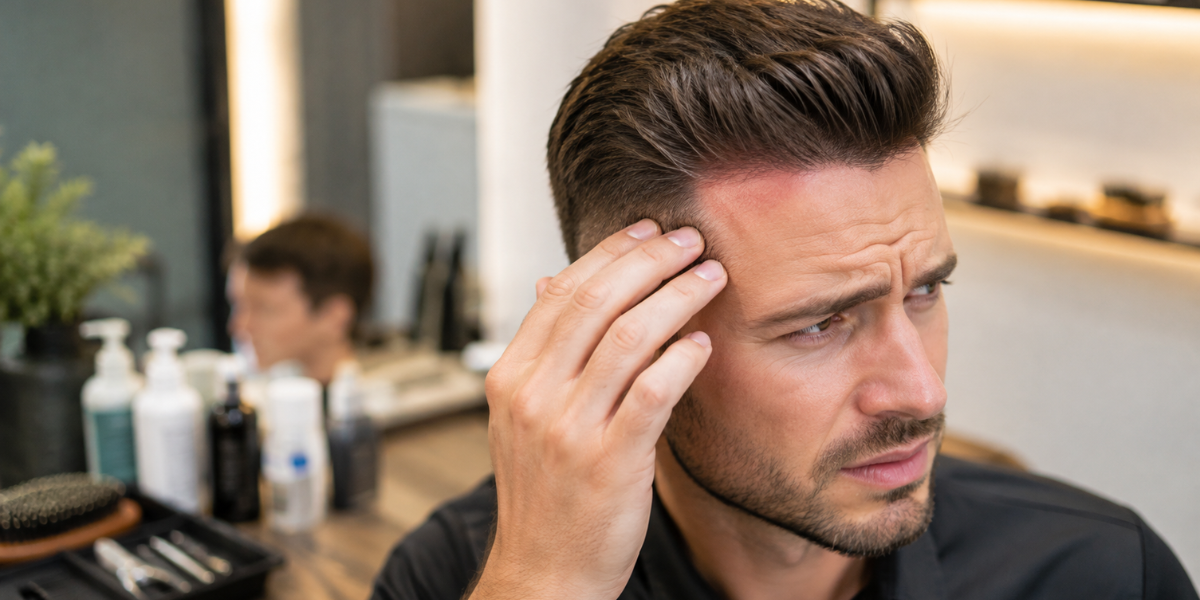

A hair system that itches is not something you have to accept as a normal part of wearing one. Itching is almost always caused by something specific: adhesive sensitivity, product build-up on the base, a bond that has been left too long, inadequate scalp hygiene between appointments, or an underlying skin condition that has been aggravated by the bonding environment. Each cause has a different fix, and identifying which one applies to you is what determines whether the itching resolves quickly or keeps coming back. This guide covers every common cause of hair system itching, what each one feels like, and exactly what to do about it.
Why the Scalp Under a Hair System Is Prone to Irritation
The scalp under a bonded hair system is in a different environment to the exposed scalp. It is partially occluded covered by the base and adhesive which means:
- Sweat and heat accumulate rather than evaporating freely
- The skin cannot shed dead cells as easily as normal
- Product residue, adhesive remnants, and debris accumulate between the base and the scalp
- The micro-environment under the base is warmer and more humid than the surrounding skin
None of this makes wearing a system incompatible with scalp health but it does mean that the scalp under a system requires more attention than uncovered scalp, not less. The itching that many wearers experience is not a fundamental incompatibility with hair systems. It is the scalp responding to a specific, addressable condition in that environment.
Cause 1: Adhesive or Tape Sensitivity
What it feels like: Itching that begins within hours to a day or two of a fresh re-bond, concentrated at or just inside the hairline and perimeter edges exactly where the adhesive contacts the skin. May be accompanied by redness, a warm sensation, or mild swelling at the bond line.
What causes it: Skin sensitivity or an allergic response to a component in the adhesive or tape. Most hair system adhesives contain acrylates, solvents, or resins that some skin types react to particularly on first exposure or after prolonged use with the same product. Sensitivity can develop over time even if you have previously tolerated an adhesive without issue.
This is one of the most commonly misidentified causes of itching. Wearers often attribute the irritation to the base material or assume it will settle with time when in most cases it does not, because the allergen or irritant is being reapplied at every re-bond.
What to do:
Contact your technician before the next re-bond and flag the pattern itching that begins soon after a fresh bond and is concentrated at the adhesive contact area is a reliable signal of adhesive sensitivity. Alternative adhesives, including water-based formulations and hypoallergenic tape products, suit most sensitive skin types and are available as a standard alternative. A patch test on a small area of the perimeter before a full application confirms sensitivity without committing to a full bond.
Do not try to manage adhesive sensitivity by applying barrier creams or moisturisers between the skin and the adhesive; these break down the bond faster and do not address the underlying reaction.
Cause 2: Product Build-Up on the Base
What it feels like: Itching that develops gradually over the course of a bond cycle rather than immediately after application typically beginning in the second week of wear. Diffuse rather than localised to the hairline. Often accompanied by the system starting to look flat or dull.
What causes it: Styling products, dry shampoo, conditioner used too close to the roots, and natural scalp oils all accumulate on the base over time. This build-up traps heat and bacteria against the scalp, creating the conditions for irritation. On lace bases in particular, product residue mats the lace fibres and sits directly against the skin rather than allowing any airflow.
The irony is that many of the products people use to manage the appearance of the system between washes, dry shampoo at the roots, oil-based pomades near the hairline are the same ones most likely to cause the build-up that produces itching.
What to do:
A thorough wash using a sulphate-free shampoo designed for hair systems removes surface build-up and typically resolves the itching within a day or two if build-up was the cause. For heavier accumulation that has developed over multiple bond cycles, a professional deep clean at a service appointment restores the base more effectively than a home wash alone.
The preventive fix is adjusting the product routine, keeping oil-based products away from the bond area and roots, avoiding dry shampoo at the base, and washing on schedule rather than extending the interval. The full washing routine and product rules are covered in our maintenance and aftercare guide.
Cause 3: The Bond Has Been Left Too Long
What it feels like: Itching that intensifies significantly in the final days of a bond cycle particularly in the second half of week two or beyond for tape users. Often accompanied by visible lifting at the edges and a mild odour under the base.
What causes it: As the bond weakens and edges begin to lift, the gap between the base and the scalp allows moisture, bacteria, and debris to accumulate beneath the system. The scalp is no longer clean and sealed; it is in contact with a warm, partly occluded environment that has been collecting material for days. Bacteria and yeast naturally present on all skin proliferate faster in this environment, producing the irritation and sometimes a mild smell that indicates the scalp needs attention.
This is one of the most preventable causes of itching and one of the most common, because people often try to stretch the bond interval to reduce the frequency of re-bonding appointments.
What to do:
Book a re-bonding appointment. Do not try to press lifting edges back down or apply additional adhesive over the existing bond; this extends the time before a proper clean and makes the scalp environment worse, not better.
After the bond is properly removed, a thorough scalp clean before the next application resets the environment. Our guide on how long hair replacement systems last covers the correct bond intervals by attachment method staying within these windows is the most reliable way to prevent the bond-related irritation cycle.
Cause 4: Inadequate Scalp Hygiene Between Appointments
What it feels like: Persistent, low-level itching that is present throughout the bond cycle rather than spiking at a particular point. Sometimes mistaken for the system “settling in” when it is actually a hygiene problem that has become the baseline.
What causes it: The scalp under a bonded system still produces sweat, sheds dead skin cells, and accumulates sebum between professional appointments. For wearers who do not address scalp hygiene between re-bonds either because they do not know it is necessary or because they are trying to avoid disturbing the bond this accumulation builds steadily throughout the bond cycle.
On fully bonded skin systems (PU/polyurethane bases), where the base covers the entire scalp contact area rather than just the perimeter, scalp hygiene between appointments requires more deliberate attention than on lace systems where some airflow and access is available.
What to do:
Clean accessible areas of the scalp gently using a cotton pad with a small amount of diluted witch hazel or a system-safe scalp cleanser between appointments. The key is working around the bond edges carefully rather than attempting to clean under the base. The goal is removing surface accumulation from the accessible scalp, not lifting the bond.
This step is covered specifically in our complete maintenance guide. It is one of the most commonly skipped elements of the maintenance routine and one of the most meaningful for scalp comfort.
Cause 5: Contact Dermatitis from Bond Remover
What it feels like: Itching, redness, and sometimes a mild burning sensation that appears after adhesive removal rather than during wear. Concentrated at the areas where the remover was applied.
What causes it: Some bond removers, particularly solvent-based products, irritate the skin if they are not fully rinsed away before the next bond application, or if the skin has a sensitivity to the solvent ingredients. This is less common than adhesive sensitivity but often overlooked because people assume the removal product is inert once the bond is off.
What to do:
After adhesive removal, clean the scalp thoroughly with a scalp prep solution or gentle cleanser before applying new adhesive. Do not apply a new bond to skin that still has solvent residue from the remover on it. If the irritation pattern consistently follows removal rather than application, switching to a gentler, citrus-based remover formulated for sensitive skin is worth discussing with your technician.
Cause 6: An Underlying Skin Condition
What it feels like: Itching that persists despite correct adhesive, good hygiene, and timely re-bonding. May be accompanied by visible scaling, redness extending beyond the bond line, or patches that do not respond to changes in adhesive or cleaning routine.
What causes it: Pre-existing skin conditions including seborrhoeic dermatitis, eczema, psoriasis, and contact dermatitis are not caused by hair systems but the bonded environment can aggravate them. The combination of occlusion, heat, and adhesive contact on already sensitised skin produces itching that is harder to manage than hygiene or adhesive-related causes.
People with known skin conditions are not automatically unsuitable for hair systems. But the approach adhesive type, re-bond frequency, scalp hygiene routine, and base choice needs to be calibrated specifically for their skin. A one-size approach to bonding does not work for skin that is already reactive.
What to do:
Raise the specific condition at your consultation or next appointment. A technician experienced in fitting systems for sensitive skin will assess the right adhesive and base combination, and may recommend a shorter re-bond interval than standard to reduce the accumulation time in a potentially irritating environment.
For conditions like seborrhoeic dermatitis specifically which often worsens under occlusion — a medicated scalp treatment used on accessible areas between appointments can manage the condition without affecting the bond. A dermatologist consultation alongside your technician’s input gives you the most complete picture for a challenging skin type.
Cause 7: New System Adjustment Period
What it feels like: Mild, generalised itching in the first few days after a new fitting particularly with a system on a base type you have not worn before. Usually settles without specific intervention within 3–5 days.
What causes it: The scalp adjusting to a new base material, a new adhesive formulation, or a slightly different coverage area. This is not an allergic response, it is the skin registering a change in its environment. Most wearers who have changed base type (from lace to skin, for example) notice a brief adjustment period that resolves on its own.
How to distinguish this from a genuine reaction: The mild adjustment itch settles within a few days and does not worsen. A genuine adhesive sensitivity reaction either intensifies or persists; it does not naturally resolve while the adhesive remains in contact with the skin.
What to do:
For most people, nothing beyond monitoring. If itching intensifies rather than settles over the first few days, contact your technician this signals a sensitivity issue rather than an adjustment period and needs a different approach.
A Quick Diagnostic Guide
| Itch pattern | Most likely cause | First action |
| Starts within hours of re-bond, at hairline | Adhesive or tape sensitivity | Contact technician discuss alternative adhesive |
| Builds gradually mid-cycle, diffuse | Product build-up | Wash with sulphate-free shampoo |
| Intensifies in final days of bond cycle | Bond overdue, lifting edges | Book re-bonding appointment |
| Present throughout cycle despite hygiene | Underlying skin condition or adhesive sensitivity | Raise at next appointment; consider dermatologist |
| Appears after bond removal | Bond remover sensitivity | Thorough scalp clean before next application; switch remover |
| Mild, first few days of new system | Adjustment period | Monitor; contact technician if worsens |
What Not to Do When Your Hair System Is Itching
These are the responses that make itching worse all of them common:
Do not scratch through or around the base. Scratching at the bond edges damages the base material, introduces bacteria under the system, and shortens the bond life without addressing whatever is causing the itch.
Do not apply anti-itch products near the bond area. Hydrocortisone creams, antihistamine creams, and moisturisers applied near the adhesive break down the bond and do not treat the underlying cause effectively when the irritant is still in contact with the skin.
Do not assume itching will settle on its own if it has been present for more than a few days. Unlike the brief adjustment itch a new system can cause, persistent itching rarely resolves without identifying and addressing the cause. Hoping it settles while continuing the same routine typically means the cause continues uninterrupted.
Do not extend the bond interval to avoid re-bonding on itchy skin. This makes the hygiene environment worse, not better. A re-bond that includes proper scalp cleaning resolves the most common causes of persistent itching far more effectively than continuing to wear an overdue bond.
When to Raise It at Your Next Appointment
Any itching that has been present for more than a week despite correct washing and timely re-bonding warrants a conversation with your technician. Bring as specific a description as you can:
- When in the bond cycle does it start?
- Where is it located at the hairline, diffuse under the system, or elsewhere?
- Is it associated with any visible redness, lifting, or odour?
- Has anything in your routine changed recently to new products, different adhesive, new base type?
This information narrows the cause before the technician sees the system in person and makes the appointment significantly more productive.
If the system is not looking the way it should alongside the itching lifting edges, visible base, or a general decline in appearance, our guide on why a hair system looks fake and what causes it covers the overlapping presentation of bond and hygiene issues in more detail.
Frequently Asked Questions
Why does my hair system itch?
The most common causes are adhesive or tape sensitivity, product build-up on the base, a bond that has been left past its correct interval, inadequate scalp hygiene between appointments, or an underlying skin condition aggravated by the bonding environment. Each cause can produce a different pattern of itching, including when it starts in the cycle, where it occurs, and what other symptoms accompany it. Identifying the pattern is the first step toward finding the right fix.
Is it normal for a hair system to itch?
Mild itching during the first few days of a new system or a new base type can be common as the scalp adjusts. Persistent itching beyond the first few days should not simply be accepted as normal. It is often caused by a specific and manageable issue such as adhesive sensitivity, product build-up, overdue maintenance, or scalp hygiene problems.
How do I stop my hair system from itching?
The right fix depends on the cause. For adhesive sensitivity, a hypoallergenic or water-based adhesive alternative may help. For product build-up, use a suitable sulphate-free shampoo and review your product routine. If the bond is overdue, book a re-bonding appointment with a thorough scalp clean. If itching persists despite these changes, discuss the pattern with your technician so they can help identify the underlying cause.
Can hair system adhesive cause itching?
Yes. Adhesive sensitivity is one of the common causes of itching around the hairline and bonded areas. It can sometimes develop even after you have previously tolerated the same adhesive. If sensitivity is suspected, continuing to use the same adhesive may not resolve the problem. Water-based or hypoallergenic alternatives may be suitable for people with sensitive skin.
Why does my scalp itch under my hair system between appointments?
Itching between appointments is commonly associated with product build-up, a bond that is approaching or past its recommended maintenance interval, or inadequate scalp hygiene between re-bonds. Sweat, sebum and product residue can accumulate around the scalp and base. Regular washing and appropriate scalp cleaning between professional appointments can help reduce mid-cycle itching.
Can I use hydrocortisone cream for hair system itching?
Applying hydrocortisone or other creams directly around the bond area is generally not recommended without professional advice. Creams can interfere with adhesive performance and may not address the underlying cause if the irritant remains in contact with the skin. If adhesive sensitivity is suspected, discuss changing the adhesive with your technician. Persistent or significant skin symptoms should be assessed by a qualified healthcare professional.
How do I clean my scalp between hair system appointments?
Gently clean accessible areas of the scalp using a system-safe scalp cleanser, working carefully around the bond edges without attempting to clean underneath the base yourself. This can help remove sweat, oil and surface build-up between professional appointments. Follow your technician’s recommended maintenance and aftercare routine to avoid weakening the bond or damaging the system.
Book a Check-In If the Itching Is Not Resolving
Itching that has been present for more than a week, that has not responded to washing and correct re-bonding, or that is accompanied by redness, visible irritation, or a persistent odour is worth bringing to a professional appointment rather than continuing to manage day to day.
At The Hair Standard, check-in appointments address exactly this kind of issue, identifying the specific cause, adjusting the adhesive if needed, deep cleaning the base, and ensuring the next bond is applied to a properly prepared scalp.
Book an appointment at The Hair Standard in London, or visit our London hair replacement page for more information on what a fitting and servicing appointment involves.