
Afro hair and hair systems get along fine. The catch is that you can’t look after the hair the way you would straight hair. Tight curls go dry quickly and they knot up if you so much as lean on a collar, and both of those cut into how long a system lasts.
Get a few habits in place early and most of the usual problems never show up. We only work with men, and what you’re about to read is the same thing we say to the guys who sit in our chair at the studio in London.
Why does afro hair dry out so fast on a system?
It comes down to the shape of the curl. The oil your scalp makes is supposed to run down the hair and coat it, but a tight curl is like a spring, so the oil gets held up on the way. By the time anything reaches the ends there’s very little left. Dry hair snaps, and afro hair will snap even when nobody’s pulling on it.
The hair on your system is in a worse spot still. It doesn’t grow out of your scalp, so it never gets any of that oil. Every bit of softness it has comes from the shampoo, the conditioner and the cream you put on it. Skip those and the curls turn to straw.
So there are three things to look after. The hair on the system is one. Your own hair is another, the bit we cut in around the system at the sides and back so the two blend. The third is the scalp under the base, which is easy to forget because you can’t see it. Almost everything below is about keeping the curls soft and knot free without loosening the bond.
How do you wash it without wrecking the curls?
Start with the water, and make it lukewarm. Hot feels nicer on a cold morning, but it strips hair that’s already short of moisture.
Squeeze a little mild shampoo onto your fingertips and work it into the scalp. After that, stop. Don’t scrub the lengths. Let the suds slide down through the curls by themselves as you rinse. The habit most men have is to rub the whole head in circles, and that’s how a tangle starts. Keep rinsing until the water runs clear, because shampoo that stays in leaves the hair dull and puts a film on the skin near the base.
Next is conditioner, which afro hair needs every wash. Put it on the ends first, since they’re the oldest and weakest part of each hair, and then draw it up towards the roots. Leave it for a few minutes while you wash the rest of you, and rinse. Once you’re out, press the water from the hair with a towel. Don’t rub and don’t wring.
We’ve written the steps up in a short guide to cleaning a hair system, and at your fitting we’ll talk you through it in person.
How often to wash is what most men want to know. For natural afro hair, once every one to two weeks is the usual advice, because more than that dries it out. A system may want a different rhythm. How much you sweat counts, so does how your scalp behaves, and so does how well the bond is holding. We’ll give you a number that fits you.
If you can, let the hair dry in the air. When you’re short of time, press out the water and leave it be. A hot dryer is a bad idea, and so is aiming heat at the edge of the base, because warmth can soften the bond. Along the edge, clean the skin with your fingertips and never your nails.
And if a corner of the base starts to lift, resist the urge to pick at it. Leave it and let us know.
Moisture, and what to keep off the edge
After a wash the curls are wet but they won’t stay moist on their own. A leave-in conditioner or a light cream on damp hair holds the water in. Add two or three drops of oil on the ends to seal it. That all goes on the lengths and the ends of the hair, and none of it goes near the edge of the base.
Why so strict about the edge? Oil and thick cream next to the bond can loosen it, and a loose bond is the commonest reason a system lifts. If you aren’t sure whether a product is safe, send us the name before you buy it. We’d much rather answer a message than refit a lifted edge. The post on a system lifting at the hairline shows what’s normal and what isn’t.
Now and then, a hot oil treatment is good for your own hair around the system, so long as it stays off the bond. Water and a halfway decent diet help your hair and scalp too. Nobody enjoys hearing that, but it’s true.
You don’t need a cupboard full of bottles. A mild shampoo, a conditioner, a leave-in or light cream, a wide tooth comb, a satin cap or pillowcase and a small spray bottle cover the lot. If you use heat on your own hair, add a heat protectant. Chances are you own half of this already.
Knots, combs and mats
Curls knot. They’ve always done it, so the trick is to catch a knot while it’s the size of a pea and not the size of a golf ball.
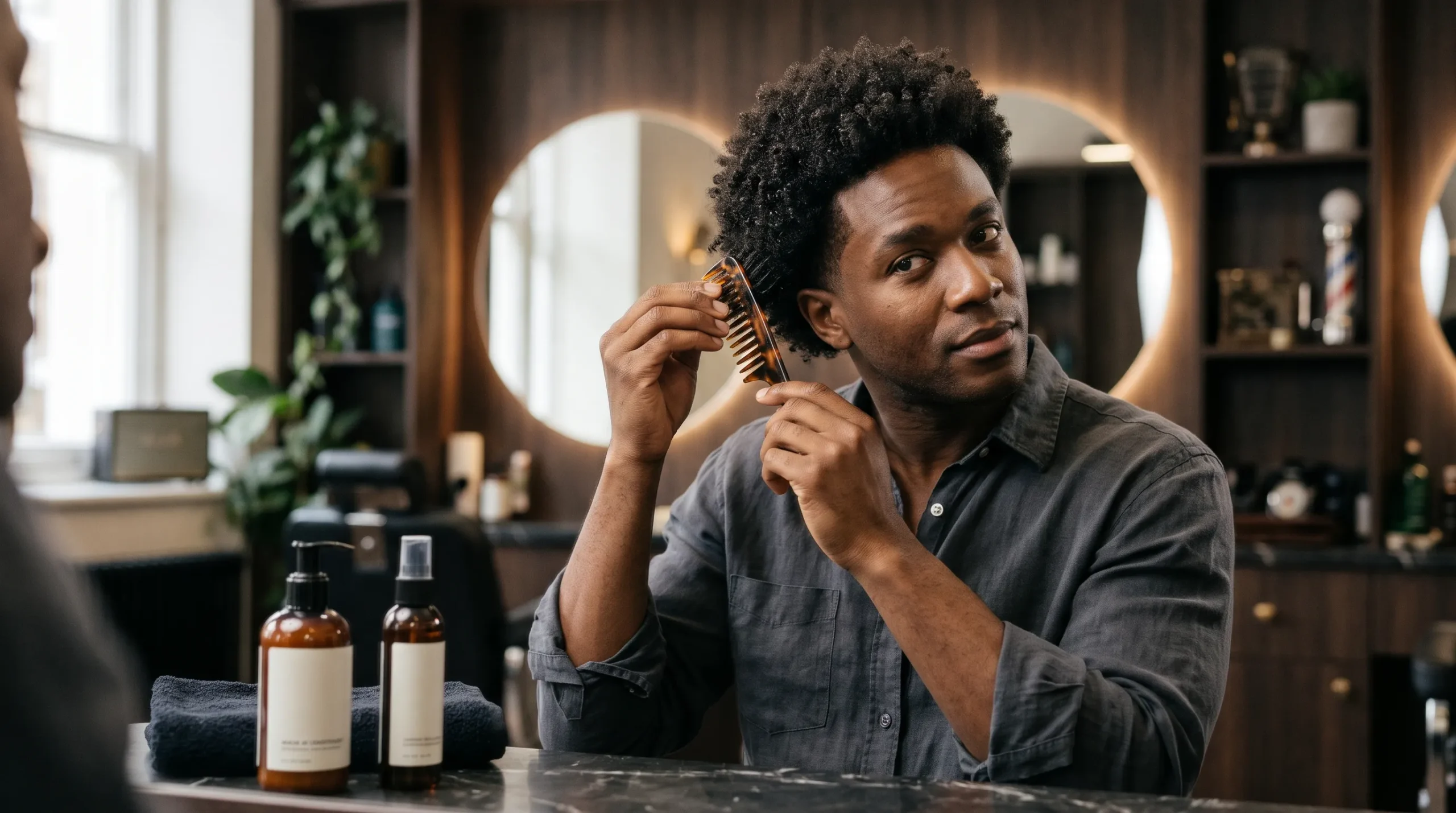
Comb when the hair is wet and coated in conditioner, because a dry curl will snap before it will untangle. A wide tooth comb is fine. So is a soft brush with the bristles set far apart, and so are your own fingers. Begin at the ends and climb upwards in small sections. Starting at the roots and dragging down pulls on the bond and on your scalp, and it hurts.
Knots gather in the places where hair rubs. That’s the back of the neck, the sides, and anywhere a collar or hood sits all day. Leave one alone for a few days and it can matt, and a mat is far harder to deal with than a knot. Please don’t cut it out with scissors. If you’ve got one already, read up on a matted hair system before you touch it.
Between washes, a spritz from a spray bottle and a dab of light cream will wake the curls up in the morning. Keep the comb off dry hair. Fingers do the job.
Nights, sweat, weather and heat
Think about how long you lie on a pillow. Eight hours a night is a lot of rubbing. A satin or silk pillowcase takes most of that friction away, and a satin or silk cap does the same. Cotton soaks moisture out of curls and snags them, so try to keep it off the bed. A loose twist before sleep is fine as long as nothing tugs at the edges.
Sleeping in a system is allowed. The post on sleeping in a hair system has the rules, and the one about showering with a hair system covers water, steam and what to avoid.
Sweat is harmless by itself. The trouble is the salt and oil it leaves behind, which build up near the base until the hair feels heavy and flat. After a hard session, rinse in lukewarm water, let your scalp dry fully, then put a little moisture back so the curls don’t set stiff.
The weather changes what your hair asks for. Winter air is dry and central heating is worse, so from November to March afro hair wants more moisture. Summer brings sweat and sun, and sun fades colour. A wet day makes curls shrink and frizz a little, which is normal. Hats are fine in any month, provided they’re loose. A tight one squeezes the edges.
Go easy on heat. Hot tools dry out afro hair, and the hair on a system can’t mend itself the way yours can. On your own hair, use a heat protectant and the lowest setting that works. On the system, ask us first.
Relaxers and dyes on your own hair can change how it blends with the system, and they can weaken the hair, so tell us before you book either. If you do relax your own hair, the usual rules hold. Relaxer goes on new growth only and never on hair that’s already been relaxed, and touch ups need a few months between them. If you also dye, leave about two weeks between the two.
Colour fades on every system sooner or later. Sun, strong shampoo and age all take a little. If yours is shifting, read about why a hair system loses colour before you worry. A colour refresh at a visit often fixes it.
Are tight styles a risk to your edges?
Yes, and the hairline is where it shows first. If tight styles are what cost you hair in the first place, that area doesn’t need any more tension.
Tight braids, cornrows, ponytails and buns are the main cause of traction alopecia. A style that hurts, stings, turns the skin red or brings up small bumps is too tight. Keep it in and the scalp can scar, and then the loss can become permanent. Loosen it or take it out, and see a doctor if the signs carry on.
Protective styles are popular with afro hair and they’re fine when they’re done loose. As a guide, braids should come out after about six weeks, weaves after eight weeks at the most, and twists get redone every four weeks or so. Locs shouldn’t be twisted tight at the root, and very long heavy ones put strain on it. If your hairline looks thinner than it did, see a dermatologist early. The sooner hair loss gets looked at, the more choices you have.
A system shouldn’t pull at all. If it feels tight after the fitting, tell us the same day. There’s a post on why a system might feel tight after installation that explains what’s normal. Plenty of men also ask what a system does to the hair underneath, and the answers are in the posts on whether a hair replacement system damages your existing hair and how traction alopecia and hair systems fit together.
Then there’s the scalp. It lives under a cover, it sweats, and it has a bond stuck to it. Clean it well at every wash and let it dry fully afterwards.
A bit of itching in the first few days is common. Sweat can cause it, so can product left on the skin, and so can a reaction to the adhesive. If your skin is sensitive, or you’ve got eczema or psoriasis, tell us and we’ll change how we work. The posts on a sensitive scalp, eczema and psoriasis and tape versus glue go through the choices.
Redness, soreness, crusting, bumps or a rash aren’t normal. If you get any of them, take the system off and see a doctor. A system should never hurt. Adhesives irritate the skin of some men, and when that happens we change the method. You shouldn’t have to put up with it.
Visits, barbers and the first week
A system isn’t a fit-and-forget job. The bond wears down, the hair picks up dirt and product, and your own hair keeps growing out. So we see our clients every four to six weeks.
When you come in, we clean the system and your scalp, put on a fresh bond, and tidy your fade and lineup. We check the curls and the base and fix whatever needs fixing. It’s also your chance to ask us things, or to mention a problem while it’s still small. The maintenance page explains the visits, and the aftercare guide covers what to do in between. Cost is on the prices page.
How long a system lasts depends a lot on how it’s looked after. There’s a breakdown of how long hair replacement systems last, and some tips on making a hair system look more natural if you want yours to blend in better.
Plenty of men use a barber in between, and that’s fine. Say you wear a system before the clippers come out. Ask the barber to keep clippers, razors and hot tools away from the base and the bond, and not to tug the edge or lean on the hairline. If you want the system trimmed or the lineup changed, bring it to us. We cut it together with your own hair so the two stay matched, and a cut in the wrong place on a system can’t be put back.
A normal week is quiet. Wash day means cleaning the scalp, conditioning the ends, combing while it’s wet and putting a light leave-in on the damp curls. The other days you do very little: a spritz of water and a bit of cream in the morning, the satin cap at night. Wash your hands before you touch the edge, wear loose collars, and take hoods off gently. After each visit, take a photo of your hairline in good light. It makes any change easy to spot.
The slips we see most are washing too often, washing too rarely, oil at the edge of the base, rough towel drying, combing dry curls from the roots and sleeping on cotton. Some men pull at a lifting edge or trim the system themselves. Some stay in tight styles for months. Some skip visits to save money, then find the bond has failed and the bill is bigger. Most of it gets fixed at the next visit, and the sooner you tell us, the easier it is.
Get in touch if the edge is lifting and you can see a gap, if the system feels tight or hurts, or if your scalp is red, sore or itchy for more than a day or two. Do the same for curls that have gone dry and straw like, tangles that keep coming back, a change in colour, or more of your own hair coming out at the edges. Systems need more attention as they age, and that’s normal.
The first week sets the tone. Do what we told you at the fitting and go gently on the bond for the first day or two. Keep your hands off the edge and avoid anything that tugs. Wash when we suggest, with the products we recommend. If something feels off, like tightness, itching or a lifting edge, message us instead of waiting for your visit. The fitting page explains the appointment, and getting your first hair system helps if you’re new to all this.
Our studio is at Unit C, Dorset House, 845 Harrow Rd, London NW10 5NH, near Willesden Junction. We’re open Monday to Friday from 9:00 to 18:30 and Saturday from 9:00 to 16:00. The consultation is free, private and one to one. You can read the full process, see what clients say in our reviews, and learn more about afro textured hair systems and hair replacement systems for curly hair. For the wider picture, there’s non-surgical hair replacement in London and about Hair Standard.
FAQs: Afro Hair System Care and Maintenance
How do you wash a hair system on afro textured hair?
Use lukewarm water and a mild shampoo, and work it into the scalp with your fingertips. Let the suds run down through the curls and rinse well. Put conditioner on the ends first and pat dry with a towel. We’ll show you the full routine at your fitting.
How often should you wash afro hair with a hair system?
Natural afro hair is usually washed once every one to two weeks, because more than that dries it out. A system can need a different rhythm, since sweat, your scalp and the bond all play a part. We’ll tell you what suits you at the fitting.
How do you keep a hair system soft on afro hair?
Put conditioner on the ends at every wash, then a leave-in or light cream while the hair is damp. A few drops of oil on the ends seal in the moisture. Keep all of it away from the edge of the base, because heavy products near the bond can loosen it.
How do you detangle afro curls on a hair system?
Use a wide tooth comb, a soft brush with widely spaced bristles or your fingers on wet, conditioned hair. Start at the ends and work up in small sections. Don’t comb dry curls from the roots, because that tugs on the bond.
Can you sleep in a hair system with afro hair?
Yes. A satin or silk pillowcase or cap causes less friction than cotton, which is kinder to your curls and the bond. If you twist your hair at night, keep the twists loose so nothing pulls at the edges.
Can you use oil on a hair system?
A few drops on the lengths and ends help with moisture. Oil near the bond can weaken it, so keep it off the edge of the base. If you’re not sure a product is safe, ask us before you use it.
Can you use heat on an afro textured hair system?
Heat dries afro hair, so keep it to a minimum. On your own hair, use a heat protectant and the lowest setting. Check with us before you use any hot tool on the system itself.
Why does a hair system keep tangling?
Curls knot where the hair rubs on collars, hoods and pillows, mostly at the back of the neck and the sides. A knot left alone can turn into a mat. Detangle gently after washing, and come and see us if a mat forms.
Can a hair system cause traction alopecia?
A system shouldn’t pull on your hair at all. Tight braids, cornrows, ponytails and buns are the main cause of traction alopecia. If a system feels tight or painful after the fitting, tell us at once.
How often do you need maintenance visits for a hair system?
Every four to six weeks. We clean the system and your scalp, put on a fresh bond and tidy your fade and lineup. We also check the curls and the base while you’re in the chair.
What should you do if your scalp is itchy under a hair system?
A little itching in the first days can come from sweat, product build up or a reaction to the adhesive. If it carries on, or your scalp is red, sore or bumpy, take the system off and see a doctor. After that, talk to us about other options.
Do you need special products for afro hair with a system?
You need products that moisturise without leaving heavy residue at the bond. A mild shampoo, a conditioner and a light leave-in are the basics. We’ll recommend what suits your hair and system at the fitting.
Book a free consultation
Want help looking after your system, or thinking about getting one? Come and talk to us. The consultation is free and private. Use our contact page, call 0203 393 1235, or message us on WhatsApp. You can also read about our alopecia hair systems, receding hairline systems and crown thinning systems.