
Hair integration is a way of adding extra hair to the hair you already have. A thin mesh goes over the thin patch, your own hair gets pulled up through the holes, and new hair is added so it all mixes together. You need quite a lot of your own hair for it to work.
A hair system is something else. It’s a piece of hair on a thin base, and the base sits on your scalp. It doesn’t need your own hair to hold on to, so it works for a thin top and for a fully bald one.
One thing before we go on. We fit hair systems for men at Hair Standard. We don’t do hair integration. So if you came here wondering which one you need, we’ll try to be fair to both, and tell you where each one makes sense.
“What is a hair integration system?”
The name says it. Your hair is being “integrated” with other hair.
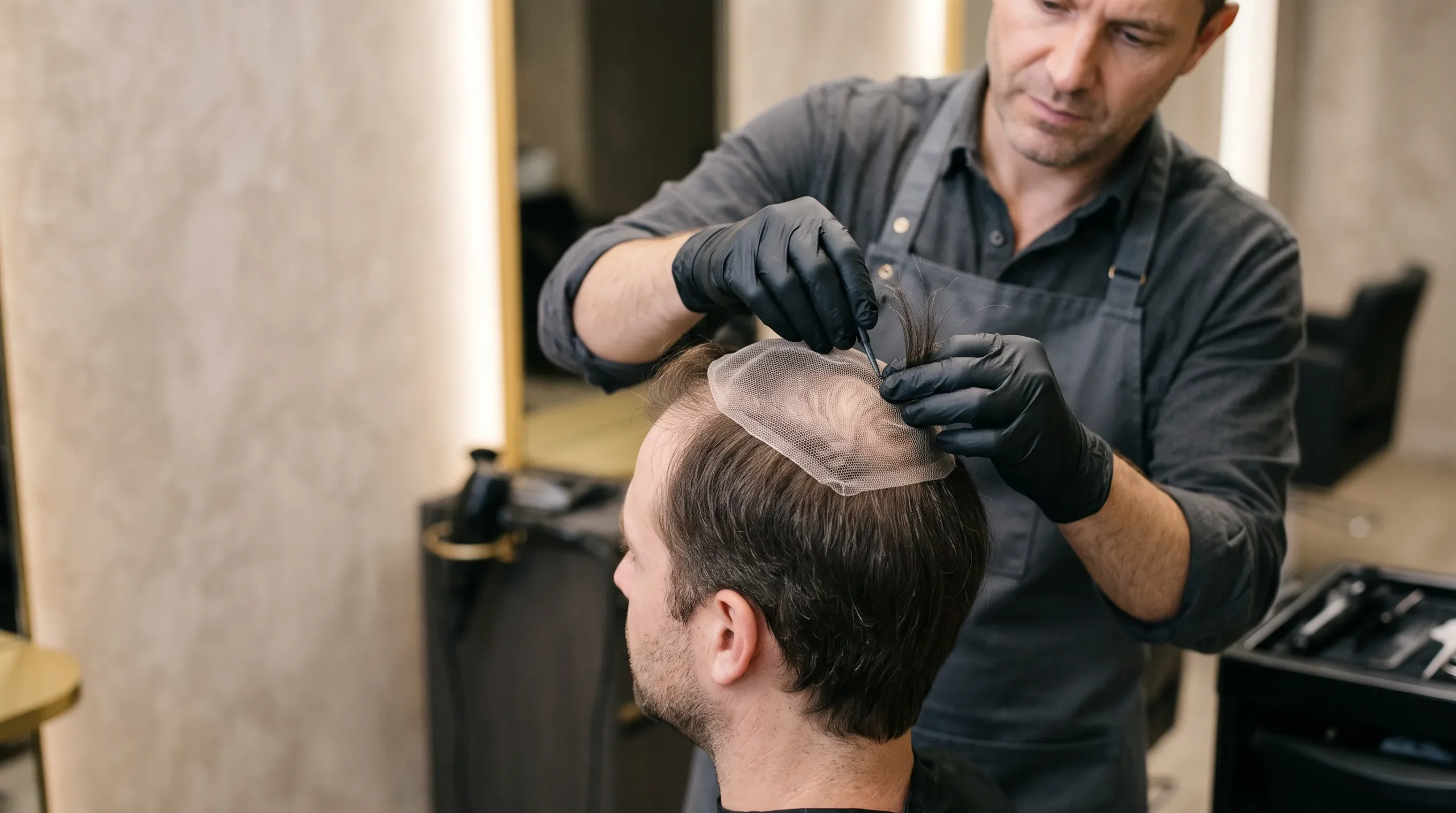
The most common kind uses a fine net. A stylist puts the net over the thin area. Then they use a tiny hook to pull bits of your own hair through the holes, one section at a time. Extra hair is tied or woven into the net to fill what’s missing. When it’s finished, your hair and the new hair sit side by side, and you can’t easily see where one ends.
Your own hair stays out on top. Nothing covers it. That’s the best thing about integration. It’s also the catch, because it only works if you’ve got enough hair to hide the net and hold everything up.
“How is it done, step by step?”
It takes a while. Longer than most people expect.
First the stylist looks at your hair. How thick is it? Where is it thin? What colour is it? They need this so the new hair matches. Then they cut or pick a net that covers the thin spot. Next comes the slow part, pulling your hair through the net, bit by bit. The extra hair goes in wherever you need more. Last, a cut to blend it all in.
A first session can run from about an hour and a half to three hours. And you’ll go back again, because your hair keeps growing. More on that in a minute.
“Is hair integration the same as hair extensions?”
Close, but not quite.
Some salons say “hair integration” when they mean something different. They fix extra strands of real hair onto your own hair, mostly near the front or in thin patches. The strands might be bonded on with tiny tips, or worked in along very fine lines. There’s no big net at all. The new hair hangs off your hair, a few strands at a time.
So the same two words can mean two different things. One is the net with your hair pulled through. The other is new hair fixed onto your hair. In both cases your own hair is the anchor. And that’s the main thing that separates them from a hair system.
“So what’s the difference between integration and a hair system?”
It comes down to what the new hair is attached to.
In integration, it’s attached to your hair. In a hair system, it’s attached to a thin base, and the base sits on your scalp. The base covers the thin or bald skin. Your own hair round the sides and back is cut to blend in, but the system isn’t hanging off it.
That’s a big difference. Let’s say your hair is gone on top. There’s nothing to pull through a net and nothing to bond onto. A hair system doesn’t have that problem, because it brings its own cover.
A hair system is also made for you. The colour, thickness, texture and hairline are matched to your head. The front edge is made to look like a real hairline. If you want to see how the bases differ, types of hair replacement systems goes through them, and the non-surgical hair replacement systems guide gives the big picture.
“How much of your own hair do you need for integration?”
Enough to hide the net and hold the new hair. There’s no set number. If a salon gives you one before they’ve seen your head, they’re guessing.
A rough way to check. Comb your hair over the thin area. Can you still cover the scalp? Then integration is something to think about. Can you see lots of skin, or have clear bald patches? Then there’s often not enough to work with.
This is where a lot of men get stuck. Male pattern hair loss usually keeps going. The hairline moves back and the crown gets thinner. A receding hairline hair system or a crown thinning hair system does not rely on that hair, because it sits on a thin base. The hair you’d lean on for integration gets thinner too. So a method that needs your hair gets harder to keep up as time goes on.
“How long does hair integration last?”
Not long between visits. That’s the part people often skip over.
The net type is usually redone every four to six weeks. Some of the bonded types get re-fixed every three to six weeks. The reason is easy. Your hair grows, and as it does, the net or the bonds move away from your scalp. They have to be moved back. Leave it too long and the piece lifts and starts to show.
The hair itself can last for a few months, or even a year or more. It depends on the quality, how you look after it and how fast yours grows. But the appointments come round fast, and each one takes time in the chair.
“Can integration damage your own hair?”
It can put a strain on it. More so if it’s done badly or left too long.
Anything fixed to your hair adds weight and tension. If it isn’t adjusted often enough, or if it’s too tight, the hair underneath gets pulled. The scalp can get sore too. Fine or thinning hair feels it most.
So the person doing the work matters a lot. And the tightening visits aren’t something to skip. If you’re thinking about integration, ask how often you’d need to come back, and what they do when your hair grows out.
Wondering whether a hair system does the same thing? We answered that in does a hair replacement system damage your existing hair.
“What does a hair system do differently?”
It covers the area on its own. It doesn’t lean on your hair.
The system is a piece of hair on a thin base, shaped to the part of your head you want covered. We colour match it, cut it and blend it with the hair you’ve still got at the sides and back. If you’ve lost a lot on top, it looks like a full head of hair again, because the front edge is made to look like a natural hairline.
It can cover a thin crown, a receding front or a bald top. It also works for hair loss that doesn’t follow a pattern, like alopecia. If you want to see how it fits your kind of hair loss, have a look at a hair system for crown thinning, getting a system before you’re completely bald and hair replacement systems for men with significant hair loss.
“How does a hair system stay on?”
It’s stuck to your scalp, not to your hair. There are three main ways.
Tape is one. Strips go round the edge of the base and hold it to the skin. Liquid adhesive is another, brushed on and a bit longer lasting. The third is clips, which grip your own hair. No glue, but you’d take the system off every day.
The bond wears out first. Tape tends to need redoing every one to three weeks. Liquid adhesive, every two to four. The system itself lasts a lot longer than that, around three to six months with good care.
Two different clocks, then. One for the bond and one for the system. We explain both in how long hair replacement systems last, and the pros and cons of each method in tape vs glue.
“What are the base types?”
There are three. Lace, skin and monofilament.
Lace is very fine and light. It gives the most natural hairline and lets air through, but it wears out sooner. Skin is a thin layer that looks like scalp. It lasts longer and holds the bond well, though it can feel warmer. Monofilament is a see through fabric that makes each hair look like it’s growing out of the scalp. It’s somewhere in the middle.
Plenty of systems use two. Lace at the front for the hairline, skin round the edge for strength. If you want to know which suits you, lace vs skin vs mono sorts it out.
“Which one is right for you?”
Here’s a simple way to look at it.
Your hair is thin all over, but it’s still there. You don’t mind going back every few weeks. Integration might suit you.
You’ve got clear bald patches. Or the hairline has gone back a long way. Or the crown is bare, or there’s hardly any hair left. A hair system is the better fit, because it doesn’t need your hair to work.
Look at how quickly your hair is changing too. If you’re losing it fast, a system gives you something steady. A method that depends on your hair keeps needing changes as that hair changes.
Then there’s daily life. Do you swim, train hard, sleep in a warm room? A system can be made to cope with that. Showering with a hair system and sleeping in a hair system cover the everyday stuff.
“Is it a hair transplant?”
No. Neither one is surgery.
A transplant moves hair from one part of your head to another. It’s a procedure, you need time to recover and it’s meant to last. Integration and hair systems don’t cut anything. You can stop whenever you like.
If you’re stuck between a transplant and a system, we put them next to each other in hair replacement system vs hair transplant.
“How are wigs, toppers and patches different?”
They’re different again. That’s part of why the words get so tangled.
A wig covers your whole head. Most people take it off every day. A topper is smaller and clips on, usually for thin spots. A patch is a small piece for one area. A hair system sits between them. It’s bigger than a patch, it’s made to measure, and it stays put for days or weeks.
The names are sorted out in hair system, hair unit, hair patch or toupee, and hair system vs wig for men goes through the wig side. If “patch” is the word you’ve seen, try non-surgical hair extension patches.
“How much does it cost?”
That depends on the method and the salon. So here are our numbers.
A first hair system with us starts from £495. That covers the system, the fitting, the cut and the styling. Maintenance visits cost extra. There are packages too, if you want more than one system and a run of maintenance visits. The latest figures are on our hair system prices page.
Integration prices change a lot from salon to salon. They depend on the method, how much hair is used and how often you go back. Since the visits repeat, add up a full year before you start.
“Can people tell?”
They can look natural, if the work is good. Neither one is magic.
With a hair system, four things decide it. The hairline, the colour match, the thickness and the cut. A hairline that’s too straight, too thick or too dark gives it away. A good one has a soft, slightly uneven front, like a real one. We’ve written about this in can people tell you’re wearing a hair replacement system and how to make a hair system look more natural.
Integration has its own risk. If there’s too little of your own hair, the net can show through. Or the added hair can end up thicker than the rest.
“What should you ask before booking any hair solution?”
A few questions save a lot of trouble later.
How much of your own hair is needed? Is that enough for what you want? How often do you have to come back, and what does each visit cost? What happens when your hair loss gets worse? How long does the first fitting take? Can you see real results on someone with hair loss like yours?
A good studio answers all of that without any pushing. If the reply to the first question is “we’ll see once we start”, be careful.
“What happens at a Hair Standard consultation?”
It’s free. Nobody pressures you.
We look at your hair loss and talk about the look you want. Then we tell you if a hair system suits you. Our team has more than five years of experience fitting hair systems for men, and the consultation is where we explain your options and answer your questions.
If you go ahead, your system is made and colour matched before the fitting is booked. At the fitting we cut and style it so it blends with your own hair. You’ll have a short adjustment period over the first few weeks, and we help you through it. After that, maintenance visits clean the system, redo the bond and adjust it as your own hair grows. The steps are on our process page, and getting your first hair system covers what the day itself is like.
Our studio is at Unit C, Dorset House, 845 Harrow Rd, London NW10 5NH. You can ring us on 0203 393 1235, or message us on WhatsApp. If you’re picking a studio in London, the guides to hair replacement systems for men in London and the best hair systems in London help you choose, and our reviews page shows what clients say.
Quick Answers
What is a hair integration system?
It’s a way of adding hair on top of your own thinning hair. With the net type, your hair is pulled through the holes and extra hair is added to fill the gaps. You need enough of your own hair for it to work.
Is hair integration the same as a hair system?
No. Integration is attached to your own hair. A hair system is attached to a thin base that sits on your scalp. So a hair system still works when there’s very little hair left, and integration doesn’t.
Does Hair Standard offer hair integration?
No. We fit hair systems for men. They’re made to measure and cover the thin or bald area. If you aren’t sure which one fits, book a free consultation and we’ll tell you.
How much of a man’s own hair is needed for hair integration?
Enough to hide the net and hold the added hair. A salon has to see your hair before it can say how much. If you’ve got lots of visible scalp or clear bald patches, there’s usually not enough.
How long does hair integration last?
The net type is usually redone every four to six weeks. Some bonded types are re-fixed every three to six weeks. The hair itself can last months, or a year or more. You go back often because your own hair keeps growing.
Can hair integration damage natural hair?
It can strain it and the scalp if it’s done badly, pulled tight or left too long. Fine or thinning hair is more at risk. A trained stylist and regular visits keep that risk down.
How long does a hair system last?
Around three to six months with good care. The bond that holds it on needs redoing much sooner. Tape is usually every one to three weeks, and liquid adhesive every two to four.
Is a hair system surgery?
No. Nothing is cut, and there’s no recovery time. You can stop wearing it whenever you want.
How much does a hair system cost?
A first hair system with us starts from £495, with the fitting, cut and styling included. Maintenance is extra, and there are packages for more than one system. The latest figures are on our prices page.
Is integration better than a hair system for thinning hair?
It depends on how much hair you have left. If it’s thin all over but still plentiful, integration can work. With a receding hairline, a bald crown or advanced hair loss, a hair system is the more reliable choice.
Can people tell if a man is wearing a hair system?
A well made one is hard to spot. The hairline, colour match, thickness and cut decide how natural it looks. A soft, slightly uneven front edge is what makes it believable.
Is the consultation at Hair Standard free?
Yes. We look at your hair loss, talk through the result you want and tell you if a hair system suits you. There’s no pressure to book.
Book a free consultation
Not sure whether integration or a hair system fits your hair loss? Come and talk to us. The consultation is free. Use our contact page, call 0203 393 1235, or message us on WhatsApp. You can also read about non-surgical hair replacement in London, see our prices and learn about us.
FAQs: Hair Integration vs Hair Systems
What is a hair integration system?
It’s a way of adding hair on top of your own thinning hair. With the net type, your hair is pulled through the holes and extra hair is added to fill the gaps. You need enough of your own hair for it to work.
Is hair integration the same as a hair system?
No. Integration is attached to your own hair. A hair system is attached to a thin base that sits on your scalp. So a hair system still works when there’s very little hair left, and integration doesn’t.
Does Hair Standard offer hair integration?
No. We fit hair systems for men. They’re made to measure and cover the thin or bald area. If you aren’t sure which one fits, book a free consultation and we’ll tell you.
How much of a man’s own hair is needed for hair integration?
Enough to hide the net and hold the added hair. A salon has to see your hair before it can say how much. If you’ve got lots of visible scalp or clear bald patches, there’s usually not enough.
How long does hair integration last?
The net type is usually redone every four to six weeks. Some bonded types are re-fixed every three to six weeks. The hair itself can last months, or a year or more. You go back often because your own hair keeps growing.
Can hair integration damage natural hair?
It can strain it and the scalp if it’s done badly, pulled tight or left too long. Fine or thinning hair is more at risk. A trained stylist and regular visits keep that risk down.
How long does a hair system last?
Around three to six months with good care. The bond that holds it on needs redoing much sooner. Tape is usually every one to three weeks, and liquid adhesive every two to four.
Is hair system surgery?
No. Nothing is cut, and there’s no recovery time. You can stop wearing it whenever you want.
How much does a hair system cost?
A first hair system with us starts from £495, with the fitting, cut and styling included. Maintenance is extra, and there are packages for more than one system. The latest figures are on our prices page.
Is integration better than a hair system for thinning hair?
It depends on how much hair you have left. If it’s thin all over but still plentiful, integration can work. With a receding hairline, a bald crown or advanced hair loss, a hair system is the more reliable choice.
Can people tell if a man is wearing a hair system?
A well made one is hard to spot. The hairline, colour match, thickness and cut decide how natural it looks. A soft, slightly uneven front edge is what makes it believable.
Is the consultation at Hair Standard free?
Yes. We look at your hair loss, talk through the result you want and tell you if a hair system suits you. There’s no pressure to book.
Book a free consultation
Not sure whether integration or a hair system fits your hair loss? Come and talk to us. The consultation is free. Use our contact page, call 0203 393 1235, or message us on WhatsApp. You can also read about non-surgical hair replacement in London, see our prices and learn about us.