
Introduction
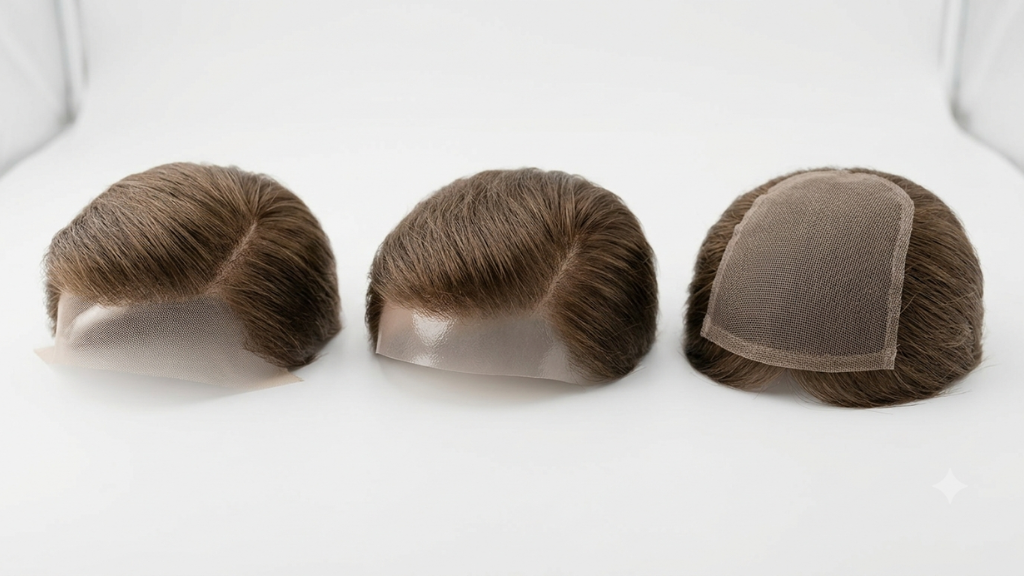
If you are looking into hair replacements for the first time, you are probably seeing lace, skin, and mono. These terms refer to the materials that make up the base of the hair system that sits close to the scalp and houses the hair.
There is no right or wrong answer for which base to choose, but every base has its trade-offs that you should consider. You should choose the hair system base that is best suited for your lifestyle, how close you need it to look natural, and what your skin type is. This will help you prepare for the consultation that you are most likely going to have with a hair replacement specialist. The following is how each of the bases will perform and how they will play into the trade-offs specifically with everyday use.
Quick answer
There are three main types of hair replacement systems, defined by their base material:
- Lace systems: sheer, breathable, and the most natural-looking, but less durable and more delicate to handle.
- Skin (poly) systems: a thin polyurethane base that mimics scalp skin, very durable and easy to maintain, but can feel less breathable.
- Mono systems: a woven mesh base that’s strong and breathable, with a slightly less transparent look than lace.
The base that most people choose is the combination base, which consists of a lace front and a skin or mono base. This is because it is the best combination of realism and durability. Which hair base is best for you will be determined by your climate, your personal level of activity, how much time and effort you want to play into the routine, your skin type, and how sensitive your skin is.
The systems that we recommend first time users are the skin and mono systems. This is because lace systems are the most difficult systems to maintain. These systems are more user friendly and allow the clients to get a feel for wearing hair systems. After a lace system is a popular choice due to the natural hairline that the lace system provides, it is a more difficult system to maintain.
What is a hair replacement system?
A hair replacement system is a non-surgical solution for hair loss. It provides real or synthetic hair systems that are attached to a custom base system that is glued to the scalp. Unlike a generic wig that provides systems for a range of sizes, a hair replacement system is a custom sized size of the area you’re covering. You may also see it called a hair unit or non-surgical hair replacement system; these all describe the same product.
The base is the foundation everything else depends on. It determines how the system looks, how long it lasts, how it feels on your scalp, and how it’s attached (usually with adhesive tape or medical-grade glue). This is why understanding base types matters more than most people expect when they start looking into hair systems.
What are the different types of hair replacement systems?
Hair replacement systems are grouped by the material used for the base, which sits directly against the scalp. The three most common types are lace, skin (also called poly), and mono (short for mono-filament).
Many modern systems don’t use just one material. A combination base lace at the front hairline for realism, with skin or mono at the back and sides for strength is now one of the most popular options because it plays to each material’s strengths.
Lace hair systems
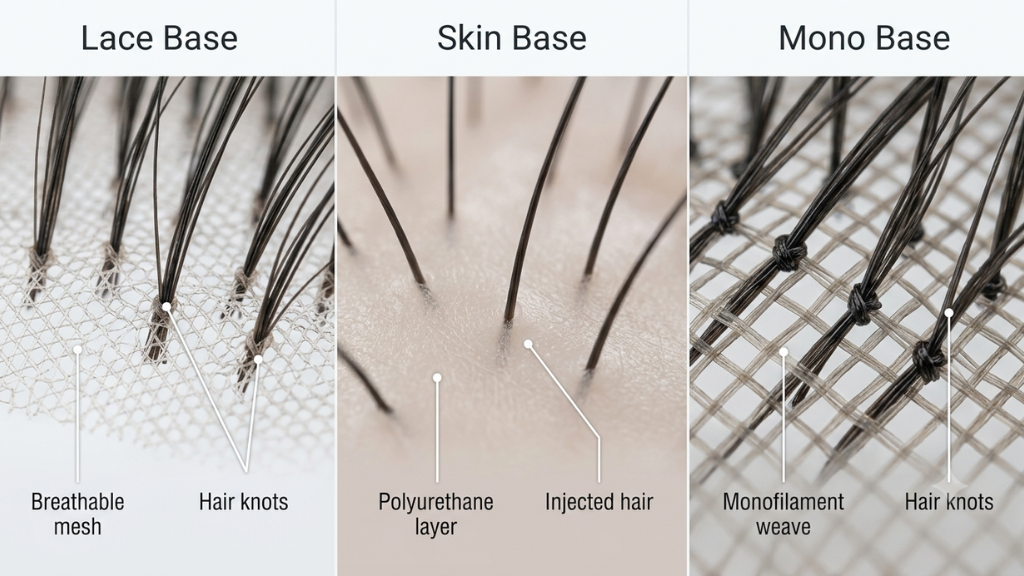
A lace system uses a fine, see-through mesh base, similar to the lace used in bridal veils. Individual hair strands are hand-tied into the mesh one by one, which is what gives lace systems their realistic, “growing from the scalp” appearance.
Pros:
- Most natural-looking option, especially at the hairline
- Lightweight and breathable, so the scalp stays cooler
- Blends well with existing hair for a seamless look
Cons:
- More fragile than skin or mono, so it tears more easily
- Typically needs replacing more often (roughly 3–6 months with daily wear)
- Requires more careful handling during cleaning and attachment
Lace is good for people whose main concern is how close to natural the system looks, for instances such as photography, or for people who want the closest hairline possible. The higher breathability also makes lace comfortable in the heat. Because of its lower durability, it usually isn’t recommended by clinics for a base, especially for first-time wearers who prefer a more low-maintenance system to start with.
Skin (Poly) hair systems
The base of a Poly system, or Skin system as they are commonly called, are made using a thin sheet of polyurethane. In these systems, they attempt to bring closer the look and feel of the skin of a real scalp, and in these systems, the hair can be either injected or knotted.
Pros:
- Very durable and resistant to everyday wear and tear
- Easier to clean and maintain than lace
- Adhesive bonds strongly to the smooth surface, giving secure hold
Cons:
- Less breathable, which can feel warmer in hot weather or during exercise
- Can look slightly less natural up close compared with lace
- May cause irritation for people with sensitive skin, depending on the polyurethane formulation
For people who have a more active lifestyle or people who have started wearing hair systems and prefer a more easy to manage system, the Skin systems are a more low-maintenance and highly durable option. Because of these reasons, it’s often used as a first-time system. However, people with a more sensitive scalp should be careful because of the Skin system’s reduced breathability and the irritation it could cause in hotter climates.
Mono hair systems
A mono system uses a mono-filament base, a fine, woven mesh that’s slightly thicker and more opaque than lace. Hair strands are knotted into the mesh, which gives good strength while still allowing some breathability.
Pros:
- Strong and long-lasting, generally more durable than lace
- Breathable enough for comfortable everyday wear
- Knots can be bleached to look less visible against the scalp
Cons:
- Not as sheer or natural-looking as lace, especially at the hairline
- Slightly heavier than lace systems
- Can feel a bit stiffer until it’s broken in
When compared to lace systems, Mono systems are a more translatable option being a bit more durable, a bit less durable and a good option for everyday use and not just special events. Because of the balance of strength and breathability, Mono systems are highly recommended for people who have more active lifestyles. .
Lace vs Skin vs Mono comparison
Lace wins on realism and breathability, skin wins on durability and ease of care, and mono sits between the two. The table below compares all three across the factors that matter most day-to-day.
| Feature | Lace | Skin (Poly) | Mono |
| Natural appearance | Excellent | Good | Good |
| Hairline realism | Excellent sheerest, most scalp-like | Moderate more solid-looking at the front | Moderate slightly less sheer than lace |
| Breathability | Excellent | Lower | Good |
| Durability | Lower | High | High |
| Maintenance | Higher needs gentle handling | Lower easy to clean | Moderate |
| Comfort | Very good, especially in heat | Can feel warm during sweat or exercise | Good |
| Lifespan (daily wear) | Roughly 3–6 months | Often 6 months or more | Often 6 months or more |
| Cost | Often higher over time due to shorter lifespan | Mid-range | Mid-range |
| Best suited for | Close-up realism, special occasions, cooler climates | Beginners, active lifestyles, low-maintenance wear | Everyday durability with good breathability |
| Main drawback | Fragile, shorter lifespan | Less breathable, can feel warm | Less sheer than lace at the hairline |
Quick recommendation
If you’re not sure where to start, match your top priority to a base:
- Realism above all else → Lace
- Low maintenance and long lifespan → Skin
- Active lifestyle or physically demanding job → Mono
- New to hair systems → Skin or mono, since both are easier to handle while you learn
- Hot climate or heavy sweating → Lace or mono, for better airflow
- Sensitive scalp → Whichever base you choose, patch test the adhesive first, since irritation is usually caused by the adhesive rather than the base material itself
Which hair replacement system is best?
There’s no single “best” hair replacement system the right one depends on what matters most to you. Someone prioritising the most natural hairline for photos or public-facing work will likely prefer lace, while someone who exercises daily or works outdoors may get on better with skin or mono.
Here’s a simple way to think about it:
- Want maximum realism and don’t mind extra care? Choose lace.
- Want low maintenance and strong durability? Choose skin.
- Want a balance of strength and breathability? Choose mono.
- Want realism at the front and durability everywhere else? Choose a combination base.
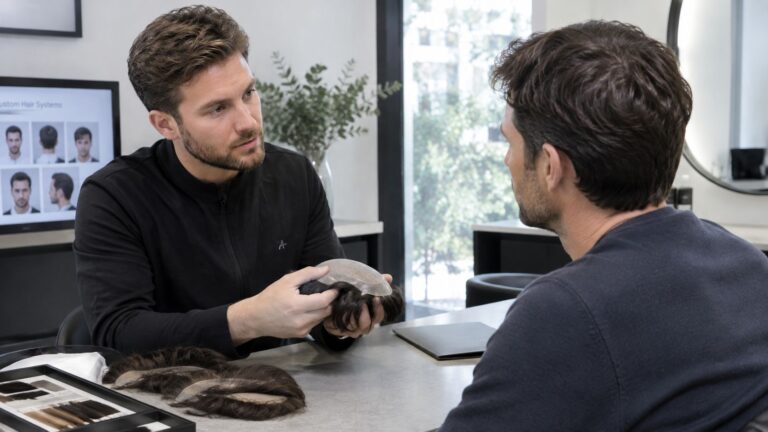
A qualified hair replacement specialist can assess your scalp, lifestyle, and budget during a consultation to recommend the base that fits your situation, rather than the one that’s simply most popular.
How to choose the right hair system
Choosing the right base comes down to weighing six practical factors against each other, rather than picking whichever one sounds most impressive. Answer these honestly before you buy:
- How active is your lifestyle? Frequent sweating or swimming favours more durable bases like skin or mono.
- What’s your climate like? Hot or humid conditions suit the better airflow of lace or mono over skin.
- How sensitive is your scalp? Some people react to certain adhesives or polyurethane bases, so a patch test is worth doing first.
- How much time can you spend on maintenance? Lace systems generally need more frequent attention and replacement.
- What’s your budget? Lace systems often need replacing sooner, which can add up in cost over a year compared with more durable bases.
- How close-up does it need to look natural? If you’re regularly photographed or work in a public-facing role, hairline realism may outweigh durability.
It’s also worth having a professional fitting rather than buying a system based on appearance alone. A poorly fitted base regardless of material will look and feel wrong no matter how good the hair itself is.
Hair System Base FAQs
Common questions about choosing the right base for your non-surgical hair replacement system.
Which hair system base lasts the longest?
Skin and mono bases generally last longer than lace, often 6 months or more with daily wear, because the material is thicker and more resistant to everyday wear and tear.
Which hair system base looks the most natural?
Lace looks the most natural, particularly at the hairline, because it is sheer enough to let the scalp show through in a way that closely resembles natural hair growth.
Which base is best for beginners?
Skin or mono generally suit beginners best, since both are more forgiving to attach, clean, and maintain while you are still learning the routine.
Which base is best for an active lifestyle?
Mono is often the best fit for regular exercise or physical work, since it combines the durability to handle sweat and movement with enough breathability to stay comfortable.
Which base is best for hot weather?
Lace performs best in heat thanks to its high breathability, with mono a close second. Skin can feel warmer, since the polyurethane base allows less airflow to the scalp.
Is skin or lace better for a sensitive scalp?
Neither base is inherently better for sensitive skin. Irritation is usually caused by the adhesive rather than the base material itself, which is why a patch test is worth doing regardless of which base you choose.
Can I switch between lace, skin, and mono systems?
Yes, many people change base types over time as their lifestyle changes or as they get more experienced with system maintenance.
What is a combination base hair system?
A combination base uses lace at the front hairline for a natural look and skin or mono at the back and sides for durability, offering a balance between realism and long-term wear.
Do all hair systems need professional fitting?
Custom systems generally perform best with a professional fitting and consultation, since scalp shape, hair density, and lifestyle all affect which base and attachment method will work best.
Conclusion
Each base offers a solution to a specific problem. Lace is as realistic as possible, Monroe offers strength and breathability, and Skin maximizes durability. Realism is important to some and not to others, as is sensitivity to the elements, sensitivity of the scalp, and sensitivity to the daily routine. Consider base combinations to suit the factors mentioned. These factors may also lead to a single choice base.
Think of your choice as temporary. Most people initially go for a stronger, more durable, low-maintenance base while getting accustomed to their system, and move to lace for a stronger realistic hairline if they decide they want more realism and are willing to maintain and care for the system more. For the best first choice, consider a consultation with a hair replacement professional. They will look at your lifestyle, hair and scalp condition in person, which is more accurate than base generalizations and photo assessments.