
Yes, you can get a hair system if you have afro hair. At Hair Standard we fit afro textured systems for men, and the whole job comes down to one thing: matching your curl pattern. Colour is the easy part. If the curls on the system don’t behave like yours, you’ll see the join, and no amount of styling hides it.
This post is for men with tightly coiled hair who are thinking about a system and want to know what they’re getting into. We’ll cover how matching works, how to tell hair loss from breakage, what to ask about the base and the hairline, how to look after a system once it’s on, and what it costs. We only work with men, and a first system starts from £495.
“Can you get a hair system with afro hair?”
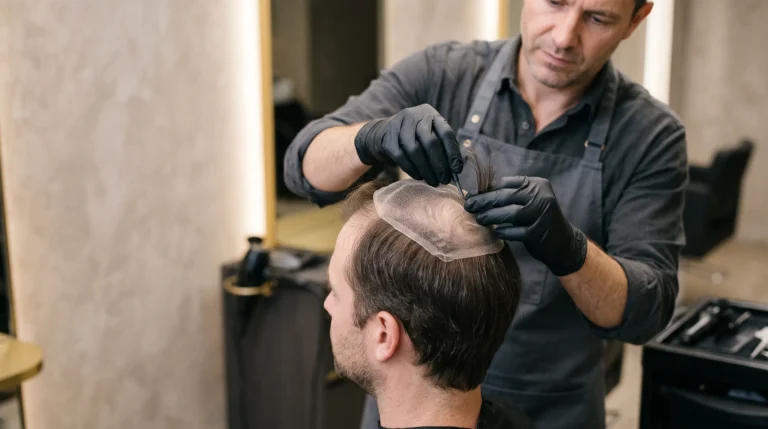
You can. A hair system is a thin base with hair attached, bonded to the scalp over the area where your hair has thinned. It covers the loss and leaves your own hair underneath alone. There’s no surgery and no healing time, and the result is there the same day.
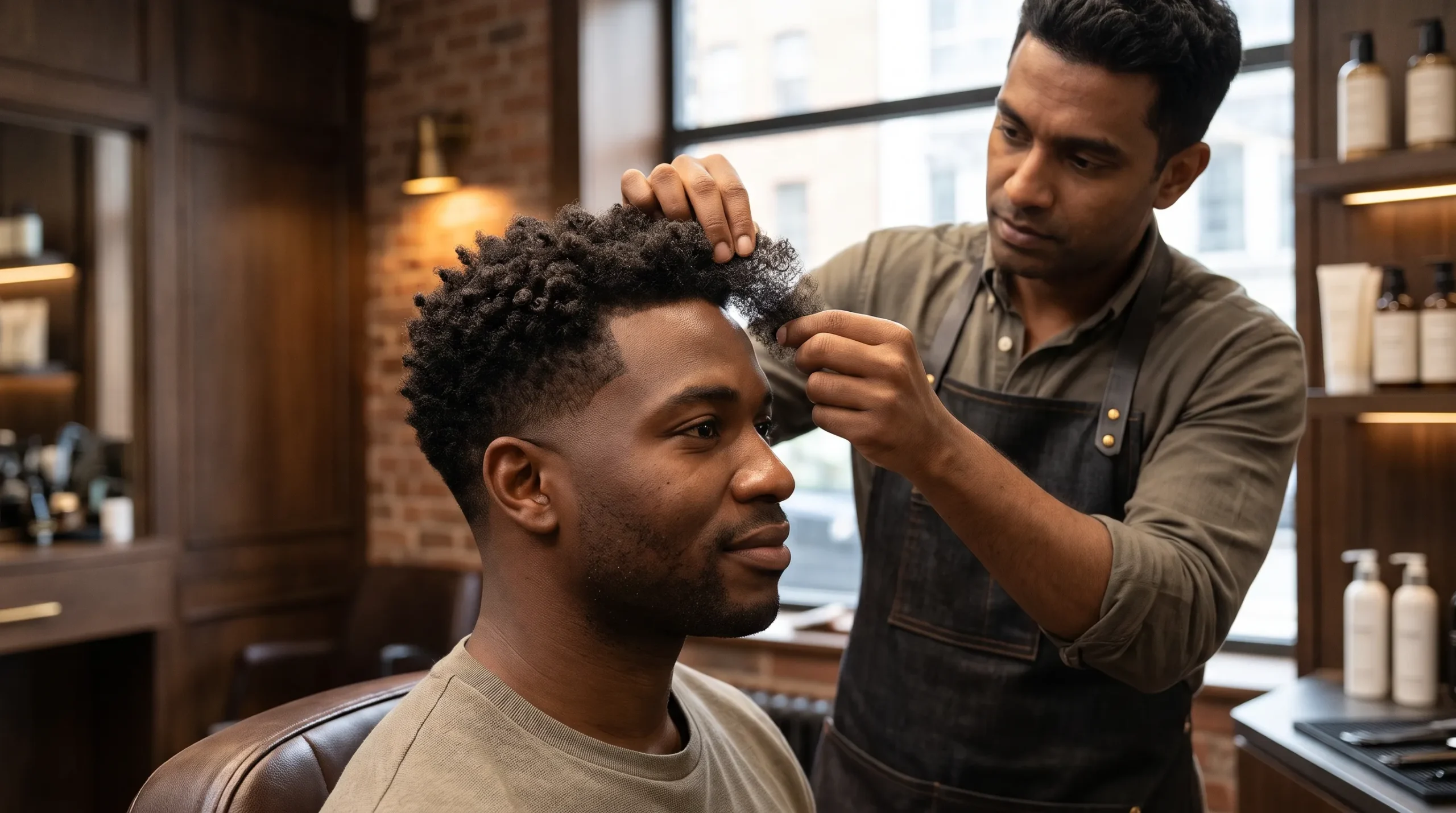
For afro hair the system is made to match your curl pattern, your thickness and your colour, and it’s built around your scalp tone. Your own hair is then cut in by hand so the two grow into one head of hair. If you keep a sharp lineup or a fade, that gets shaped at the same visit.
What it isn’t is a ready made curly piece off a shelf. A system with loose curls sitting next to tight coils looks wrong straight away, and the reverse is true as well. So we start with your hair, not a catalogue. The same thinking runs through hair replacement systems for curly hair, and our page on afro textured hair systems shows what we offer.
Why the curl pattern matters so much
Straight hair falls and curls spring up. Coils shrink as they dry and they spring back when you touch them. A system has to do the same things. If it hangs where your hair stands, or springs back where your hair stays put, people notice even when they can’t say why.
So the curl pattern is the first thing we look at. We compare it against your own hair, in the light, and we pick the texture that moves, sits and dries like yours does. Thickness comes next, since a system that’s denser than your own hair looks like a hat. Colour comes last, and it’s usually the quickest to settle.
If you’ve had a bad experience before, it was probably this. A stock system built around a looser curl is an easy way to end up disappointed, and custom versus stock systems explains why made to measure tends to work better. Why custom fitting matters goes into it more.
Is it hair loss, or is it breakage?
This is the question to answer before you buy anything, and with afro hair it isn’t always obvious. Tight coils are good at hiding thinning. A man can lose a lot of hair at the temples or the crown and not notice for a long time, because the curls stack up and cover it.
The signs tend to show at the edges first. Your hairline might be creeping back at the temples, or the edge might look sparse and uneven. Short, broken hairs along the front are another sign. So is a lineup that doesn’t sit the way it used to, or a fade that no longer hides a thin patch. Crown thinning often shows up when you cut your hair short.
There are a few different causes. Male pattern hair loss is the common one, linked to genetics and to a hormone called DHT, and it usually goes for the temples and the crown. Traction alopecia comes from years of tension, from tight braids, cornrows, twists, locs or weaves, and it often starts at the edges. Chemical straighteners and heat can weaken hair until it breaks. Some scalp conditions, illnesses and medicines cause hair loss too.
If you have patches, scarring, bumps or a sore scalp, see your GP or a dermatologist before you do anything else. A hair system covers the loss, but it doesn’t treat the cause. The posts on traction alopecia and male pattern baldness versus alopecia areata can help you work out which one you’re dealing with.
If tight styles are the cause and you catch it early, hair can start to come back about three months after the tension stops. If it has gone on for years, the follicles can be damaged for good, and the scalp can look smooth and shiny. That’s the point where a system makes the most sense.
The hairline, the lineup and the fade
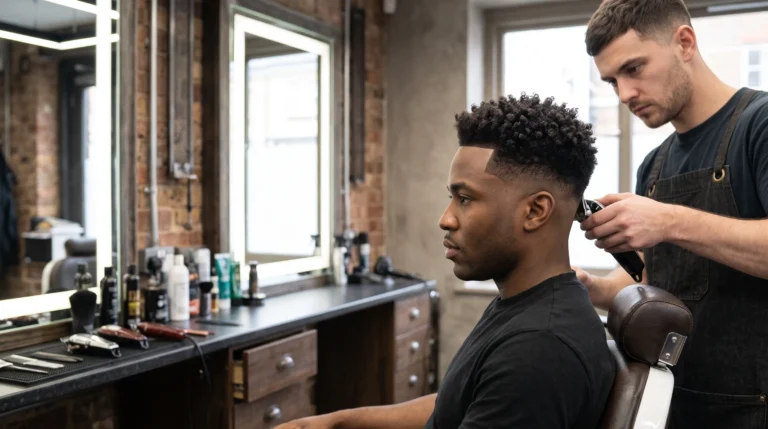
A lot of afro hair styling is about edges. A sharp lineup, a taper, a fade that blends into the top. If a system can’t take a lineup, it’s no use to you.
The front edge of a system can be shaped sharp or soft to suit the way you wear your hair, and we do it with you in the chair. Some men want a crisp line they can keep every few weeks. Others want a softer, more natural edge that looks like a hairline that’s never been touched. Either is fine, and it’s your call.
Fades and lineups can usually be done at the same visit as the fitting. The sides and back are cut in with your own hair so the two blend, and the same goes for a short crop or a longer set of curls on top. If you’re not sure what suits you, bring a photo of a cut you like and we’ll tell you whether it works with a system or whether a good haircut would do the job. Sometimes it would, and we’ll say so.
Base, scalp tone and skin
The base is the thin layer that holds the hair, and it sits on your scalp. The three main kinds are lace, skin and monofilament, and each has a different feel and a different level of see-through. Our types of hair replacement systems post sets them side by side. The base you pick affects the final price.
On darker scalps the base colour matters. A base that’s too light shows as a pale patch, especially at the front, so it’s chosen to suit your skin and not just your hair. It’s one of those details that separates a system that looks like hair from one that looks like a system.
Skin deserves a mention too. Some men find that adhesives irritate the scalp, and anything that pulls at the hairline can make traction hair loss worse. If your scalp is sensitive or you’ve had eczema or psoriasis, tell us before we start. The posts on a sensitive scalp, psoriasis and eczema and tape versus glue cover the options. It should never feel tight, and if it does, get it looked at straight away.
Will it damage your own hair?
A system sits over the thinning area and your hair underneath is left alone, but your own hair still needs looking after. If tight styles caused your loss in the first place, the last thing you want is more tension at the edges. The post on whether a hair replacement system damages your existing hair covers it.
The bond should hold without pulling. If it lifts at the front, deal with it quickly, and have a look at a system lifting at the hairline so you know what’s normal. Regular visits are how the bond stays clean and your edges stay safe.
Braids, twists and locs before you book
A lot of men with afro hair wear protective styles, and they’re fine in themselves. The trouble starts when they’re too tight, left in too long, or done again and again over the same edges. Scalp pain after a style goes in is a sign it’s too tight. Heavy extensions, beads and long locs add weight, and years of that pull can thin the hairline.
If you’ve had a run of tight styles and your edges are going, give the hairline a break before the fitting where you can, and tell us what you’ve been wearing. It changes how we place the front edge and how much we ask of that area. We’d rather know at the consultation than find out later.
This is also why we don’t push every man towards a system. If your edges are thin but still there, a looser style and a gap from tight braiding might be all you need for now. We’ll say so, and you can come back if it doesn’t improve.
Wash day, moisture and sleep
Afro hair is drier than most. Its tight curls make it hard for the scalp’s natural oil to travel down the hair, so it dries out and breaks more easily. That doesn’t change when you have a system, and the hair of the system needs care too.
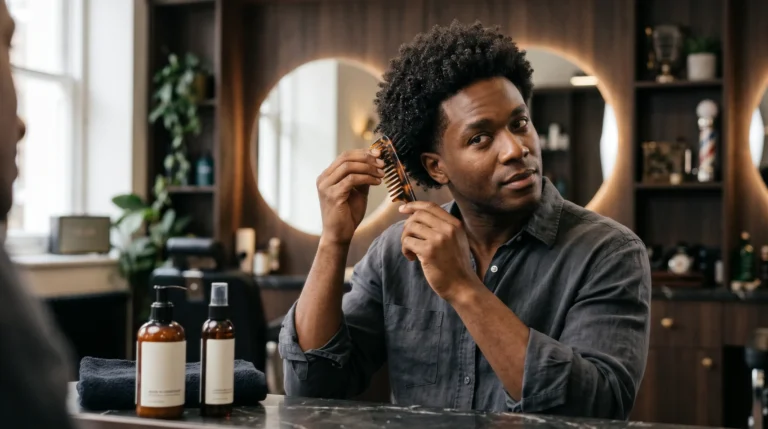
Between visits you’ll need to keep your own hair and scalp clean and moisturised, gently, without loosening the bond. We show you how at the fitting and we recommend products that suit. Our guide to cleaning a hair system is a good place to start, and the full aftercare guide covers the rest.
You can shower with a system, and the post on what to avoid when you shower is a good read before you start. At night, a satin or silk pillowcase or cap cuts down friction, which is kinder to curls with or without a system. The post on sleeping in a hair system covers the rules.
Curls can tangle and mat with time, and colour can fade. If you notice either, the posts on a matted hair system and colour fading explain what’s happening and what to do.
Styles that work
A few cuts suit afro hair systems well. A fresh fade with short curls on top, blended into your own hair at the sides and back. A sharp lineup with a natural top, for men who keep a regular line. Longer curls on top with shorter sides, if you want more length and body. And a system that covers a thin crown or thin temples and blends into the hair around it.
The more you want from the cut, the more the match matters. A short fade forgives a lot. Longer curls on top show everything, so they need a closer match to your own hair. If you’re after a new look, a tight crop or a different shape, say so at the consultation and we’ll be straight about how it will wear.
Thinning at the front or the crown is the usual reason men come in. Our pages on a receding hairline and crown thinning go through each.
Is it a wig?
No, though people ask. A wig sits on top of the head and comes off at night. A hair system is bonded to the scalp and stays put between visits, so you can train, get caught in the rain and sleep in it. Hair systems versus wigs for men goes through the difference, and the one on systems, units and toupees sorts out the names.
It isn’t a transplant either. A transplant moves your own hair and needs a donor area, and a system is non-surgical. If you’re weighing the two, system versus transplant puts them side by side.
Can people tell?
When it’s well matched and kept up, it’s hard to spot. It isn’t invisible up close, and nothing is. The things that give a system away are a curl pattern that doesn’t match, a hairline that’s too straight, a base that shows against your skin, and a bond that’s been left too long.
Most of those can be avoided at the fitting and with regular visits. The posts on whether people can tell and how to make a system look more natural say more.
What does a system cost?
A first system starts from £495. That includes the consultation, the fitting, the cut and the styling. The final price depends on the base, the thickness and the curl pattern, and we confirm it at your free consultation so there’s no surprise afterwards. Our prices page has the details.
After the first system, you come back every four to six weeks. At each visit we clean the system and your scalp, put on a fresh bond and tidy your fade and lineup. That’s what keeps it looking sharp, and it’s why the first price isn’t the whole picture. Our maintenance page explains the visits. For how long a system lasts overall, see how long hair replacement systems last.
What to ask before you book
Ask who does the matching and whether it’s the same person every visit. Ask to see how they’d handle your curl pattern, not just a photo of someone else’s. Ask what the first price includes and what it doesn’t. Ask how often you’d need to come back, and what each visit involves. And ask what happens if it isn’t right.
If a place can’t answer, or says every curl type is the same, move on. A short list of questions at a first meeting tells you a lot, and our guide to getting your first hair system has more of them. If you’ve not gone fully bald, you may be asking whether it’s too early. The post on getting a system before you go completely bald answers that.
What happens at Hair Standard
You start with a free consultation. It’s private, one to one with a specialist, in a men only studio, and there’s no pressure to book. We look at your hair, your curl pattern and your hair loss, talk about the look you want, and tell you whether a system suits you. If it doesn’t, we say so.
If it does, we match the curl pattern, thickness and colour, shape the hairline with you, bond the system and cut your own hair in. Same day fitting is available for suitable systems. Then we show you how to wash, moisturise and style it, and book your next visit. You can read the full process or see what our clients say in our reviews. Our fitting page covers the appointment itself.
Our studio is at Unit C, Dorset House, 845 Harrow Rd, London NW10 5NH, near Willesden Junction, and clients also come from Harlesden, Willesden, Kensal Green, Kilburn and Wembley. We’re open Monday to Friday from 9:00 to 18:30 and Saturday from 9:00 to 16:00. For a wider look at what we do, see non-surgical hair replacement in London and our guide for men in London.
FAQs: Afro Hair Systems for Men
Can men with afro hair get a hair system?
Yes. At Hair Standard we fit afro textured systems for men, matched to your curl pattern, thickness and colour. Your own hair is cut in by hand so the two blend into one head of hair.
How do you match a hair system to afro hair?
The curl pattern is matched first, then thickness and colour. We compare it with your own hair so the system moves, sits and dries the way yours does. The base is chosen to suit your scalp tone as well.
Will a hair system suit a man with tightly coiled hair?
It can, if the curl pattern is matched closely. A loose wave placed next to tight coils shows at the join. So we build the system around your hair and not from a stock piece.
Can a hair system cover traction alopecia?
It can cover thinned edges, but it doesn’t treat the cause. If you have patches, scarring, bumps or a sore scalp, see your GP or a dermatologist first. The traction alopecia post on our site goes through it in more detail.
Is hair loss or breakage causing the thin patches?
Thinning that sits at the temples or crown usually points to male pattern hair loss. Short, broken hairs along the front edge can point to breakage or tension. A consultation or a GP can tell which one you have.
Can you keep a sharp lineup and fade with a hair system?
Yes. The front edge can be shaped sharp or soft, and fades and lineups can usually be done at the same visit as the fitting. Your own hair is blended in at the sides and back.
What does an afro hair system cost?
A first system starts from £495, including the consultation, fitting, cut and styling. The final price depends on the base, the thickness and the curl pattern, and we confirm it at the free consultation.
How often do you need to go back after getting a system?
Usually every four to six weeks. Each visit includes cleaning the system and your scalp, a fresh bond and a tidy fade and lineup.
Is a hair system the same as a wig?
No. A wig sits on top of the head and comes off at night. A hair system is bonded to the scalp and stays on between visits.
Can people tell a man is wearing a hair system?
A well matched, well kept system is hard to spot. It isn’t invisible up close. A wrong curl pattern, a hairline that’s too straight and a bond left too long are what give it away.
How should coily hair be looked after with a system?
Keep your own hair and scalp clean and moisturised, gently, so the bond isn’t loosened. A satin or silk pillowcase or cap cuts down friction at night. We show you how at the fitting.
Is the consultation at Hair Standard free?
Yes. It’s private, one to one, and there’s no pressure to book. We look at your hair and hair loss, talk through the look you want and tell you if a system suits you.
Book a free consultation
Thinking about a system for your afro hair? Come and talk to us. The consultation is free and private. Use our contact page, call 0203 393 1235, or message us on WhatsApp. You can also read about our alopecia hair systems.