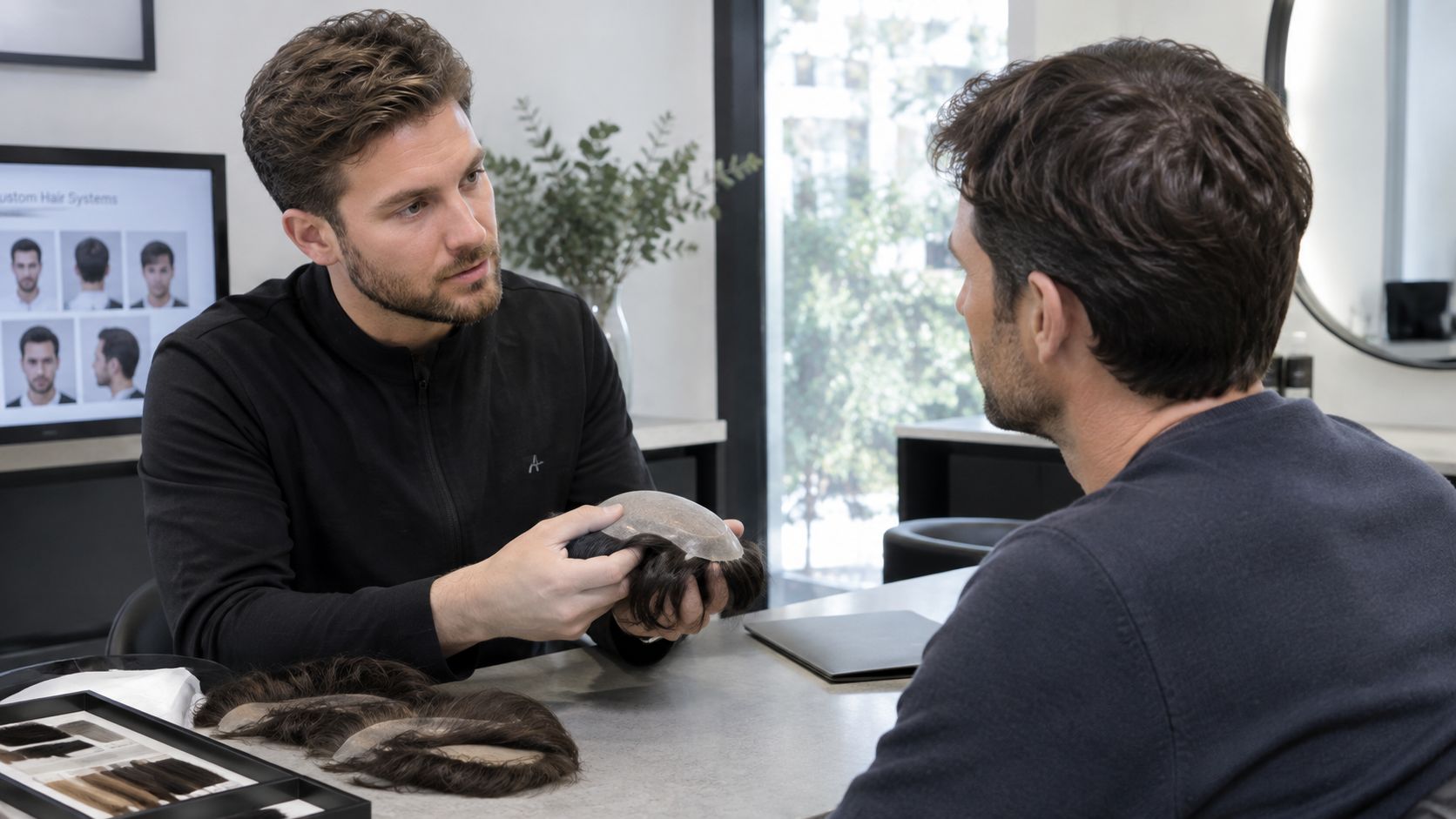

Getting your first hair system is not complicated but it involves more steps than most people realise going in, and knowing what each step looks like before you arrive makes the whole experience significantly less daunting. From the consultation through to leaving with a fitted system and understanding your aftercare routine, the process is designed to be collaborative rather than clinical. Nothing is done to your hair without your input, and nothing is rushed. This guide walks you through every stage of getting your first hair system at The Hair Standard so you arrive knowing exactly what to expect and leave with everything you need to maintain the result.
Before You Book: What to Think About
You do not need to arrive with all the answers. The consultation exists precisely to help you work through the decisions that feel overwhelming when you are researching on your own. But a few things are worth thinking about before your first appointment because they shape the conversation from the start.
What specifically are you trying to address? Hairline recession, crown thinning, diffuse thinning, or complete coverage all require different system specifications. Having a clear sense of where the loss is and what a good result would look like for you even if it is just “I want to look like I did five years ago” gives the technician a useful starting point.
What does your lifestyle look like? Exercise frequency, whether you swim, the physical demands of your work, and how much time you can realistically commit to a maintenance routine all affect which system and which attachment method will suit you best. A system that works perfectly for someone who cycles to an office job every day is not necessarily the right system for someone doing physical outdoor work or training five times a week.
Have you looked at the process page? It gives you a clear picture of how appointments work and what each stage involves before you book. Worth reading alongside this guide.
Stage 1 The Consultation
The consultation is the most important appointment in the whole process and the one most people underestimate. It is not a sales meeting. It is an assessment.
The technician uses this appointment to:
Assess your hair loss pattern. The size, shape, and location of the area to be covered determines the base size and coverage approach. Whether your remaining natural hair is fine or coarse, straight or wavy, affects the texture and density specification for the system.
Colour and texture match. Accurate matching is done in natural daylight rather than under salon lighting the most common cause of a system that looks slightly off is a colour match that was done under artificial light. At The Hair Standard, this step happens in natural light. The match is made to your existing hair at the sides and back, and the technician assesses density as well as colour. A colour match that is accurate but too dense looks just as wrong as one that is the wrong shade.
Discuss your lifestyle and attachment preference. Tape, liquid adhesive, and clip-in attachment each suit different lifestyles. The technician will recommend the right attachment method for how you live not the default option.
Set realistic expectations. A good consultation includes an honest conversation about what the system will look like, how it will behave with your specific hair and scalp, and what the maintenance commitment genuinely involves. If you leave the consultation without a clear sense of what the ongoing routine looks like, ask this is the time to get that clarity.
The consultation is covered in more detail on the process page. For current pricing on consultations and systems, see the hair system prices page.
Stage 2 Choosing Your System
Based on the consultation assessment, the technician will recommend a system specification. For a first system, the decisions that matter most are:
Base type. The three main options are lace, skin (polyurethane), and monofilament. Lace produces the most natural hairline appearance. Skin is more durable and suits shorter haircuts. Monofilament sits between the two in appearance and durability. The base choice is not purely aesthetic; it should reflect your lifestyle and maintenance commitment.
For a full comparison of what each base type involves, see our types of hair replacement systems guide.
Hair type. Human hair systems can be styled, washed, and heat-treated like natural hair. Synthetic systems hold their style well initially but cannot handle heat tools and degrade differently. For most first-time wearers, a human hair system is the recommended starting point the styling flexibility and natural appearance make the learning curve of maintaining a system easier to manage.
For the comparison of human hair versus synthetic in detail, see human hair vs synthetic hair replacement systems.
Tethered or removable. Most first-time wearers choose a fully bonded system tape or liquid adhesive worn continuously between re-bond appointments. This is the most secure, most natural-looking option and the one that requires the least daily management. Clip-in systems are an alternative for people who want to remove the system daily.
Stage 3 Manufacturing
Once the specification is confirmed, the custom unit is made. This typically takes a few days to a few weeks depending on the base type, hair specification, and current production schedule.
First-time wearers sometimes find this wait difficult particularly if the hair loss has been affecting confidence for a while and the consultation has made the result feel very real and close. The wait is genuine and unavoidable the unit is being made specifically for you, not pulled from stock.
Use this time to read through the aftercare routine so you arrive at the fitting appointment already familiar with what the ongoing maintenance involves. The maintenance page covers this in full.
Stage 4 The Fitting Appointment
The fitting is the appointment most people are both most excited and most nervous about. Here is exactly what happens.
Preparation. The scalp in the coverage area is cleaned and prepared removing any product residue and ensuring the surface is clean before the adhesive is applied. This step is more important than it sounds. The quality of the scalp preparation directly affects how long the bond holds and how cleanly the system sits.
Positioning. The system is positioned on the scalp before bonding, placed in the correct location, checked for alignment with the natural hairline (where applicable), and confirmed with you before any adhesive is applied. This is the moment to raise any questions about placement. Once the adhesive is applied, adjustments become more difficult.
Bonding. The adhesive or tape is applied and the system is bonded to the scalp. The specific technique depends on the attachment method chosen at the consultation.
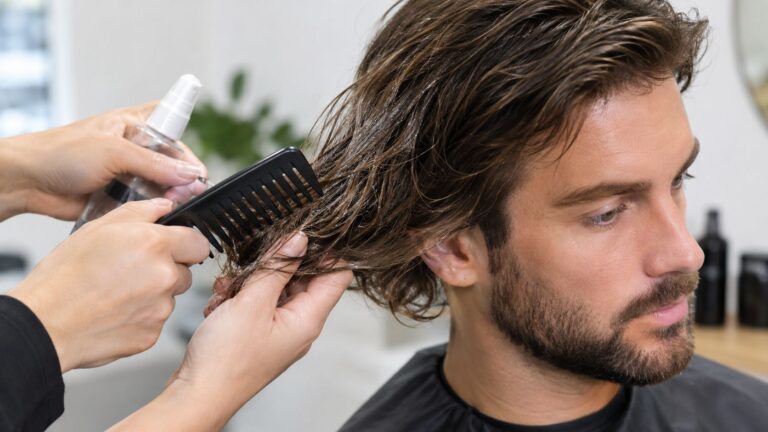
Cutting and blending. The system is not pre-cut to its final shape. It is cut on your head, after fitting, blended with your natural hair, and styled into the look you discussed at the consultation. This is one of the most important steps and one of the clearest differences between a properly fitted system and an off-the-shelf result. The cut is specific to your face, your haircut, and how your natural hair falls, not a generic shape applied to everyone.
Aftercare walkthrough. Before you leave, the technician will walk you through your specific aftercare routine: how to wash, what products to use, when to book the re-bond appointment, and what to watch for between appointments. This is not optional and it is not a quick glossing-over; the aftercare walkthrough is part of what the fitting appointment provides.
What You Leave With
After your first fitting:
A full head of hair the same day. This is the most immediately striking thing about getting a first system. You go in with visible hair loss and you leave with the coverage you came in looking for same day, no recovery period.
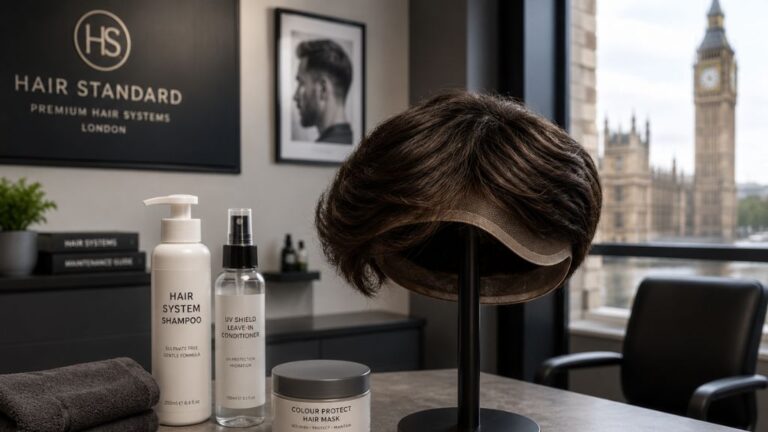
A clear aftercare routine. Wash schedule, products to use, products to avoid, how to dry it, what to do before sleeping. Everything is covered at the fitting.
A re-bond appointment date. The bond needs professional re-doing every one to four weeks depending on your attachment method. Your technician will advise on the right interval for your system and lifestyle, and you should leave with the next appointment already in the diary rather than waiting until the bond is visibly failing.
The technician’s direct contact. Most people have questions in the first week, something that feels different from what they expected, a question about a product, uncertainty about whether something is normal. You should leave the fitting with a way to reach the team directly rather than having to book another appointment for a minor query.
The First Few Weeks: What Is Normal
The first few weeks with a new system involve an adjustment both practical and psychological that most wearers mention as something they wish they had been warned about.
It will feel different from natural hair. Particularly in the first few days. The weight is slightly different, the feel of the base against the scalp is new, and the hair behaves slightly differently from what you are used to. This is normal and resolves within a week or two as it becomes familiar.
You will be more aware of it than anyone else is. The self-consciousness of the first few days checking mirrors, being aware of the system in social situations, wondering if people can tell is almost universal among first-time wearers and almost universally resolves faster than people expect. People who see you regularly will notice your hair looks better. Very few will know why.
The maintenance routine will feel more involved than you expected. The first wash, the first morning routine, the first time something feels slightly different these moments are when most people feel uncertain. Read the maintenance guide before these moments arise rather than after, and contact the team if something seems wrong rather than assuming it is normal.
The bond will not feel the same throughout its lifespan. A bond that is fresh feels very secure. As the bond ages toward re-bond time, the edges may feel slightly different, not failed, just different. This is normal and is what a re-bond appointment is for.
Ongoing: What the Routine Looks Like
After the adjustment period, most wearers describe the ongoing routine as significantly less demanding than they anticipated going in. The key habits:
Wash every 7–14 days with a sulphate-free shampoo. Not every day the system does not need washing as frequently as natural hair and over-washing with the wrong products is one of the most common causes of premature unit ageing.
Re-bond every 1–4 weeks depending on attachment method and lifestyle. Do not stretch this. A bond that is overdue lifts at the edges, looks less natural, and risks the base material if left too long.
Professional service every few months to deep clean the base, inspect for wear, and reset the system properly rather than just re-bonding over accumulated residue.
The full routine washing, drying, products, heat styling, scalp care, sleeping is covered in detail at the maintenance page and the hair system maintenance London page.
Questions Worth Asking Before You Leave the Fitting
Most people think of questions after the appointment. Write these down before you go:
- What products should I use and which should I avoid?
- How often should I wash and what is the correct process?
- When is my re-bond due and what are the signs I should book sooner?
- What does a bond that is lifting look like and what do I do when I see it?
- Is this styling direction and parting position the correct one for the system?
- What happens if I want to adjust the colour or density at the next appointment?
Frequently Asked Questions
What should I expect at my first hair system fitting?
The fitting involves scalp preparation, positioning and bonding the system, cutting and blending it with your natural hair on your head, and an aftercare walkthrough before you leave. You arrive with hair loss and leave with full coverage the same day with no recovery period. The technician will walk through your specific maintenance routine and re-bond schedule at the end of the appointment.
How long does a first hair system fitting take?
Most first fittings take two to three hours longer than subsequent appointments because they include the more detailed positioning and blending work that first systems require. Allow the full afternoon and avoid planning anything immediately afterward so there is enough time for the fitting, styling and aftercare guidance.
Will people be able to tell I am wearing a hair system?
Not if it is correctly colour-matched and fitted. The goal of a custom system from The Hair Standard is to be indistinguishable from natural hair, including at the hairline. The most common reason a system looks obvious is poor colour or density matching, not the technology itself. In-person fitting and natural daylight colour-matching help produce the most natural result.
How long will the system last?
The unit itself typically lasts three to six months before replacement. The bond needs professional re-doing every one to four weeks depending on the attachment method and your lifestyle. For a more detailed breakdown, see our guide to how long hair replacement systems last.
Is getting a hair system worth it?
For someone who wants immediate, reversible results without surgery and is prepared for the ongoing maintenance commitment, a hair system can be a suitable option. The answer depends on your expectations, lifestyle and willingness to maintain the system. Our dedicated guide covers whether hair replacement systems are worth it for male pattern baldness, along with our guide to whether hair replacement systems are good.
What is the difference between a hair system and a hair transplant?
A hair system gives immediate, reversible results with ongoing maintenance, while a hair transplant is a surgical procedure intended to provide a permanent result using transplanted hair. A transplant can take around 12–18 months before the full result is visible. For a detailed comparison, see our hair replacement system vs hair transplant guide.
Book Your First Consultation
The best way to understand whether a hair system is right for you is to see one fitted in person matched to your own hair and scalp, not in a photograph or on someone else.
Book a consultation at The Hair Standard free, no obligation, and the clearest picture of what a first system would look like for you.