
A hair system losing its colour before the unit has reached the end of its useful life is almost always caused by something specific, not an inevitable feature of wearing a system. The most common causes are UV exposure, sulphate shampoos, heat styling without protection, chlorine or salt water exposure, and hard water mineral build-up. Each one accelerates colour degradation through a different mechanism, and identifying which applies to your situation determines whether the fix is a product change, a habit adjustment, or a mid-cycle colour refresh. This guide covers every cause of premature colour loss in hair systems, what each one does to the hair, and what actually helps.
Human Hair vs Synthetic Hair: Why Colour Fades Differently
Before looking at specific causes, understanding the fundamental difference between how human hair and synthetic hair hold colour matters because the causes and fixes differ between the two.
Human hair systems use real hair that has been processed and coloured in the same way salon hair colouring works: the cuticle is opened, colour molecules are deposited, and the cuticle is closed again. Unlike natural hair growing from a scalp, the hair in a system has no melanin being actively produced at the root to replenish colour. Every wash, every UV exposure, every heat styling session depletes the colour that was deposited during manufacturing without any replacement occurring. Human hair systems are therefore inherently prone to gradual colour fading over their lifespan the question is how quickly.
Synthetic hair systems hold their colour differently. The colour is built into the fibre structure during manufacturing rather than deposited on the hair shaft. Synthetic hair does not fade in the same gradual way as human hair, but it does degrade under UV exposure and heat producing a different kind of colour change. Rather than fading evenly, synthetic hair often develops brassiness, goes dull, or changes tone unevenly as the surface coating of the fibres breaks down. Heat damage in particular produces an irreversible colour shift in synthetic hair because the fibre structure itself is altered.
Cause 1: UV Exposure
UV light is the single most consistent cause of premature colour fading in human hair systems and the most underestimated, because the damage accumulates gradually rather than appearing after a single exposure.
The UV component of sunlight breaks down the colour molecules deposited in the hair shaft during the dyeing process. This is the same mechanism that causes natural hair to lighten in summer, but it is more pronounced in hair system hair for two reasons: the hair has no scalp to produce new pigment from the root, and the processing the hair underwent during colour treatment has already opened the cuticle, making it more permeable to UV damage than untreated hair would be.
The specific colour changes UV produces depend on the base colour. Darker systems black and dark brown often develop reddish or brassy undertones as UV breaks down the darker pigment molecules faster than the underlying warm tones. Lighter systems fade toward an uneven, washed-out appearance. The change is usually most noticeable at the top of the system the area receiving the most direct sunlight.
What helps:
UV-protective leave-in products designed for hair systems or colour-treated hair create a barrier between the hair shaft and UV radiation. These are not optional extras for wearers who spend significant time outdoors; they are the primary protective measure available. Applied after washing and before sun exposure, they meaningfully slow UV-driven colour loss.
Wearing a hat or covering during extended outdoor exposure protects both the colour and the base material. This is not always practical, but for prolonged exposure beach days, outdoor events, sustained outdoor work it is the most effective protection available.
Cause 2: Sulphate Shampoos
Sulphate-based shampoos are one of the fastest routes to premature colour loss in human hair systems and they are the shampoo most wearers start with before they are told otherwise, because they are what most people use on natural hair.
Sulfate sodium lauryl sulphate and sodium laureth sulphate are surfactants designed to strip oils and product build-up from the hair shaft. They do this by opening the cuticle and washing out whatever is present, including the colour molecules deposited during processing. This is manageable for natural hair that is continuously producing new pigment at the root. For hair system hair, where the deposited colour is the only colour present and nothing is replacing it, sulphate washing strips a small amount of colour with every wash.
The effect is cumulative. A single wash with a sulphate shampoo does not produce visible fading. Four to eight weeks of regular sulphate washing produces noticeably faster colour loss than the same period with a sulphate-free formula particularly in darker systems where the contrast between faded and unfaded areas is more visible.
What helps:
Switch immediately to a sulphate-free shampoo designed for hair systems or colour-treated hair. This is the single most impactful product change available for slowing colour loss. The switch should be permanent, returning to sulphate shampoo occasionally for a “deeper clean” undoes the benefit of the sulphate-free routine between washes.
Cause 3: Heat Styling Without Protection
Heat styling blow drying, straightening, curling opens the hair cuticle to achieve the desired style. Each time the cuticle is opened by heat and then cooled and closed, a small amount of colour is released from the shaft. Over repeated heat styling sessions without a protective barrier, this produces gradual colour loss alongside the cuticle damage that makes the hair look dull and feel rougher.
The specific risk from heat styling varies by temperature. Low-heat settings on a hairdryer produce minimal colour loss. High heat from straighteners or curling irons used without protectant is significantly more damaging both to colour retention and to the hair’s structural integrity.
What helps:
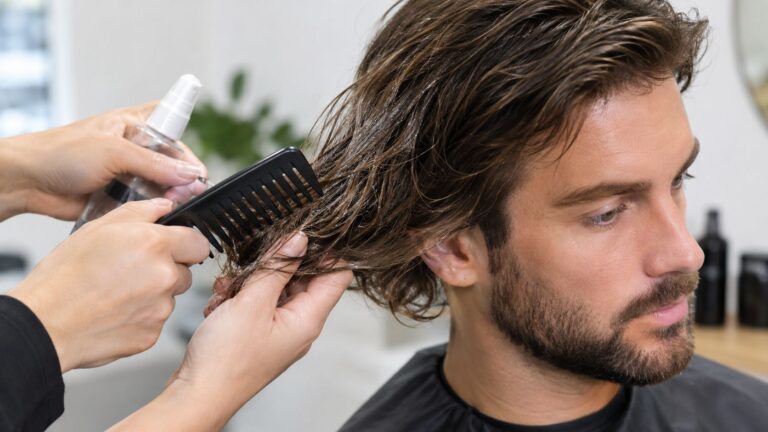
Apply a heat protectant spray to the hair before any heat styling. Heat protectants work by coating the cuticle with a layer that reduces the direct heat exposure of the hair shaft; they do not eliminate heat damage entirely but reduce it meaningfully. Use the lowest heat setting that achieves the desired result. For blow drying, keep the dryer moving rather than holding it stationary over any one section. See our maintenance and aftercare guide for the full heat styling guidelines by base type.
Cause 4: Chlorine and Salt Water
Swimming in chlorinated pools or in the sea accelerates colour loss in both human hair and synthetic systems, through different mechanisms.
Chlorine is an oxidising agent. It breaks down the colour molecules in human hair through oxidation, the same process that makes bleach work on natural hair. The effect is more pronounced in lighter-coloured systems where the underlying hair is closer to bleached, but all human hair systems experience accelerated colour loss with regular chlorine exposure. Chlorine also damages the hair cuticle, producing a rougher texture alongside the colour change.
Salt water is less aggressive than chlorine but still affects colour through prolonged immersion and the drying effect of salt on the hair shaft. Salt water combined with UV exposure during sea swimming produces a combined effect that is faster than either alone.
What helps:
Rinse the hair in clean fresh water before entering a chlorinated pool or the sea saturating the hair with fresh water before it is exposed to chlorine or salt reduces how much of each substance the hair absorbs. Rinse thoroughly again immediately after swimming. Apply a leave-in conditioner or UV/protective product after rinsing to restore some of the moisture lost during exposure. For wearers who swim regularly, the base type choice also matters some bases handle chlorine exposure better than others. See our types of hair replacement systems guide for the comparison.
Cause 5: Hard Water Mineral Build-Up
Hard water with a high mineral content, particularly calcium and magnesium produces a specific type of colour change that is often mistaken for fading. Mineral deposits from repeated hard water washing accumulate on the hair shaft and create a dull, grey or brassy film that sits on top of the colour rather than replacing it.
This is most common in areas with hard water much of southern England, including London, has some of the hardest water in the UK and produces a gradual dulling of the colour that is not the same as UV fading or sulphate stripping. The colour underneath is often intact; what is obscuring it is a mineral coating on the surface of the hair.
What helps:
A chelating or clarifying treatment specifically designed to remove mineral deposits different from a standard clarifying shampoo, which is too harsh for hair system hair dissolves the mineral coating without stripping the colour underneath. This is a periodic treatment rather than a regular washing product. Applied every six to eight weeks in hard water areas, it restores the colour’s clarity and the hair’s ability to catch light correctly.
Installing a shower filter that reduces hard water mineral content is a longer-term solution that reduces the rate of accumulation rather than addressing existing build-up worth considering for wearers who experience this problem consistently.
Cause 6: Incorrect Conditioner Use
Conditioner applied at or near the roots or left in for too long softens the hair cuticle in a way that allows colour molecules to escape from the shaft alongside the conditioner residue when it is rinsed out. The effect is more pronounced with heavier conditioners and with leave-in products that are not formulated for colour-treated hair.
This is a less significant cause than sulphate shampoos or UV exposure, but it compounds the other causes: a wearer using sulphate shampoo, skipping heat protectant, and applying conditioner at the roots is losing colour from multiple directions simultaneously.
What helps:
Apply conditioner from mid-shaft to the ends only never at the roots or base. Use a lightweight, colour-safe conditioner rather than a heavy moisturising formula. Rinse after two to three minutes rather than leaving it in longer than necessary. See our showering guide for the correct conditioner application process within the full washing routine.
Cause 7: Friction and Physical Wear
Physical friction against the hair shaft from pillowcases, scarves, hats, or high-friction activities roughens the cuticle over time. A roughened cuticle is more permeable and releases colour molecules faster than a smooth, intact cuticle. This is a slower cause of colour loss than UV or sulphates, but it accumulates across the lifespan of the unit.
The most consistent source of overnight friction is a cotton pillowcase. Cotton’s fibrous texture creates repeated mechanical stress on the hair shaft during sleep, roughening the cuticle, producing frizz, and accelerating colour release. This is the same mechanism that reduces bond lifespan through friction at the hairline edges, addressed in our sleeping with a hair system guide.
What helps:
Switch to a satin or silk pillowcase. This is one of the most impactful and most affordable changes available for both colour preservation and overall system longevity. The smooth surface of satin allows the hair to move without friction rather than catching and roughening the cuticle during sleep.
Can a Fading Hair System Be Colour-Refreshed?
Yes for human hair systems, within limits. A unit that has faded significantly but still has structural integrity intact base, hair strands attached correctly, base edges in good condition can often be toned or colour-refreshed to extend its useful life before replacement is needed.
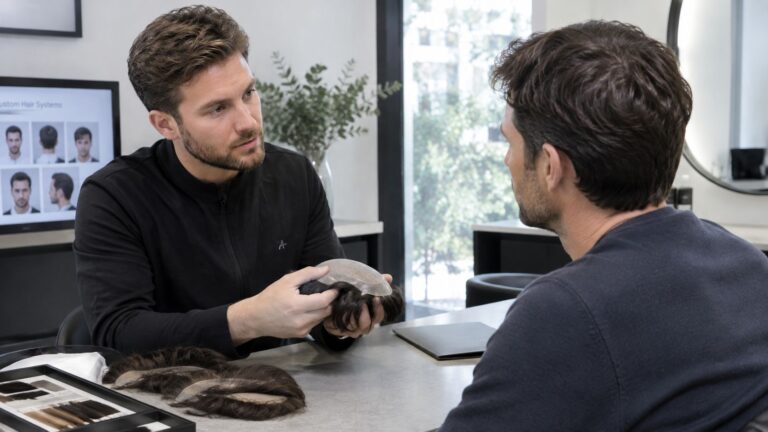
This is not a home process. Chemical treatment to refresh the colour of a hair system carries the same risks as chemical treatment of natural hair over-processing damages the hair structure and accelerates the end of the unit’s life. Colour refreshing should be carried out by your technician, who can assess whether the unit’s current condition makes colour treatment viable or whether replacement is the more practical option.
The factors that determine whether colour refreshing is viable:
- How much remaining hair integrity the unit has brittle, over-processed hair does not hold colour well
- Whether the colour shift is even or uneven even fading is easier to address than patchy discolouration
- Whether the colour change is from fading or from a different cause mineral build-up can be addressed with a chelating treatment rather than recolouring, which is less damaging to the unit
Raise the colour question at your next service appointment. Your technician can assess the unit in person and advise whether toning, colour refreshing, or replacement is the appropriate next step.
Frequently Asked Questions
Why is my hair system losing its colour?
The most common causes are UV exposure breaking down colour molecules in the hair shaft, sulphate shampoos stripping colour during washing, heat styling without a protectant, chlorine or salt water exposure during swimming, and hard water mineral build-up creating a dull film over the existing colour. Each produces a different type of colour change, so identifying the cause helps determine the correct fix.
How do I stop my hair system from fading?
Switch to a sulphate-free shampoo, apply a UV-protective leave-in product before sun exposure, use a heat protectant before any heat styling, rinse your hair before and after swimming, and sleep on a satin pillowcase. Addressing these factors together provides the best protection for colour longevity. For most wearers, switching from sulphate to sulphate-free shampoo is one of the highest-impact changes.
Can you re-colour a hair system that has faded?
Yes, human hair systems with sufficient remaining integrity can often be toned or colour-refreshed to restore their appearance and extend their useful life. This should be carried out by your technician rather than at home, as over-processing a hair system can damage the hair and shorten its lifespan. Discuss colour refreshing with your technician at your next service appointment.
Why is my hair system going brassy or orange?
Brassiness in hair systems is often caused by UV exposure, which breaks down darker, cooler pigment molecules faster than the underlying warm tones. It is particularly noticeable in dark brown or black systems. A purple or blue-toned toning product may help neutralise brassy tones between washes, but you should discuss whether toning is appropriate for your specific system and colour with your technician.
Does chlorine damage hair system colour?
Yes. Chlorine is an oxidising agent that can break down colour molecules in human hair through oxidation. Regular swimming in chlorinated pools can therefore accelerate colour loss. Rinsing the hair thoroughly with fresh water before and after swimming can reduce, although not completely eliminate, chlorine-related colour damage.
Is colour loss worse in human hair or synthetic hair systems?
They lose colour through different mechanisms. Human hair systems tend to fade gradually as colour molecules are depleted over time. Synthetic hair does not fade in exactly the same way but can develop an irreversible colour shift, becoming dull, brassy, or discoloured as UV exposure and heat affect the fibre coating. Human hair colour loss is generally more manageable because the colour can be refreshed, while synthetic colour changes are usually not reversible.
How often will a hair system need colour refreshing?
This depends on how quickly the unit’s colour fades, which is influenced by UV exposure, swimming, heat styling frequency, and the care routine. With correct products and habits, most human hair systems do not need colour refreshing before the end of their natural lifespan of around three to six months. Units exposed regularly to UV, chlorine, or sulphate washing may develop visible colour loss earlier.
Book a Colour Assessment at The Hair Standard
If your system’s colour has shifted and you are unsure whether toning, a product change, or unit replacement is the right next step, a check-in appointment gives you an accurate answer rather than a guess.
Book an appointment at The Hair Standard in London. We assess the unit in person colour condition, base integrity, hair quality and advise on whether colour refreshing or replacement is the more practical option for your specific system.
For the complete care routine that protects colour alongside bond and base longevity, see our maintenance and aftercare guide. For guidance on what to do if the system is also looking fake or unnatural alongside the colour change, see our guide on why a hair system looks fake.