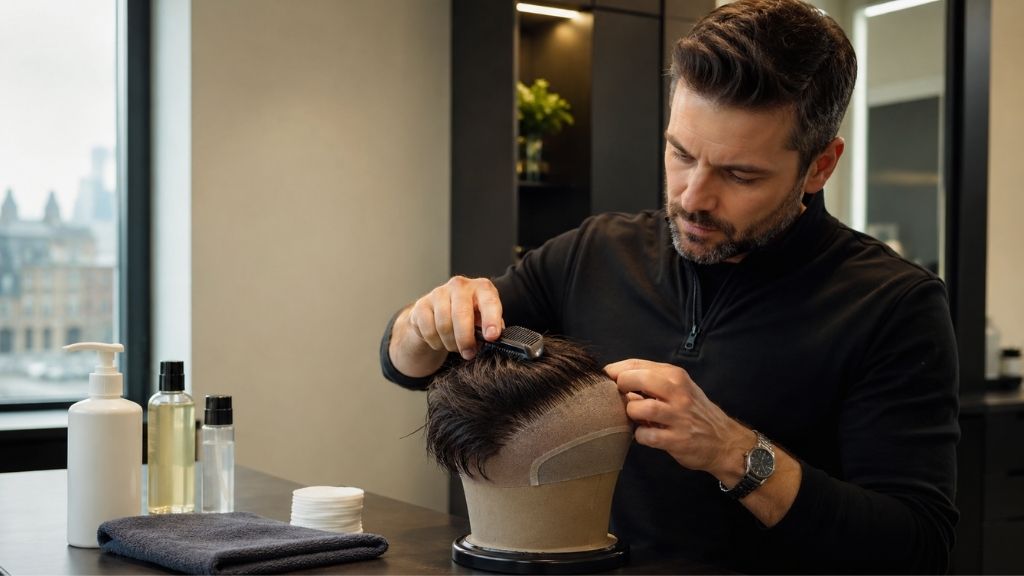

Cleaning a hair system correctly is not the same as washing natural hair: the base material, the adhesive residue, and the attached hair each require a different approach, and getting any of them wrong produces damage that shortens the unit’s life faster than almost any other maintenance mistake. The goal of cleaning a hair system is to remove product build-up, adhesive residue, and scalp debris from both the hair and the base without weakening the lace fibres, degrading the skin material, or stripping the hair of its coating. Done correctly, a proper clean restores the system’s appearance, extends the bond’s holding time, and meaningfully extends the unit’s overall lifespan. This guide covers the full cleaning process including what to use, what to avoid, and how the process differs between base types and between routine washing and a deep clean.
The Difference Between Routine Washing and a Deep Clean
Most wearers do both but they serve different purposes and involve different processes.
Routine washing happens every 7 to 14 days while the system is being worn between re-bond appointments. It removes surface product, environmental debris, and normal scalp oil that has migrated onto the base during wear. The system may or may not remain bonded during a routine wash depending on the base type and the technician’s recommendation. Our showering guide covers this routine in detail: the steps, water temperature, and product rules specific to washing while wearing.
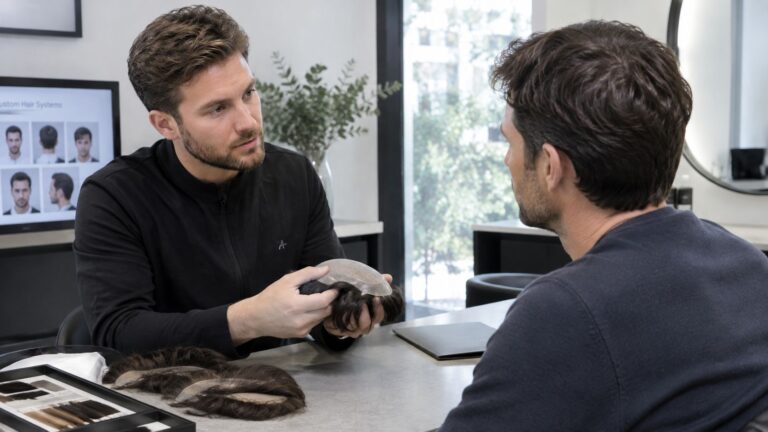
A deep clean is a more thorough process typically carried out at the time of a professional re-bond appointment when the system has been removed from the scalp and can be cleaned fully from both sides of the base. It removes adhesive residue that has accumulated on the base, product build-up that routine washing did not fully address, and mineral deposits from hard water that gradually dull the hair and affect how the base bonds next time.
The deep clean is what this guide focuses on the process that restores a system to the closest thing to its original condition and prepares it for a clean, lasting re-bond. It is also the process most often done incorrectly, because people apply the same approach they use for routine washing and discover that it does not address what has accumulated on the underside of the base.
What Needs to Be Cleaned and Why Each Element Matters
The hair strands
Hair attached to a system whether human or synthetic accumulates the same things natural hair does: styling product, environmental debris, hard water mineral deposits, and the natural oils from contact with hands and face. Unlike natural hair, it has no scalp to replenish its own oils, which means it dries out faster and is more susceptible to damage from incorrect products.
Human hair needs cleaning with a sulphate-free shampoo and light conditioning from mid-shaft to ends. The goal is removing build-up without stripping the hair of its remaining coating. Repeated exposure to sulphate shampoos is one of the fastest ways to age a human hair system prematurely. Synthetic hair needs different products entirely: standard shampoos and conditioners change the texture of synthetic fibres in ways that are not reversible.
The top side of the base
The top surface of the base the side the hair is attached to accumulated product residue, particularly from anything applied near the roots or hairline. Dry shampoo used at the base, oil-based pomades near the hairline, and conditioner applied too close to the roots all leave residue on the base surface that routine washing does not fully remove. Left to accumulate over multiple bond cycles, this residue dulls the base material, affects how it lies against the scalp, and on lace systems, mats the fibres in a way that becomes visible at the hairline.
The underside of the base
This is the most neglected cleaning area and the most consequential. The underside of the base the side that contacts the scalp, accumulates adhesive residue from each bond cycle, scalp oil and debris that work under the base during wear, and in some cases mineral deposits from repeated water exposure.
Adhesive residue left on the base creates an uneven bonding surface for the next application. The new adhesive bonds partially to the residue and partially to the clean base material producing inconsistent hold and a base that lifts in areas where residue prevented proper adhesion. The more residue cycles that are allowed to accumulate, the harder the base is to bond cleanly and the shorter each subsequent bond interval becomes.
Removing this residue properly is what distinguishes a deep clean from a surface wash and it is why professional service appointments include base cleaning as a distinct step rather than just adhesive removal.
What You Need Before Starting
For a proper deep clean, you need:
- Sulphate-free shampoo for human hair systems. Specifically formulated for hair systems or colour-treated hair. Check ingredients for sodium lauryl sulphate or sodium laureth sulphate if present, the product is not appropriate.
- Synthetic hair shampoo if the system uses synthetic hair. Standard shampoos change synthetic fibre texture irreversibly.
- Citrus-based bond remover or adhesive solvent for removing adhesive residue from the underside of the base. Not rubbing alcohol damages both lace and skin base materials. A purpose-made citrus-based remover designed for hair system adhesives dissolves residue without degrading the base.
- Lightweight, silicone-free conditioner for human hair systems only, applied to the hair length rather than the base.
- A wide-tooth comb or soft-bristle brush
- A soft microfibre towel not a standard bath towel, which creates friction damage
- A wig stand or head form for drying the system off-head without distorting the base shape
- Cotton pads or a soft cloth for applying remover to the base underside
Step-by-Step: Deep Cleaning a Hair System
Step 1 Remove adhesive residue from the base underside first
Before any water touches the system, address the adhesive residue on the underside of the base. This is always the first step: cleaning the hair before the residue is removed means rinsing water through a base that still has adhesive on it, which makes the residue harder to shift and can cause it to spread.
Apply citrus-based bond remover to the underside of the base using a cotton pad. Work gently from the edge of the bond area toward the centre never rubbing aggressively, which damages lace fibres and distorts skin bases. Allow the remover to penetrate for 30 to 60 seconds before gently wiping with a fresh cotton pad. Repeat until the underside is clean and no residue remains.
For skin and polyurethane bases where adhesive has been applied across the full surface, the cleaning process takes longer than for lace systems where bonding is perimeter-only. Taking the time needed to force removal without adequate penetration risks tearing skin bases and stripping lace fibres.
What not to use: Rubbing alcohol, acetone, or standard household cleaning products. All of these damage base materials. Citrus-based remover is the correct product; it dissolves adhesive chemistry without attacking the base material itself.
Step 2 Detangle the hair before getting it wet
Gently detangle from the ends upward with a wide-tooth comb or soft-bristle brush before wetting the system. Attempting to detangle wet hair, particularly human hair that has been worn for a bond cycle, creates significantly more friction and base stress than detangling dry hair. Work through any knots gradually rather than forcing a comb through them.
For curly or wavy systems, finger-detangling is preferable to a comb at this stage. For synthetic hair, detangle with particular care synthetic fibres cannot repair the damage caused by aggressive combing.
Step 3 Rinse with warm water
Use warm, not hot water throughout the entire cleaning process. Hot water softens adhesive that may remain in the base and causes lace fibres to become brittle over time. This applies equally to a deep clean as to routine washing. The temperature that feels comfortable on your hand is appropriate; anything that feels genuinely hot is not.
Rinse the system thoroughly from the hair side, allowing water to flow through from the attachment points toward the ends. For the base itself, allow warm water to flow over it without directing high-pressure water directly at the hairline edge of the base.
Step 4 Apply sulphate-free shampoo
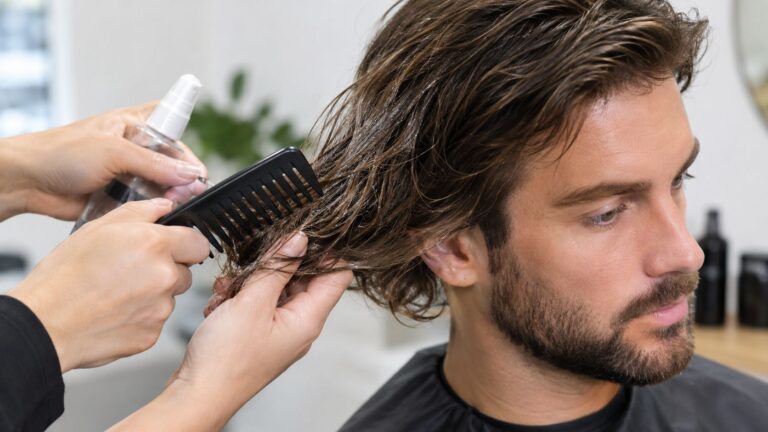
Apply a small amount of sulphate-free shampoo to the hair from mid-shaft toward the ends, then work gently toward the base using your fingertips. On the base surface itself the top side work the shampoo in with light circular fingertip movements rather than scrubbing. The goal is removing product residue from the top of the base without stressing the fibres or attachment points.
Do not apply shampoo aggressively to the underside of the base at this stage the adhesive remover in Step 1 has addressed the residue there, and scrubbing the underside with shampoo serves no additional purpose.
Step 5 Rinse completely
Rinse until the water runs completely clear. Product residue remaining in the base after washing is one of the primary causes of scalp irritation in subsequent wear and of bond failure; the residue prevents clean adhesive contact with the base surface. Take longer on this step than feels necessary.
Turn the system over and rinse the underside as well, ensuring no shampoo remains in the lace fibres or across the skin base surface.
Step 6 Condition the hair (human hair systems only)
Apply a small amount of lightweight, silicone-free conditioner from mid-shaft to the ends of the hair. Keep it entirely away from the base including the top surface of the base where the hair is attached. Conditioner near the base or attachment points softens the bonding between hair strands and base material over time and affects how the system lies.
Leave for two to three minutes. Rinse thoroughly. Any conditioner remaining in the base or hair will become product residue in the next bond cycle.
Synthetic hair: Skip this step. Applying a synthetic-hair specific product if conditioning treatment is needed, standard conditioner coats synthetic fibres in a way that attracts debris and dulls the appearance permanently.
Step 7 Pat dry, never rub
Press the hair gently between sections of a soft microfibre towel. Never rub the friction damages human hair cuticles and stresses lace fibres at attachment points. Squeeze moisture from the length by pressing sections between the towel rather than dragging it through.
For the base itself, press gently with the towel to absorb surface water without distorting the base shape.
Step 8 Dry on a wig stand or head form
Place the system on a wig stand or head form one that approximates the shape of a head and allow it to air dry in a position that maintains the base shape. Drying the system flat on a towel allows the base to dry in a distorted position, which affects how it sits against the scalp at the next fitting.
Allow to dry completely before storing or re-bonding. A system that feels dry on the surface may still have moisture at the base or within the lace fibres give it more time than seems necessary. Re-bonding a system that is still damp traps moisture under the bond from the first application, which shortens bond life immediately.
If you need to speed drying, use a hairdryer on the lowest heat setting, keeping it moving constantly and maintaining distance from the base. Never hold the dryer stationary over lace. Concentrated heat on lace causes the fibres to become crispy and visible at the hairline.
Cleaning by Base Type: Key Differences
Cleaning a lace hair system
Fine lace particularly French or Swiss lace requires the most careful handling during cleaning. The fibres are delicate and do not recover from aggressive scrubbing or incorrect chemical contact.
The specific precautions for lace:
- Apply adhesive remover with a cotton pad in gentle, directional strokes never circular scrubbing motion on lace
- Keep water pressure gentle over the hairline edge the lace is thinnest and most vulnerable here
- Do not soak lace in water for extended periods, which can cause the fibres to stretch and lose their structure
- Never use rubbing alcohol on lace it dissolves the bonding that holds lace fibres together at their intersections
- After cleaning, handle lace by the hair rather than pinching or pulling the lace base directly
Cleaning a skin or polyurethane (PU) base
Skin bases are more durable than lace but have their own specific considerations:
- Adhesive remover needs longer penetration time on a full-coverage skin base the adhesive covers the entire surface rather than just the perimeter, and there is more to dissolve
- Work across the skin base systematically rather than focusing on one area even adhesive removal prevents residue pockets that create uneven bonding at the next application
- After cleaning, check the entire base surface under good light residue on a skin base is sometimes difficult to see but will be felt as slight tackiness if it remains
Cleaning a monofilament base
Monofilament cleaning follows the same general process as lace, with similar care around scrubbing and water pressure. Monofilament is more robust than fine lace, which makes the cleaning process slightly more forgiving but the same product rules and temperature guidelines apply.
For the full comparison of what each base type involves across the full maintenance picture, see our types of hair replacement systems guide.
How Often to Deep Clean
A full deep clean including adhesive residue removal from the underside of the base should happen at every professional re-bond appointment. Between re-bonds, routine washing every 7 to 14 days addresses surface accumulation.
The error most wearers make is assuming that a routine wash during a bond cycle is equivalent to a deep clean. It addresses the hair and the top of the base but does not remove the adhesive residue from the underside that is accumulating with each bond cycle. This residue builds progressively each cycle and adds to what the previous cycle left behind which is why bond intervals often shorten over successive cycles without any change in adhesive product or application technique. The cause is not the adhesive. It is the accumulating residue that prevents a clean bond surface.
Professional service appointments address this as a standard step. The full process of what a professional service involves and how often to schedule one is covered in our Hair System Maintenance Page and complete maintenance and aftercare guide.
Signs the System Needs a Deep Clean Now
A deep clean is overdue when you notice:
- The hair looks flat, dull, or matted even after a routine wash
- The base feels slightly tacky or stiff rather than lying cleanly against the scalp
- The hairline area of a lace base looks grey or discoloured rather than clear
- The bond is holding for noticeably shorter intervals than it did earlier in the unit’s life, without any other change in routine
- The system has a persistent smell that routine washing is not resolving
Any of these is a signal that product and residue accumulation has reached a level that routine washing cannot address a proper deep clean, with adhesive remover on the base underside, is needed before the next re-bond.
If the system has looked less natural recently, flatter, duller, or with a more visible base product build-up is one of the ten most common causes of a hair system looking fake, and cleaning is often the fix rather than replacement. See our guide on why a hair system looks fake for the full picture.
What to Avoid Summary
| What to avoid | Why | Alternative |
| Sulphate shampoos | Degrade lace fibres, strip hair coating, fade colour | Sulphate-free system-specific formula |
| Rubbing alcohol for adhesive removal | Damages lace and skin base materials | Citrus-based adhesive remover |
| Hot water | Softens adhesive, damages lace fibres | Warm water throughout |
| Conditioner near the base or roots | Softens bond perimeter, attracts build-up | Mid-shaft to ends only |
| Rubbing dry with a bath towel | Roughens cuticle, stresses lace fibres | Gentle pressing with microfibre towel |
| Scrubbing lace aggressively | Tears lace fibres, distorts the base | Light fingertip circular motion |
| Skipping base underside cleaning | Residue accumulates, shortens bond intervals | Citrus remover to underside at every re-bond |
| Drying flat on a surface | Distorts base shape | Dry on a wig stand or head form |
| Standard conditioner on synthetic hair | Permanently dulls fibres | Synthetic-specific product only |
Frequently Asked Questions
How do you clean a hair system without damaging it?
Clean the hair with a sulphate-free shampoo, remove adhesive residue from the base underside with a citrus-based bond remover, condition human hair from mid-length to the ends, and dry it on a wig stand. Common causes of damage include sulphate shampoos, rubbing alcohol used to remove adhesive, hot water, and failing to clean the underside of the base properly. These issues can cause cumulative damage over repeated cleaning cycles.
Can you use regular shampoo on a hair system?
No. Regular shampoos often contain sulphates such as sodium lauryl sulphate or sodium laureth sulphate, which can degrade lace fibres, strip the protective coating from human hair, and accelerate colour fading. Use a sulphate-free shampoo designed for hair systems or colour-treated hair. Synthetic hair systems require products specifically formulated for synthetic fibres.
How do you remove adhesive from a hair system base?
Use a citrus-based bond remover on the underside of the base with a cotton pad. Allow it to penetrate for 30 to 60 seconds, then gently wipe away the residue with a fresh pad. Repeat as necessary until the adhesive is removed. Avoid rubbing alcohol and acetone, as these can damage lace and polyurethane base materials. Adhesive residue should be removed during every re-bond before new adhesive is applied.
How often should you clean a hair system?
Routine washing with sulphate-free shampoo every 7 to 14 days can help remove surface build-up during a bond cycle. A full deep clean, including adhesive residue removal from the underside of the base, should be carried out at every professional re-bond appointment. Regularly cleaning the base helps prevent residue from accumulating and affecting future bond performance.
Can you use conditioner on a hair system?
Yes, on human hair systems, but apply conditioner from mid-shaft to the ends only. Avoid the roots, base and bond perimeter, as conditioner in these areas can soften the adhesive and contribute to premature lifting. Leave it on for two to three minutes before rinsing thoroughly. Synthetic hair systems should use a conditioner specifically formulated for synthetic fibres rather than standard human-hair conditioner.
Why does my hair system look dull after washing?
Dullness after washing is commonly caused by sulphate shampoo stripping the hair’s protective coating, product residue left behind after insufficient rinsing, or hard-water mineral deposits accumulating on the hair. Switching to a sulphate-free shampoo, rinsing thoroughly, and using a lightweight conditioner on human hair from mid-length to the ends can help restore a healthier appearance over a few wash cycles.
Is it better to clean a hair system on or off the head?
For lace bases with perimeter bonding, on-head washing with suitable products is generally fine for routine cleaning. For skin bases with full-coverage bonding, off-head washing is often preferable because it reduces the risk of water working underneath the base and weakening the bond. For a deep clean involving adhesive removal, cleaning the system off the head is always preferable because the underside of the base cannot be properly accessed while it is bonded.
Book a Professional Service if Build-Up Has Been Significant
If the system has accumulated multiple cycles of adhesive residue and product build-up, a professional deep clean at a service appointment restores the base more thoroughly than an at-home process particularly for fine lace systems where the cleaning process requires the most careful handling.
Book a service appointment at The Hair Standard in London. We clean the base underside, remove accumulated residue, inspect the base for any wear or damage, and apply the next bond to a properly prepared surface so the interval holds as long as it should.
For the full routine beyond cleaning including bond management, scalp hygiene between appointments, and servicing schedule see our complete maintenance and aftercare guide. For guidance specifically on washing during daily wear, see our showering with a hair system guide.