
The short answer is that a stock system is made to standard sizes and shapes and picked off a pre-made range, while a custom system is built specifically to your head measurements, hairline shape, density, and colour. Both can look genuinely natural when they’re fitted properly, but they get there in different ways, and which one actually suits you depends more on your situation than either option being straightforwardly “better.”
We get asked about this constantly, usually from men who’ve done some research online and landed on two very different price points without really understanding why. So let’s go through what each option actually involves, where they genuinely differ, and how to work out which one makes sense for you.
What Is a Stock Hair System?
A stock system comes from a pre made range built to a set of common base sizes and standard density and colour options. Think of it a bit like buying a shirt off the rack rather than having one tailored. Manufacturers produce these in bulk to fit the most common head shapes and hair patterns, which keeps the cost down and the turnaround time short, sometimes just days rather than weeks.
Where it can fall short is in the details. If your hairline is asymmetric, A crown thinning hair system is a good example, because the crown pattern and density have to be matched to you. if you’ve got an unusual crown pattern, or if your natural hair colour doesn’t quite match any of the standard shades on offer, a stock system asks you to compromise somewhere. That doesn’t always show, and plenty of men wear stock systems that look completely convincing, but it’s a genuine trade off worth knowing about upfront.
What Is a Custom Hair Replacement System?
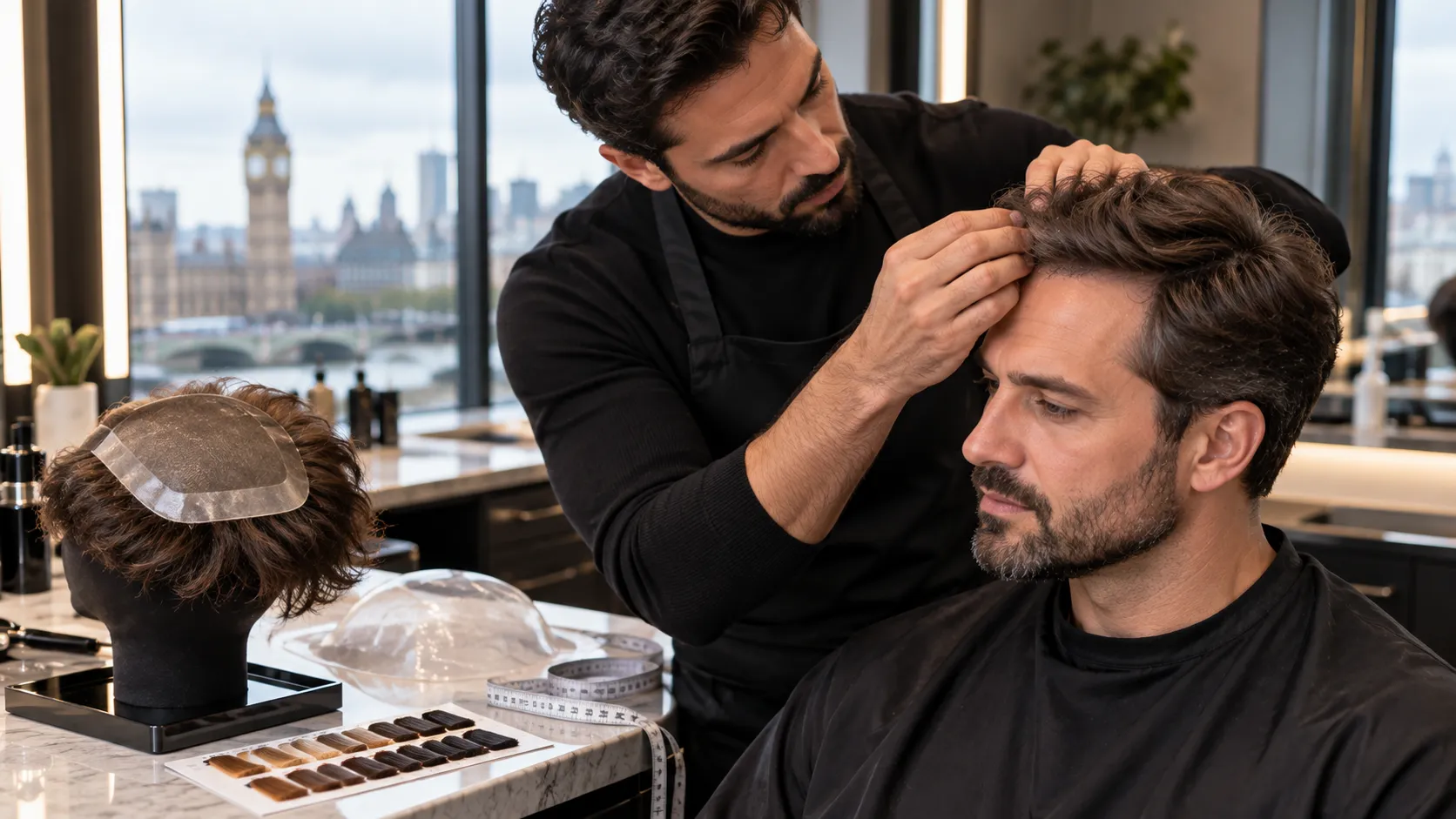
A custom system starts with a mould or precise measurement of your actual scalp, taken either in person or from detailed photos and measurements you provide. From there, the base is built specifically to match your head shape, your hairline is designed to follow your natural growth pattern, and the hair itself is colour matched, sometimes blended from more than one shade, to your real hair rather than the nearest available stock option.
This is a slower process. Depending on the supplier, a custom system can take anywhere from three to eight weeks to arrive, since it’s essentially being built from scratch rather than pulled from existing stock. It costs more too, for the same reason. But the payoff is a system that’s genuinely matched to you rather than the closest approximation available.
The Real Differences at a Glance
| Factor | Stock System | Custom System |
| Fit | Standard sizes, general shape match | Built to your exact scalp measurements |
| Hairline | Pre designed, may not match your natural pattern | Designed around your actual hairline |
| Colour matching | Limited to available stock shades | Blended and matched precisely |
| Turnaround | Often available quickly | Typically three to eight weeks |
| Cost | Lower | Higher |
| Best suited to | Common head shapes, budget conscious buyers, first timers testing the idea | Unusual hairlines or crown patterns, long term wearers, those wanting the closest possible match |
Neither column is automatically the right answer. It genuinely comes down to your head shape, your budget, and how long you’ve been thinking about wearing a system.
Does Fit Actually Feel Different Between the Two?
Yes, and this is probably the biggest practical difference day to day. A stock base, even a well chosen one, is still an approximation of your scalp shape. Most men get on fine with it, especially once a skilled fitter has trimmed and adjusted the edges properly, but there’s a ceiling to how precisely it can sit.
A custom base, because it’s built from your actual measurements, tends to sit flatter against the scalp with fewer visible edges, particularly around the temples and hairline where fit matters most for a natural look. If you’ve got a particularly narrow or wide head, a pronounced widow’s peak, or an unusual crown whorl, this is where custom really earns its higher price tag.
What About How Natural It Looks?
Both can look excellent. We want to be upfront about that, because there’s a common assumption that stock automatically looks less convincing, and that’s not really true once you factor in a good fitting and styling job. A well matched, well fitted stock system on a fairly typical head shape can be genuinely hard to spot.
Where custom pulls ahead is in edge cases. If your natural hair has an unusual colour blend, greys coming through in a specific pattern, or a hairline that doesn’t follow a typical shape, custom gives the technician far more to work with. Our guide on how to make a hair system look more natural covers a lot of the styling and fitting factors that matter regardless of which base type you choose, and our piece on why some hair systems look fake goes through the specific things that usually cause that, most of which come down to fitting and maintenance rather than stock versus custom on its own.
Which One Actually Suits You?
If you’re trying a hair system for the first time and want to see how it feels before committing to a bigger spend, stock is usually the sensible starting point. Our page on getting your first hair system covers what that process typically involves and what to expect going in.
If you’ve got a head shape or hairline that’s genuinely unusual, if you’ve worn stock before and struggled with fit around specific areas, or if you’re planning to wear a system long term and want the closest possible match to your natural hair, custom is worth the wait and the extra cost. Men dealing with crown thinning specifically often benefit from custom, since crown patterns vary a lot more between individuals than most people realise.
Budget matters too, honestly, and there’s no shame in that. Our hair system prices page sets out what both options typically involve cost wise, and a proper consultation is really the only way to know for certain which route makes sense for your specific head and hair.
Does One Last Longer Than the Other?
Not inherently, no. Longevity comes down more to the base material, how well it’s maintained, and how often it’s worn, than whether it started out as stock or custom. Our guide on how long hair replacement systems last goes into this in more detail, but broadly, a well maintained system of either type will outlast a poorly maintained one regardless of how it was made.
That said, because a custom system fits more precisely, there’s less stress on the edges from constant readjustment, which can mean less wear at the hairline over time compared to a stock base that’s being trimmed and coaxed into a better fit repeatedly.
Can You Switch Between Stock and Custom Later?
Absolutely, and a lot of men do exactly this. Starting with stock to get comfortable with wearing a system, then moving to custom once you know you’re sticking with it long term, is a genuinely common path. There’s no rule that says your first system has to be your last, and plenty of men use a stock system almost as a trial run before investing in something built specifically for them.
What Determines the Price Difference?
The gap mostly comes down to labour and materials. A custom system involves a mould or precise scalp mapping, individually selected and blended hair, and a base constructed specifically for one person rather than a batch produced range. That’s simply more time and more specialist work per unit than manufacturing stock bases at scale.
It’s worth saying that a higher price doesn’t automatically mean a better outcome for everyone. A man with a fairly average head shape and straightforward hair colour might genuinely get an excellent result from a well fitted stock system without needing to spend more on custom. The extra cost buys precision, and precision only matters as much as your particular situation actually needs it.
Human Hair or Synthetic, and Does That Change With Custom vs Stock?
Both stock and custom systems come in human hair and synthetic options, so this is really a separate decision from the custom versus stock question. Our detailed comparison of human hair versus synthetic hair replacement systems covers that choice on its own terms, and it applies whichever base type you end up going with.
Types of Systems This Applies To
This custom versus stock choice applies across pretty much every base type on the market, whether you’re looking at a full system or something more targeted. Our overview of types of hair replacement systems is a good starting point if you’re still working out which base construction suits you before even getting to the custom or stock question.
Hair Standard FAQs
Is custom always better than stock?
Not necessarily. Custom offers a more precise fit and match, but a well chosen stock system can look just as natural on a fairly typical head shape. Better depends on your specific head, hairline, and budget rather than being a blanket rule.
How much longer does a custom system take to arrive?
Typically three to eight weeks, compared to stock systems which are often available much faster since they’re already made. Exact timing depends on the specific product and supplier involved.
Can I try a stock system first and upgrade to custom later?
Yes, this is genuinely common. Plenty of men use a stock system to get comfortable with wearing one before committing to the cost and wait time of a custom build.
Does a custom system need a mold of my head?
Often yes, though some suppliers work from detailed measurements and photographs instead. Either method aims to capture your actual scalp shape rather than relying on standard sizing.
Will a stock system definitely not match my hair colour properly?
Not necessarily. Stock ranges usually cover a reasonably wide spread of common shades, and a skilled fitter can often get a close match. It’s specifically unusual or blended natural colours where stock tends to fall short.
Is custom worth it if I only plan to wear a system occasionally?
Probably not, honestly. The extra precision and cost of custom makes more sense for regular, long term wear, where the improved fit and match pay off over time.
Do custom systems need different maintenance to stock ones?
Not fundamentally. Our guides on
how to maintain a hair replacement system
and
how to clean a hair system
apply to both, though the exact product recommendations can vary depending on the base material chosen.
Can I get a custom system with an unusual hairline shape matched exactly?
Yes, that’s really the main point of going custom. The hairline is designed around your actual growth pattern rather than picked from a standard shape.
Are custom systems heavier or thicker than stock ones?
Not typically. Weight and thickness come down to the base material and density you choose rather than whether the system is custom or stock built.
Does hair replacement work the same for fine hair either way?
The base type doesn’t change the underlying approach, though density and construction choices matter a lot for fine hair specifically. Our guide on
hair replacement systems for fine hair
covers that in more depth.
Can a stock system be adjusted to fit better after the initial fitting?
To a degree, yes. Trimming, tension adjustment, and skilled fitting can improve a stock base considerably, though there’s a ceiling to how much can be corrected compared to a base built to your exact measurements from the start.
Is a custom system a good option before going completely bald?
It can be, particularly if you’re catching early thinning and want a precise match to your remaining natural hair. Our article on
getting a hair system before going completely bald
covers that stage specifically.
Will either option feel uncomfortable when it’s first fitted?
Some initial tightness is normal with either type as the base and adhesive settle in. Our guide on
why a hair system feels tight after installation
explains what’s normal and what’s worth getting checked.
Do stock systems have a higher chance of not sticking properly?
Not inherently, no. Sticking issues usually come down to adhesive choice, scalp preparation, and fitting technique rather than whether the base is stock or custom. Our piece on
why a hair system isn’t sticking
goes through the actual causes.
Should I book a consultation before deciding between the two?
Yes, we’d genuinely recommend it. A proper look at your head shape, hairline, and hair colour makes the decision far clearer than trying to work it out from photos alone. Our
process page
explains what a consultation actually involves.