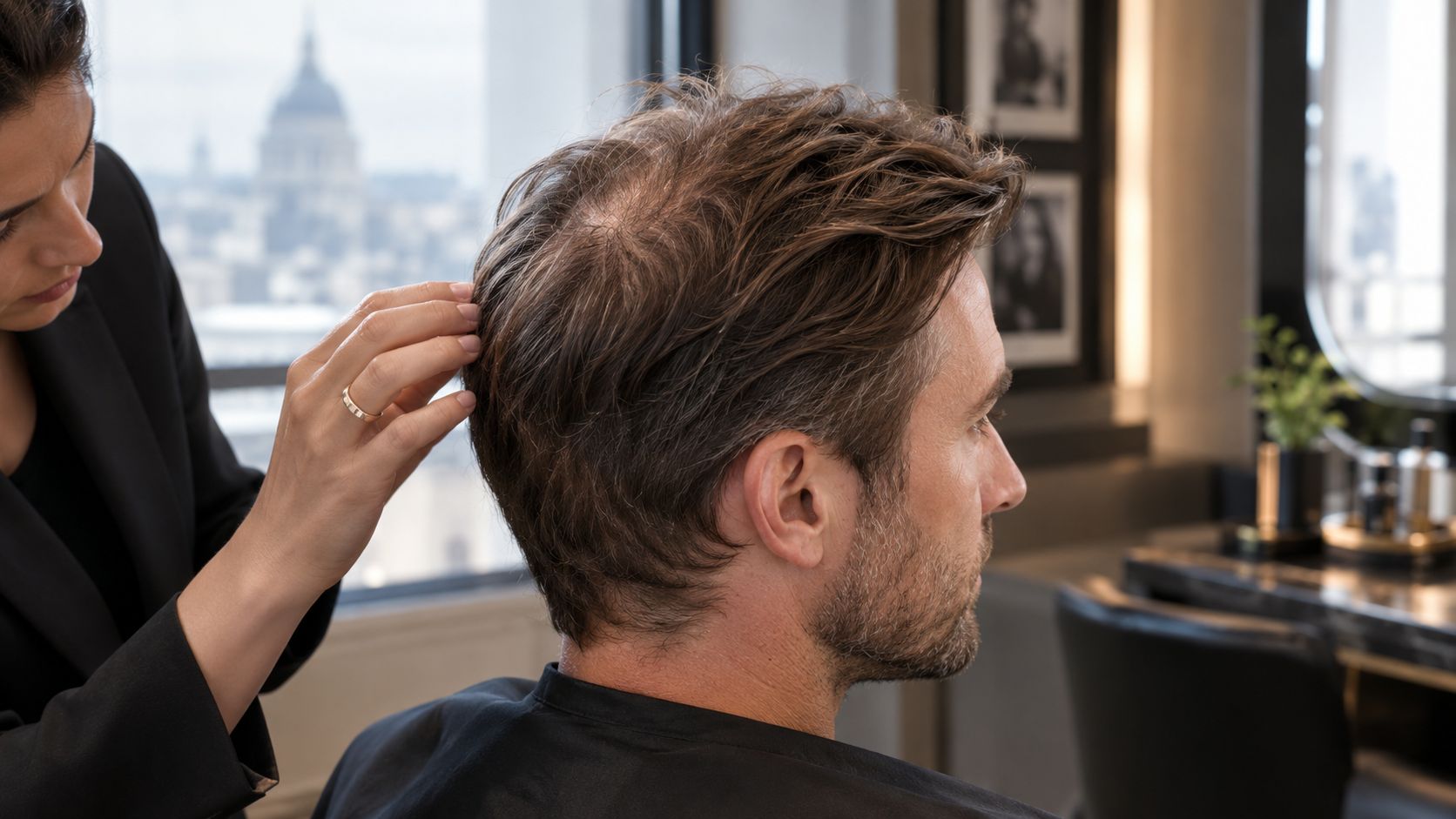

If your hair isn’t gone but it’s thin, fine, and giving up on you a little more every year, you’re in a strange in-between spot. You’re not bald enough to feel like a hair system is “for you,” but you’re not happy enough with what’s left to just carry on ignoring it. It’s one of the most common questions we get asked in consultations not “can you fix my baldness,” but “can you actually work with what I’ve still got, even though it’s weak and thin?”
The short answer is yes. Modern hair replacement systems are built for exactly this kind of hair loss pattern, not just for men who’ve lost everything. But how well it works, and which type of system suits you, depends on a few things worth understanding before you commit to anything.
Why Fine, Weak Hair Is Actually a Common Starting Point
A lot of men assume hair systems are only for those with total or near-total baldness. In reality, plenty of the men we work with still have a full head of hair. Technically speaking it’s just fine, sparse, and visibly thinning at the crown or hairline rather than absent altogether.
This matters because fine, weak hair usually means the follicles are miniaturising rather than dying off completely, a hallmark of male pattern baldness in its earlier-to-middle stages. The hair is still there, but each strand is thinner, growing more slowly, and offering far less coverage than it used to. If you’re not sure whether what you’re experiencing is pattern baldness or something else entirely, our guide on alopecia areata vs male pattern baldness is worth reading first, since the right approach depends on getting that distinction right.
Does a Hair System Work Over Existing Fine Hair?
Yes and in a lot of cases, it works better this way than people expect. A well-fitted hair system doesn’t require your natural hair underneath to disappear; it’s designed to blend with whatever’s there, using the base material and hair density of the system to fill in the gaps your natural hair can no longer cover on its own.
That said, there are a couple of practical considerations specific to fine or weak hair:
Attachment method matters more. Fine, weak hair sometimes doesn’t hold certain attachment methods as securely as thicker hair would, so your stylist may recommend a specific bonding or clip approach suited to what you’ve got left, rather than a one-size-fits-all method.
Blending takes a bit more care. Because your natural hair is still visible around the edges of the system, matching colour, texture and density precisely is more important than it would be for someone who’s fully bald and simply covering the scalp. This is where working with an experienced fitter rather than a generic supplier makes a real difference.
The system can actually protect what’s left. For some men, a properly fitted system reduces the daily stress (styling, heat, product build-up) on remaining natural hair, which can help preserve it rather than accelerate further thinning.
If you’re wondering whether a system is worth it at all before your hair loss progresses further, our guide on is a hair system worth it for male pattern baldness covers that decision in more depth.
Choosing the Right System Type for Fine or Weak Hair
Not every hair system suits every hair type, and this is especially true when you’re working around existing fine hair rather than a clean, bald scalp.
Lace-based systems tend to blend particularly well for men with fine natural hair still present, since the lace base sits close to the scalp and allows natural hair to come through around the edges more convincingly than some thicker base materials.
Density matching is critical. A system with too much hair density relative to your natural surrounding hair will look obviously artificial; too little, and it won’t achieve the coverage you’re after. This is a conversation to have directly with your fitter rather than guessing from photos online.
Human hair vs synthetic also plays into this more than people expect human hair systems tend to blend more naturally with fine natural hair because they move and catch light similarly, whereas synthetic hair can look slightly more uniform by comparison. Our full comparison in human hair vs synthetic hair replacement systems goes through the pros and cons of each in detail.
For a broader look at what’s actually available before deciding, our guide to types of hair replacement systems is a good starting point.
What to Expect at Your First Consultation
If you’ve got fine or weak hair rather than a bald scalp, your first consultation is going to look a little different from someone starting from scratch. Expect a closer look at your existing hair’s density, growth pattern and colour, since all three affect how well a system can be matched and blended.
We’ve written a full walkthrough of what a first appointment actually involves in getting your first hair system, which covers what questions to expect and what to bring with you.
Common Concerns Men With Fine Hair Have
“Will it look obvious next to my own hair?” This is the single most common worry, and it’s a fair one. A poorly matched system next to fine natural hair is more noticeable than the same system on a fully bald scalp, simply because there’s a direct comparison point right next to it. This is exactly why density and colour matching matter so much more in this situation, and why we’d always recommend seeing examples of similar cases before committing. Our guide on how to make a hair system look more natural covers the practical side of this.
“Will the system damage what hair I have left?” Generally, no provided it’s professionally fitted and properly maintained. Problems tend to arise from poor attachment technique or neglecting maintenance, not from the system itself. Our guide on how to maintain a hair replacement system covers what ongoing care actually involves.
“What if my hair keeps thinning after I get a system?” This is worth discussing directly with your fitter, since systems can generally be adjusted or refitted as your natural hair pattern changes over time, rather than requiring you to start over completely.
How Long Does a System Last With Fine Hair Underneath?
Longevity depends on a mix of the system itself, how well it’s maintained, and how your underlying natural hair behaves. Fine or thinning natural hair can sometimes affect how securely a system holds over time compared with a fully bald scalp. Our guide on how long do hair replacement systems last gives a realistic breakdown of what to expect, and our guide on why is my hair system not sticking is useful if you’re already noticing hold issues.
Alternatives Worth Knowing About
If a full system feels like more than you need at this stage, non-surgical hair extension patches are sometimes a lighter-touch option for filling specific thinning areas rather than covering the whole scalp. Our guides on non-surgical hair extension patches and discovering non-surgical hair extension patches go through how these compare to a full system.
If you’re weighing up surgical options too, our comparison of hair replacement systems vs hair transplants lays out the practical differences, including recovery time, cost and permanence.
London-Based Consultations and Fittings
If you’re in or around London and want to see and feel the difference a properly matched system makes before committing, we offer in-person consultations and fittings. Our guides on hair replacement systems for men: London guide and best hair systems in London cover what to expect locally, and our non-surgical hair replacement London page details our full range of services. Ongoing maintenance and top-up appointments are covered on our hair system maintenance London page.
Hair Systems for Fine or Weak Hair FAQs
Can I get a hair system if I still have some hair, just very thin?
Yes. Hair systems are commonly used by men with thinning rather than fully bald scalps and can be designed to blend with the natural hair you still have.
Will a hair system make my existing fine hair fall out faster?
Not when it is properly fitted and maintained. Problems are more likely to come from poor attachment techniques or neglected maintenance than from the hair system itself.
Do I need to shave my head to get a hair system?
Not necessarily. It depends on the system type and your hair pattern. Some systems can work over trimmed or thinned natural hair without requiring the scalp to be completely shaved.
Will people be able to tell I’m wearing a system next to my own hair?
With careful colour and density matching, a hair system can blend convincingly with your existing hair. This can be more technically demanding than fitting a system over a completely bald area, which is why experienced fitting is important.
Is human hair or synthetic hair better for blending with fine natural hair?
Human hair generally provides a more natural blend with fine natural hair because it moves and reflects light similarly to your own hair. Synthetic hair has its own advantages, so the right choice depends on your desired result and system requirements.
How often will I need to visit for maintenance?
This varies depending on the system, attachment method and lifestyle, but regular maintenance appointments are standard for keeping a hair system looking natural and secure over time.
Can a hair system be adjusted if my natural hair keeps thinning?
Yes. Hair systems can typically be adjusted or refitted as your natural hair pattern changes, so further thinning does not necessarily mean you need an entirely new system straight away.
Is a hair system a better option than a hair transplant for fine, weak hair?
The right option depends on your goals, budget and how advanced your hair loss is. Hair systems and hair transplants work in different ways, so comparing the practical and long-term considerations can help you decide which approach suits you.
Will the system feel uncomfortable with my natural hair underneath?
Some men notice tightness or an unfamiliar sensation initially after fitting, which usually settles as the scalp adjusts. Persistent discomfort should be discussed with your hair system fitter so the fit or attachment can be checked.
How long does a hair system typically last?
This depends on the system type, materials, maintenance routine and lifestyle. A hair system may last anywhere from several months to a couple of years before replacement is needed.
Can I still style my natural hair alongside the system?
Yes, in most cases. Your fitter can advise you on suitable styling techniques and any limitations based on your particular system type, natural hair and attachment method.
Should I try a non-surgical patch instead of a full system?
If your thinning is localised to a specific area rather than widespread, a non-surgical hair patch may be a lighter option worth discussing. A consultation can help determine whether a patch or fuller system is more suitable for your hair pattern.
Book a Consultation
If you’re dealing with fine or thinning hair and want an honest assessment of whether a system would work for you, not a generic sales pitch we offer consultations across London to talk through your specific hair pattern and the best-fit options. Get in touch via our contact page or explore our full hair systems range to see what’s available.