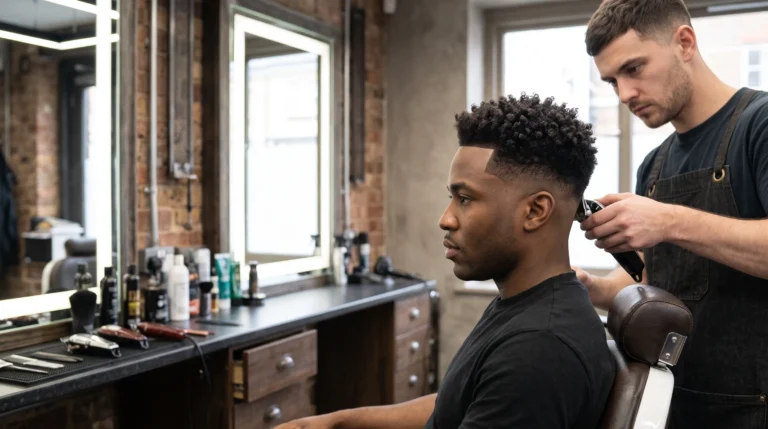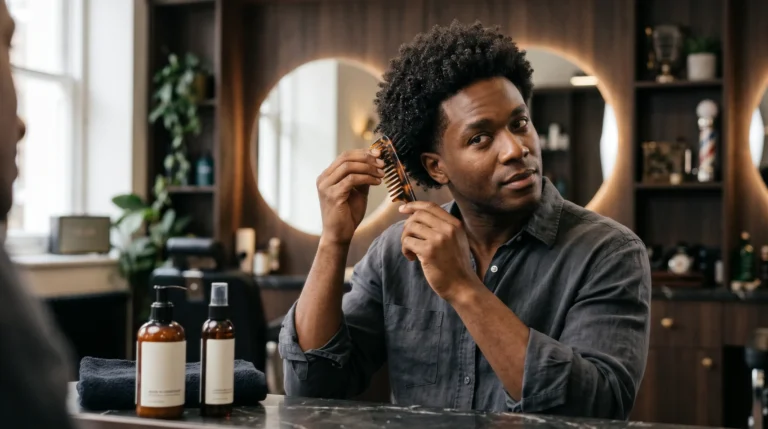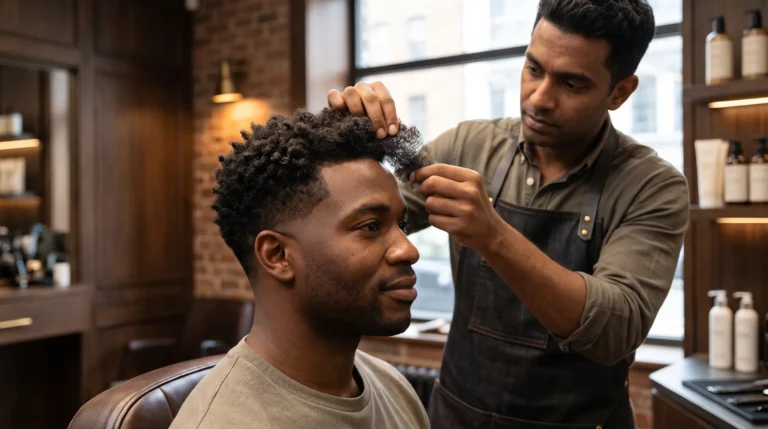


No. Not if it’s fitted well. Most men who wear a system go through their whole week without a single person clocking it, and that includes coworkers, close friends, even partners who’ve never been told outright.
I say this a lot to new clients, and I still mean it every time: the odd person who does get spotted almost always has one specific, fixable thing going on. It’s not some built in giveaway baked into wearing a system at all. Hair that sits and moves like it belongs on you, because someone put real care into the details most people never think to check. That’s the whole job.
So what actually gives it away when it happens? And how close can someone stand before any of that should even start showing?
The Hairline Edge
This is the big one. A hard, visible line along the front is the single most common tell, and it’s a fitting problem rather than a wearing-a-system problem. The base edge needs to blend into your own skin instead of sitting on top of it like a seam. Get that wrong, and it shows under any decent light. Full stop.
Density matters too, though people notice it less consciously. Off the shelf systems spread hair evenly across the whole base, which sounds fine until you remember real hair isn’t even at all. Thicker in some spots. Thinner at the temples and crown edges. Identical density everywhere reads as artificial the moment someone looks closely, even if they couldn’t tell you why.
A base shaped around your own scalp sits flatter and follows your head’s real contours, instead of gapping the way a standard size often does. Our page on custom fitting goes into why that matters beyond comfort alone.
Colour and shine cause the quieter problems
Hair fades. Yours does, mine would too, and a system’s hair does exactly the same thing with sun and time. Trouble starts when the system isn’t recoloured alongside that drift, and it begins looking noticeably different from the hair surrounding it. Our guide on why a hair system loses colour covers the fading itself if you’ve already spotted it on yours.
Shine is the one almost nobody thinks about until someone mentions it to them. Certain base materials and some synthetic fibres catch light differently than real hair does, giving off a slightly plastic sheen under bright sun or harsh indoor lighting that real hair simply doesn’t produce.
And a parting that’s too perfect, too symmetrical, too neat, looks subtly off next to how real partings actually sit. Small thing on its own. People notice small things without always being able to name what felt off.
How close can someone get?
Closer than most new clients expect, honestly. A well fitted, well maintained system holds up fine at conversational distance under normal lighting, even with someone looking straight at your hairline. Extreme close up scrutiny under harsh direct light is really the only place anything can start to show, and that’s not a situation most people ever find themselves in, with anyone’s hair.
Touch works differently to how clients assume. A properly attached system doesn’t shift under an ordinary hand running through hair, a hug, normal everyday contact. Only sustained, deliberate handling, someone actively hunting for an edge, would reveal anything, and that’s rare in day to day life. Wind and rain behave the same way. Attach it right, and it moves the way your own hair would. Not as one stiff, unnatural piece.
Does the type of hair change any of this? Quite a bit, as it happens. Human hair moves, catches light and responds to styling almost exactly like your own natural hair, which is a big part of why it goes unnoticed. Synthetic hair can look great too, but it holds a slightly different sheen and doesn’t always respond to heat or weather the same way. Our guide on types of hair replacement systems covers that difference properly if you’re still choosing between them.
Crown thinning is its own small case worth a mention. Blending direction near your own remaining hair matters more up there than it does at the front hairline. Our page on hair systems for crown thinning covers that one on its own terms.
Two clients, two very different stories
One client came to us convinced his whole office already knew. Turned out his old system’s base edge had never blended into his skin, which was painfully obvious under the office’s harsh overhead lights the second anyone looked. We refitted him with a custom base and careful edge work. A few weeks later he told us nobody at work had said a word. Not politeness either. There was genuinely nothing left to notice.
Another client, years into wearing a system successfully, had quietly started avoiding certain styles and angles out of old habit, even though his current system hadn’t needed that caution for a long time. We walked through what was really visible versus what he still assumed was risky, and he let it go. Started wearing the styles he’d been avoiding for nothing.
Where most problems actually start
Not at the original fitting, usually. Colour drifts over weeks. The base can lift slightly near the edges as adhesive wears down toward the end of a cycle. Regular visits reset all of that before anyone else would ever notice a thing. Skip them for long enough, and yes, eventually it’ll start showing its age, the way any hairpiece left unattended would. That’s a maintenance gap though, not something inevitable about wearing a system in the first place. Our guide on maintaining a hair replacement system covers the habits that stretch things out between visits.
Styling choices play a smaller part. An overly stiff, flawless looking style can read as more artificial than something a bit tousled and lived in, since real hair rarely sits in perfect symmetry all day either. Our guide on styling a hair replacement system like normal hair covers what works day to day.
Lighting, cameras, and the gym
Soft, indirect light forgives almost everything. Most offices, restaurants, everyday social settings, all fine. Harsh overhead lighting or strong midday sun is different, exaggerating shine and colour differences and making any unevenness easier to catch. Got a wedding, a shoot, or a stage event with unusual lighting coming up? Mention it to whoever maintains your system beforehand, and they can account for it.
Cameras do something similar on occasion. Flash and screens can flatten texture or exaggerate shine in a way face to face conversation never does. If you’re on camera a lot for work, say so at your next visit.
Changing rooms, gym mirrors, standing right next to someone at a urinal. These are the scenarios clients worry about most, and they’re rarely as risky as they feel in your own head. Sweat and movement are exactly what a well attached system is built to handle. Most people at a gym are focused on themselves, not scrutinising the hairline of whoever’s on the next treadmill. The one genuine wildcard is changing room lighting itself, since it tends to run harsher and closer than almost anywhere else you’d be seen in a normal day. Worth flagging at your maintenance visit if that’s a regular part of your week.
Does age or time spent wearing one change anything?
Not in the way you’d think. A system doesn’t become easier to spot just because you’ve worn one for five years rather than five months. If anything, long term wearers tend to get better at the small daily habits, how they shower around it, how they sleep, what products to avoid near the base, which makes things less noticeable over time, not more.
What does change with time is confidence, not visibility. New clients are often far more self conscious about being noticed than anyone around them actually is, simply because they’re hyper aware of something nobody else is looking for in the first place. That settles down once the fitting and maintenance routine are both dialled in.
The first few weeks are the least familiar stretch for everyone, both for you and for the system itself, and it’s easy to assume every glance in your direction is someone clocking the hairline. A fresh fitting is, in a strange way, the most scrutinised version of itself. You’re checking it constantly in mirrors, touching it more than you normally would, noticing every small sensation that’s new. Nobody else is doing any of that. Give it a few weeks, let the adhesive settle into its usual rhythm, and most of that early self consciousness fades long before anyone else would’ve had reason to notice anything at all.
What about photos?
Occasionally a photo gives more away than real life would, and it tends to come down to the same culprits as any camera situation. Flash lighting. An unflattering angle. A filter that exaggerates sharpness or shine in a way your own eyes never would. A photo that’s slightly too perfect around the hairline can sometimes draw more attention than the hairline itself ever would face to face.
Worth bearing in mind if you post often, but not something to lose sleep over. Most casual scrollers aren’t studying anyone’s hairline pixel by pixel, and the same rule from earlier still applies here too: a well fitted, well maintained system holds up fine under the vast majority of everyday conditions, cameras included.
Does it eventually catch up with everyone?
Not really, no. Plenty of long term wearers go years, sometimes their entire working life, without a single unprompted comment from anyone. The ones who do get noticed almost always trace back to one of the fixable issues above, not the simple passage of time. Keep the maintenance visits regular, and that gap never really opens up at all.
Quick Answers
Can a hairdresser tell just by looking?
Someone experienced with systems might spot details an untrained eye wouldn’t, but a well fitted system still holds up to close inspection from most hairdressers without issue.
Does sweating or getting wet make it more visible?
Not if it’s attached right. Behaves the same as wet real hair would.
Is synthetic hair always more detectable than human hair?
Not always, but it’s more prone to shine and movement quirks that occasionally give it away under certain light.
Can people tell by touching your hair?
Generally no during ordinary contact. Only deliberate, sustained handling looking for an edge would reveal anything, and that’s rare.
Does an old or worn system become more noticeable?
Yes, gradually, through colour fade and the base loosening near the end of a cycle. Both fixed through regular maintenance.
Will a bad haircut around it make it obvious?
It can. A barber unfamiliar with hair systems can blend the edge poorly, often more noticeable than the system itself ever was.
Does bright sunlight make systems easier to spot?
A bit, since harsh direct light shows shine and colour differences more than soft indoor lighting.
Can a partner tell even if they’ve never been told?
Often not, provided fitting and maintenance are both solid. Plenty of long term partners simply don’t know unless told outright.
Does the base type affect how visible it is?
A little. Thinner, breathable bases tend to sit flatter than thicker ones, though both can look great fitted well.
Is there a way to test how noticeable mine is?
Ask someone you trust to look closely under bright light and give honest feedback, or raise it at your next maintenance visit.
Want an Honest Opinion on Yours?
Not sure your current system’s as undetectable as it should be? Get in touch through our contact page and we’ll take a straight look, no sales pitch. You can also browse our full range of hair systems, read about our process, or check our maintenance guide for London before booking in.