
Yes. Most of the time you can. These two conditions do need more thought than an average fitting though, since both affect the skin barrier directly, and the scalp’s already a common spot for either one to show up. Add a base sitting against that skin for hours at a stretch, and it’s a fair thing to ask about before booking anything in.
Here’s the short version. Neither condition rules you out by itself. What changes is the materials we reach for, how we plan around flare ups, and sometimes whether we’d want your GP or dermatologist involved first. I see clients managing both conditions wearing systems comfortably every single week. The fitting just needs building around the skin you’ve actually got, not some generic template.
What Makes These Two Different From a Typical Sensitive Scalp
Plain sensitivity usually just means skin that reacts a bit quicker to adhesive or trapped moisture. Psoriasis and eczema are a different thing entirely. Both are ongoing conditions with their own patterns, and lumping them in under “sensitive skin” misses what matters most for a fitting.
Scalp psoriasis shows up as raised, scaly patches. Sometimes silvery. Sometimes just thickened and flaky. It itches, and scratching only makes things worse, never better. Flares come and go, triggered by stress, weather shifts, or skin that’s already been irritated by something else.
Eczema behaves differently on the scalp. Dryness. Redness. A tendency to crack, especially around the hairline and behind the ears. It reacts fast to harsh products and fragrance, and once that skin barrier’s compromised, almost anything sitting against it too long starts causing trouble.
Both share one thing though. Neither gets caused by wearing a system, and neither gets permanently worse just from a base sitting on the scalp. Timing matters. Material choice matters. Fitting over skin that’s actively flaring badly doesn’t happen, full stop.
Does an Active Flare Change Anything?
It can. A mild flare with some flaking or dryness isn’t usually a problem, provided we’re already working with gentle, breathable options. Severe is a different story. Broken skin, weeping patches, plaques that are clearly inflamed, that’s not somewhere adhesive belongs. Not because a system causes harm. Because healing skin needs to be left alone to do its job.
So here’s roughly how I’d handle it. Mild to moderate and manageable with your usual routine? We’d likely proceed as normal, just with the gentlest products on the shelf. Something more severe or freshly flared? I’d suggest waiting until it settles, or getting a quick GP check first if it’s been a while. Neither of us wants to fit over skin that needs time to recover.
Tell us straight where things stand at your consultation. We’re not trying to catch anyone out here. We just need the real picture so we can plan properly from day one.
Picking the Right Adhesive and Base
Medical grade, hypoallergenic adhesive is where almost every client managing either condition starts. It cuts the harsher solvents some standard products carry, and for skin that’s already working overtime just to stay intact, that difference matters more than it would for someone with no history of either condition.
Tape tends to suit eczema prone skin better than liquid in a lot of cases. Mainly because it puts more of a barrier between adhesive and skin, rather than sitting in constant direct contact. Psoriasis is a bit different. The choice there usually comes down to where the plaques tend to form. A tape placement that avoids a known patch beats one sitting right across it, every time.
Base material counts for just as much. A thin, breathable mono or skin base lets air circulate the way it should, and that helps both conditions, just for different reasons. Eczema benefits because trapped moisture is exactly what makes already dry skin crack further. Psoriasis benefits because better airflow cuts the buildup of sweat and oils against patches already prone to irritation. Our types of hair replacement systems page breaks these options down further if you want to compare bases side by side.
A custom fitted base helps too, arguably more here than for most clients. Standard off the shelf sizing follows an average scalp shape. If your psoriasis or eczema tends to flare in particular spots, a generic base simply can’t work around that. Our custom fitting page covers why this matters for more than just comfort.
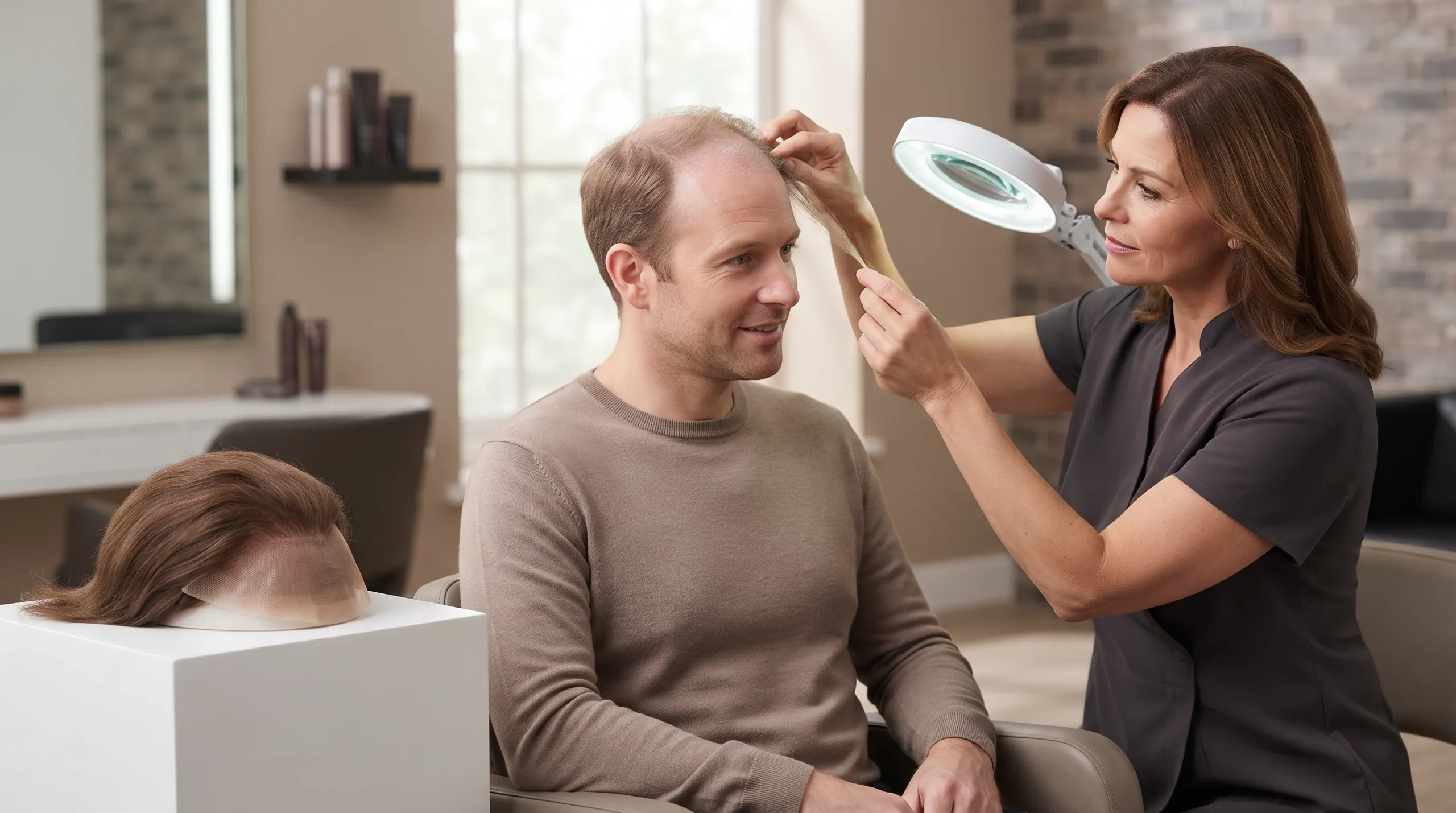
Patch testing isn’t optional here. I’d want to see how your skin responds somewhere small and discreet before committing to a full fitting. For anyone managing a flare prone condition, that test tells us more than a conversation ever could.
What Does a First Fitting Actually Look Like?
Expect more questions than usual before anything gets fitted. How often do you flare? Where does it tend to show up? What’s triggered it before, and what’s actually helped? None of this is us being overcautious. It shapes which products we reach for and where adhesive gets kept away from entirely.
We’ll often start you on a shorter wear cycle, giving the scalp regular breaks while we confirm everything’s agreeing with you. Not a permanent limitation. Most clients move toward longer wear once the fitting’s proven out over a few cycles. It’s just a sensible way to catch any issue early, instead of finding out the hard way after a full week straight.
Mid flare right now? We might suggest holding off the fitting itself while still having the consultation. No reason to delay getting advice just because timing on the fitting needs to wait a bit.
Managing Flares Once You’re Wearing a System
Most of the ongoing work happens here, and it’s less complicated than people expect. Keep the area underneath clean, using gentle, fragrance free products instead of anything harsh that could tip compromised skin further. Our maintenance guide covers a routine built around this, not something that turns into a daily chore.
Watch for the early signs. More itching than usual. A bit more flaking. Redness creeping in around the base edge. Catch it early, and a short break with some extra care usually sorts it before it turns into a full blown flare. Ignore those signs, and the next stage gets harder to manage.
Moisturising matters more here than for most clients, especially around the base edge where skin sees the most contact. A fragrance free, scalp safe product applied on removal days keeps the barrier in better shape overall. That, in turn, makes the whole system easier to live with day to day.
Weather plays its part too, more than you’d think. Cold, dry air strips moisture that eczema prone skin’s already struggling to hold onto. Humid, sweaty conditions do the opposite for psoriasis, trapping heat and moisture right against the patches. Neither means giving up on wearing a system through certain seasons. It just means adjusting wear cycle and moisturising routine as the weather shifts, something we’ll plan for at your consultation once we know your typical pattern.
A Client Story Worth Sharing
One client came in having written off hair systems entirely. He’d read somewhere that any adhesive would set his eczema off, so he’d never even tried one. His eczema sat mild to moderate, mostly managed with a prescribed cream, and flared mainly through the colder months.
We started him on a hypoallergenic tape, a thin breathable base, and a shorter wear cycle for his first month. No reaction. His worst flare that winter was handled fine with his usual cream and a slightly reduced wear schedule during the roughest week. He’s been wearing the system comfortably for well over a year now, just moisturising a bit more diligently once the weather turns cold.
Writing a condition off before even trying is one of the more common reasons people miss out on something that would’ve worked fine all along, with the right setup behind it.
Should You See a GP or Dermatologist First?
Sometimes, yes. Managing a condition that’s actively flaring badly, or never had it properly diagnosed and you’re just going on symptoms? A quick check makes sense before we fit anything. We’re not medical professionals, and I’d always rather a client walked in with a confirmed diagnosis and a management plan from their doctor than fitting around a guess.
Already managing things well with a GP or dermatologist? Bring that history along to your consultation. Knowing what’s worked for you medically helps us line up our product choices alongside it, not against it.
Everyday Habits That Help Between Visits
A lot of what keeps either condition settled has nothing to do with the hair system at all. Diet, stress, sleep, all of it plays into how often psoriasis or eczema flares for most people. Clients who already manage those factors well tend to have an easier run of things with a fitting on top.
Scratching under the base is one habit worth breaking early, tempting as it is when something itches. Lifting the edge to scratch disturbs the bond and can push the irritation further. A gentle pat over the base works better, or pulling the system off briefly if the itch is genuinely bad.
Sun exposure affects psoriasis in particular, usually for the better in small, sensible doses, though that’s got to be balanced against keeping the scalp covered for other reasons. Mention it if you spend a lot of time outdoors. We’ll factor that into wear cycle advice.
Stick to the products we recommend instead of swapping in something new without checking first. A shampoo that’s fine everywhere else on your scalp isn’t automatically fine right at the base edge. Swapping products without a quick check in is one of the more common reasons a previously settled fitting starts causing trouble again.
Keep a simple note of flare timing if you can manage it. When it started. Roughly how long it lasted. What seemed to help. That record makes every follow up visit faster and more useful, since we’re working from your actual pattern instead of guessing off a single conversation.
Questions We Hear Often
Can psoriasis or eczema get permanently worse from wearing a system?
Not from the system itself. The wrong adhesive or base can irritate compromised skin, but switching to gentler options usually sorts that quickly.
Do I need a patch test even if things are calm right now?
Yes. A calm stretch doesn’t guarantee how your skin reacts to a new adhesive, and testing first beats finding out the hard way.
Will I need to stop wearing my system during a flare?
Sometimes, depending how bad it gets. A mild flare often just needs extra care and a shorter wear cycle. A severe one might need a short break while it settles down.
Is tape definitely better than liquid adhesive here?
Often, yes, though it still comes down to where your flares tend to show up and how your own skin responds during a patch test.
Can a fitting be adjusted later if things change?
Yes, and it often is. Skin conditions shift over time, so we review at follow up visits rather than assuming day one got everything right forever.
Does having both conditions at once make fitting harder?
Not necessarily harder. Just more specific. We’d plan around whichever one’s more active and build from there.
How soon would I notice if a product didn’t agree with me?
Usually within the first day or two of a patch test, sometimes sooner.
Should I mention medication I’m using for my condition?
Worth it, yes, especially anything topical you apply to the scalp, since timing around application and wear can matter.
Worried Your Condition Will Stop You Wearing a System?
It doesn’t have to. Psoriasis and eczema both call for a bit more planning. Not a flat no. Get in touch through our contact page and tell us straight where things currently stand, including any flare pattern or diagnosis you’ve already got. We’ll build your fitting around the skin you actually have, not a generic setup. You’re also welcome to browse our full range of hair systems, read more about our process, or check our maintenance guide for London before you book in.