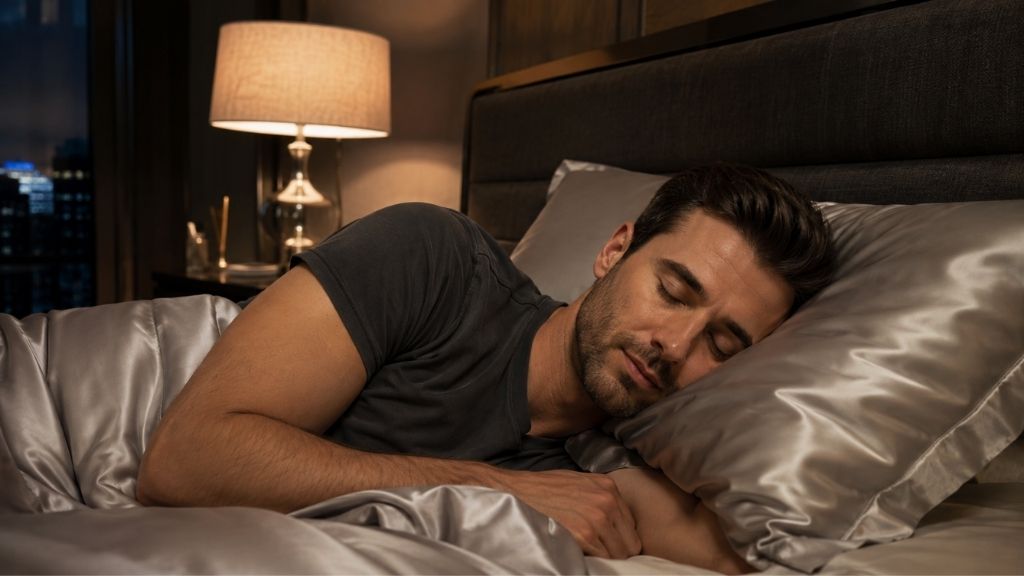

Yes most bonded hair systems are designed to be slept in, and sleeping in your system is standard practice for the majority of wearers. The bond between the base and your scalp is built to withstand daily life including overnight wear, and removing and reapplying the system every night is not necessary or recommended for most people. What does matter is how you sleep in it. Sleeping on the wrong surface, sleeping with the system wet, or developing habits that repeatedly stress the hairline edges will shorten bond life, degrade the base material, and produce a system that looks less natural between appointments. This guide covers everything you need to know about sleeping in a hair system: what protects it, what damages it, and how the answer changes depending on your base type.
The Difference Between Sleeping In It and Sleeping Well In It
Most questions about sleeping in a hair system are really asking two separate things: is it structurally safe to sleep in, and is there anything you need to do differently than you would with natural hair?
The answer to the first question is yes for almost all bonded systems. The answer to the second is also yes and that second part is where most of the practical information lives.
A hair system that is slept in correctly on the right surface, dry, with the right care before bed will reach its expected bond lifespan and maintain its appearance throughout. A system slept in incorrectly on a rough surface, wet, or without any consideration for how the hairline edges are affected by friction will lift earlier than expected, wear faster at the base, and need replacing or servicing sooner than the unit’s actual lifespan warrants.
The goal is not to be overly cautious about sleeping in your system. It is to make a few specific, small adjustments that protect the investment.
Base Type Matters: Lace vs Skin vs Monofilament
The most important variable in how well a system handles overnight wear is the base material. Different bases respond differently to the friction, moisture, and pressure of sleeping.
Lace bases
Fine lace, particularly French lace, is the most delicate base material. It produces the most natural hairline appearance but it is also more susceptible to the cumulative effects of overnight friction than skin or monofilament bases.
On a lace system, overnight wear is generally fine with the right precautions, but the hairline edge of the lace is the area most vulnerable to wear from repeated contact with a pillow surface. Over weeks and months of sleeping on cotton pillowcases without any protective layer, the lace at the hairline can begin to thin, fray, or develop small tears at stress points. These are not catastrophic failures they develop gradually but they shorten the unit’s lifespan faster than the same system worn on a satin or silk surface would.
Fine lace wearers who notice their systems deteriorating at the hairline faster than expected should look at pillowcase material before assuming the unit or the adhesive is the problem.
Skin and polyurethane (PU) bases
Skin bases are more durable than lace and handle overnight wear more robustly. The base material is thicker and less susceptible to friction-related wear at the edges. For skin base wearers, sleeping in the system with a satin pillowcase is still the recommended approach, but the risk of base damage from overnight friction is lower than with fine lace.
The greater risk for skin base wearers during sleep is moisture. Because a PU base covers the entire scalp contact area rather than just the perimeter, moisture trapped under the base overnight from a system that has not fully dried before sleep affects a larger surface of the adhesive bond and can produce more significant bond weakening than the same scenario on a lace system.
Monofilament bases
Monofilament sits between lace and skin in terms of durability and the handling of overnight wear. The base is more robust than fine lace but produces a similarly natural appearance. The same principles apply to satin or silk pillowcase, dry before sleep but monofilament wearers generally find overnight wear less of a management challenge than those on fine lace.
For a full comparison of what each base type involves and which suits different lifestyles, see our lace, skin, and mono comparison guide.
The Most Important Rule: Never Sleep With a Wet System
This is the single most impactful thing you can do to protect your system during sleep and the most commonly skipped.
Moisture trapped between the base and the scalp overnight creates conditions that weaken adhesive significantly faster than dry wear does. The warmth of the scalp combined with trapped moisture softens the adhesive, allows the base edges to lift gradually during the hours of sleep, and in some cases creates conditions for bacteria and yeast to proliferate under the base which produces itching and odour alongside the bond damage.
The effect is not hypothetical. Wearers who consistently sleep with a wet or damp system regularly find that their bond lifespans are shorter than the expected range for their attachment method, and they often cannot identify why because the connection between wet sleep and bond failure is not obvious.
The fix is simple: allow the system to dry fully before going to bed. If you wash your hair in the evening, which is common for people who want clean, fresh-feeling hair before sleep, air dry for at least 30 to 45 minutes and use a hairdryer on a low heat setting to ensure the base area is fully dry before lying down. Do not let the hairdryer sit stationary over any one area of the base. Keep it moving and maintain a reasonable distance from the base surface.
This single habit change extends bond life meaningfully for almost every wearer who has been ignoring it.
Pillowcase Material: Why It Matters More Than People Expect
The surface your system rests against for six to eight hours every night is not neutral. Cotton pillowcases, the standard in most households, have a texture that creates friction against both the hair strands and the base edges. Over months of nightly contact, this friction:
- Roughens the hair cuticle on human hair systems, contributing to the dull, frizzy appearance that develops as units age
- Creates repeated mechanical stress on fine lace at the hairline, contributing to fraying and thinning at the edges
- Causes tangling at the nape and perimeter that is harder to brush out and puts stress on the base when detangling
The solution is a satin or silk pillowcase. Both materials dramatically reduce friction the system moves with the pillow surface rather than catching against it. The difference in how a system feels in the morning, and in how long the base material remains intact, is noticeable over time even if not obvious after a single night.
This is not an expensive change. A satin pillowcase costs a few pounds and replaces a cotton one without any other adjustment to your routine. For the improvement it produces in system longevity and morning appearance, it is one of the most cost-effective maintenance decisions available.
Sleeping Position and Hairline Stress
The position you sleep in affects which parts of the system experience the most repeated pressure and friction.
Side sleepers create repeated pressure on one side of the hairline, the temple area on whichever side they sleep on most consistently. This is often where the first lifting appears on a bond that is otherwise secure, and it is the area of the base most likely to show wear first in side-sleeping wearers.
A satin pillowcase reduces the friction component of this. For wearers who find the side-hairline area consistently lifts faster than the rest of the bond, it may also be worth mentioning to the technician at the next appointment the application technique at the temple edges can sometimes be adjusted to improve holding time in that specific area.
Stomach sleepers create the most sustained pressure on the entire front hairline pressing the forehead area against the pillow surface for extended periods. Stomach sleeping is the most challenging position for hairline bond preservation and is the one most likely to be associated with premature lifting at the front edge.
If you are a stomach sleeper experiencing consistent hairline lifting, the sleeping position is worth raising at your next service appointment alongside the adhesive and scalp prep discussion.
Back sleepers create the least hairline stress. The primary contact point is the nape and crown, which are typically the most securely bonded areas. Back sleeping is the most forgiving position for system wear.
Hair Preparation Before Sleep
A few minutes of preparation before bed makes a real difference to how the system looks and handles in the morning.
Brush or comb before lying down. Detangle the system gently from the ends upward before sleep to avoid waking up with knots that require forceful brushing which puts stress on the base. For curly or wavy systems, finger-detangling is preferable to a comb.
Loose tie for longer hair. If your system has more length, loosely tying the hair back not tightly, just gathered softly prevents tangling during movement in sleep. Tight elastics or bands should not be used; they create stress on the base at the tie point and can leave a dent in the hair shape.
Check the edges. If you can feel any edge of the base beginning to lift slightly before bed, that is a signal to book a re-bonding appointment rather than sleeping in it and hoping it settles. A system with a partially lifted edge is more susceptible to further lifting during sleep, and moisture can more easily work under a compromised edge overnight.
When Removing the System Before Sleep Makes More Sense
For most wearers with a bonded system, nightly removal is not necessary or recommended. But there are situations where removing the system before sleep is the more appropriate approach:
Clip-in systems. If your system uses clips rather than adhesive or tape, daily removal is typically standard. Clip-in systems are designed to be removed and stored rather than worn continuously, and the storage guidance in our maintenance and aftercare guide applies wig stand or head form, away from direct sunlight, covered loosely.
Toward the end of the bond cycle. If the bond is approaching the point of needing professional re-bonding with edges beginning to lift and the adhesive weakening, continuing to sleep in the system puts stress on a bond that is already compromised. At this point, booking a re-bonding appointment is the right response rather than extending the wear cycle overnight.
Immediately after a new unit fitting. Some technicians recommend avoiding lying directly on a new bond for the first few hours after application, allowing the adhesive to fully cure and set before the system is exposed to the sustained pressure of a pillow. Ask your technician specifically about their recommendation for the first night after a new fitting.
If you are experiencing itching or scalp irritation. If the scalp under the system is irritated due to product build-up, an overdue re-bond, or adhesive sensitivity sleeping in the system prolongs the contact between the irritant and the skin. This is a situation to address rather than sleep through. See our guide on why a hair system itches and what to do for the specific causes and fixes.
How Sleeping Affects Bond Lifespan Over Time
One of the most consistent findings from clients who carefully track their bond intervals is that lifestyle factors, not just the adhesive product, determine how long each bond holds. Sleep is one of the largest daily lifestyle variables.
A wearer who sleeps on satin, never sleeps with a wet system, and wakes with a bond that is undisturbed will typically reach the longer end of their attachment method’s expected lifespan. A wearer who consistently sleeps on cotton, occasionally sleeps with damp hair, and wakes with lifted edges will typically reach the shorter end or shorter still.
The expected bond intervals by attachment method are covered in our guide to how long hair replacement systems last. If your bond is consistently falling short of these ranges and you cannot identify a product or adhesive cause, sleeping habits are the first variable worth examining.
Frequently Asked Questions
Can you sleep in a hair system?
Yes. Most bonded hair systems are designed to be slept in, and overnight wear is standard for the majority of wearers. What matters is how you sleep in it: a satin or silk pillowcase, a fully dry system before bed, gentle hair preparation, and awareness of how your sleeping position affects the hairline edges can all make a meaningful difference to how long the bond lasts and how well the system holds up.
What pillowcase is best for a hair system?
Satin or silk. Both reduce friction against the hair strands and base edges compared with cotton. A satin pillowcase can specifically reduce mechanical stress on fine lace at the hairline during sleep and help reduce cuticle roughening that can make human hair systems look dull and frizzy over time. It is one of the simplest and most cost-effective maintenance changes available.
Can sleeping damage a hair system?
Yes, if done incorrectly, particularly when sleeping on cotton, sleeping with a wet system, or sleeping with a bond that is already lifting. Each can shorten bond life, accelerate base wear, and increase the frequency and cost of professional servicing. This damage is not inevitable; it is usually the result of specific, avoidable habits rather than an inherent consequence of sleeping in a system.
Should I tie my hair back to sleep in a hair system?
For longer systems, a loose, soft tie can reduce overnight tangling without putting stress on the base. Avoid tight elastics or bands. For shorter systems, tying the hair back is usually unnecessary. The goal is to reduce the mechanical work of brushing out knots in the morning, which helps reduce base stress rather than restricting the hair during sleep.
Why is my bond lifting at the hairline after sleep?
Hairline lifting that consistently occurs or worsens after sleep is usually caused by friction against the pillow surface, sleeping position, or sleeping with a damp system. Side or stomach sleepers may experience more hairline stress. A satin pillowcase addresses the friction component. If lifting persists despite using the right pillowcase and sleeping with a dry system, the adhesive choice or application technique may need adjusting at your next re-bonding appointment.
Does sleeping in a wet hair system damage the bond?
Yes. It is one of the most consistent causes of premature bond failure. Moisture trapped between the base and scalp overnight can soften the adhesive, allow the base edges to lift gradually, and create conditions for bacterial growth that may contribute to itching and odour alongside bond damage. Always allow the system to dry fully before sleep.
Is it better to remove your hair system at night?
For most bonded systems, no. Nightly removal is not necessary, and re-bonding daily can create unnecessary wear on the base edges. Exceptions include clip-in systems designed for daily removal, systems where the bond is approaching the end of its useful life, and situations where scalp irritation is present. For most wearers with a fresh, well-secured bond, sleeping in the system with appropriate preparation is the correct approach.
Book a Service If You Are Experiencing Bond Issues During Sleep
If your bond is consistently lifting overnight despite correct sleep habits, or if you are waking with base damage that is shortening the unit’s lifespan, a professional check-in is the most efficient way to identify the cause and adjust the approach.
Book an appointment at The Hair Standard in London. We assess the bond, the base condition, and the adhesive choice in context of your specific lifestyle including how sleep habits are affecting your system and adjust the approach at the next re-bond so the result holds as long as it should.
For the full maintenance routine beyond sleep, see our complete maintenance and aftercare guide. For guidance on the signs that the bond needs attention sooner rather than waiting until morning, see our post on what to do when a hair system is lifting at the hairline.