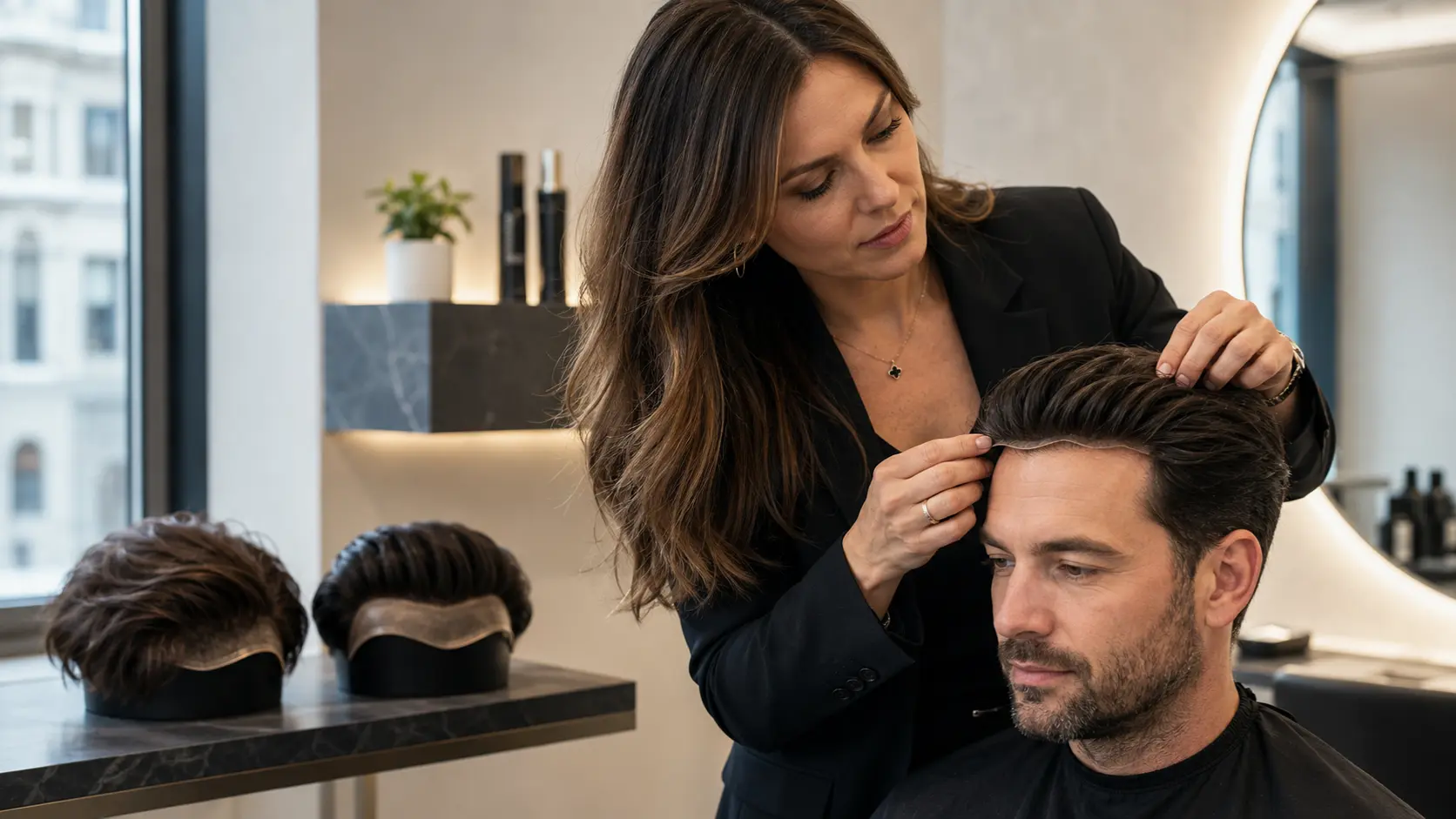

If you’re researching hair replacement systems for the first time, this is usually the first big fork in the road: human hair or synthetic. Both can look genuinely convincing when fitted properly, but they behave very differently once you’re actually wearing one day to day in how they move, how they respond to heat and styling, how long they last, and how much upkeep they need.
Neither is a universal winner. The right choice depends on your lifestyle, budget, how often you want to change your look, and how much maintenance you’re realistically willing to do. This guide walks through the real differences so you can make an informed decision and know what to ask when you sit down for a consultation.
Human Hair vs Synthetic Hair: Which Is Better?
Neither option is better in every situation. Human hair generally offers greater styling flexibility, a more natural movement, and the ability to colour or heat-style it much like your own hair. Synthetic hair can offer easier day-to-day maintenance and a consistent, pre-set style, but with less flexibility to change or heat-style it. The better fit depends on how you live and what you want from the system.
What Is a Human Hair Replacement System?
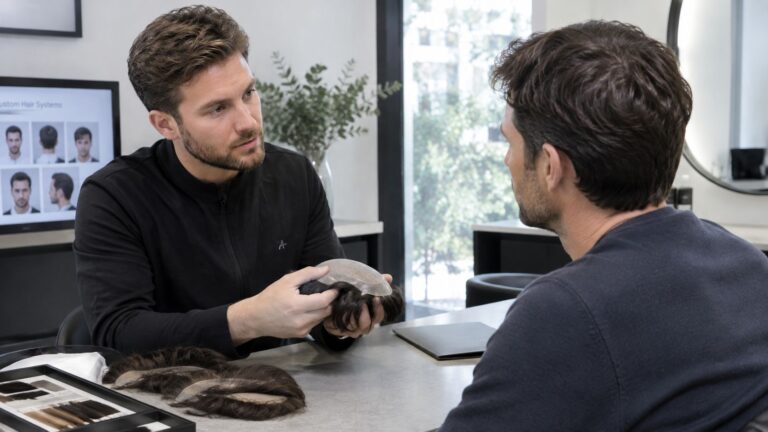
A human hair replacement system is exactly what it sounds like real human hair, hand-tied or ventilated onto a fine base (usually lace, skin/polyurethane, or monofilament) that’s custom-fitted to sit closely against the scalp. At The Hair Standard, systems are built using European and Indian Remy hair, meaning the hair’s cuticle layer runs in one consistent direction, which keeps it smoother and less prone to tangling than lower-grade hair.
Because it’s genuinely human hair, it responds to shampoo, conditioner, heat tools and colour the same way your natural hair would. That’s the main appeal: it moves, catches light, and behaves like hair growing from your own scalp, not like something sitting on top of it. Most men choose human hair when they want the system to be genuinely indistinguishable in everyday situations, including up close.
What Is a Synthetic Hair Replacement System?
Synthetic hair systems use manufactured fibres engineered to imitate the look and feel of natural hair. Modern synthetic fibre has come a long way; it’s no longer the shiny, stiff material people associate with cheap wigs. Good-quality synthetic hair can hold a natural sheen, a realistic texture, and a consistent style without much daily effort.
The trade-off is flexibility. Synthetic fibre is typically pre-set into its style at manufacture, and it doesn’t respond to heat tools or hair dye the way human hair does; some fibres will warp or melt under direct heat, and standard colouring products don’t take to synthetic fibre in a predictable way. For someone who wants a set-and-forget style rather than the ability to restyle regularly, that’s not necessarily a downside. It just means the decision gets made upfront rather than adjusted week to week.
Human Hair vs Synthetic Hair Replacement Systems
| Feature | Human Hair System | Synthetic Hair System |
| Natural appearance | Very natural, especially close-up | Can look natural, but more style-dependent |
| Styling flexibility | High — can be cut, styled, restyled | Limited largely fixed to its set style |
| Heat styling | Yes, with normal styling tools | Generally not recommended; many fibres are heat-sensitive |
| Colouring | Can be coloured/toned by a professional | Very limited, often not possible without damaging the fibre |
| Maintenance | More involved, similar to natural hair care | Generally lower daily effort |
| Durability | Depends heavily on quality and care | Can hold its style well, but fibre can degrade with heat/friction |
| Consistency of style | Style can shift day to day like natural hair | Stays close to its original set style |
| Lifestyle suitability | Good for active stylers, frequent changers | Good for low-maintenance, consistent routines |
| Cost | Typically higher upfront and in upkeep | Often lower upfront, variable by quality |
| Overall flexibility | Higher — closer to owning real hair | Lower more of a fixed, ready-made look |
Which Looks More Natural: Human Hair or Synthetic Hair?
Human hair tends to have the edge in natural movement, but a well-constructed synthetic system can look genuinely convincing too realism has as much to do with the base and fitting as the fibre itself. The way light catches real hair, the slight irregularity in how individual strands fall, and the way it responds to wind or touch are hard for synthetic fibre to fully replicate. Human hair also blends more seamlessly at the parting and hairline, where subtle inconsistency actually reads as natural.
That said, don’t assume synthetic automatically means artificial-looking. A lot of what makes a system look convincing has nothing to do with the fibre type at all; it’s the base construction, the density, how the hair’s been ventilated into the base, and how accurately the colour’s been matched to your own. A cheap human hair system with poor ventilation and a mismatched colour will look far less convincing than a well-made synthetic one. The fibre is one variable among several, not the whole story.
Which Hair Replacement System Is Easier to Style?
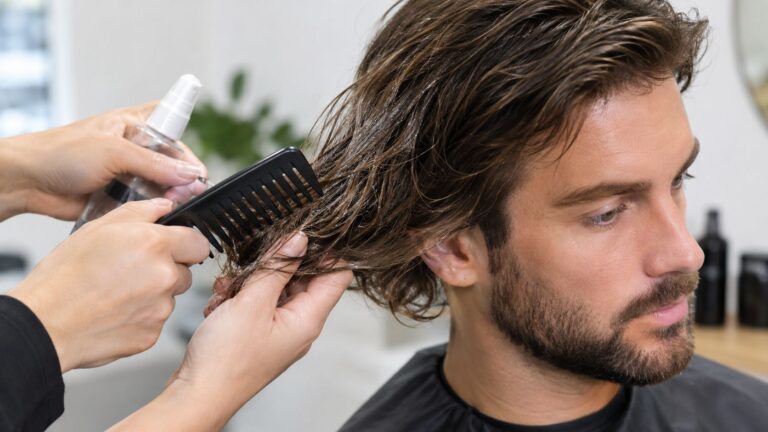
Human hair wins clearly here. It can be blow-dried, straightened, curled, and restyled with normal heat tools and styling products, the same way you’d manage your own hair. If you like to change your look, different partings, different lengths over time, more texture on some days than others, human hair gives you that room.
Synthetic fibre doesn’t offer the same freedom. Most synthetic hair is pre-styled during manufacturing and isn’t designed to tolerate regular heat stylingsome fibres can warp, frizz or lose their texture permanently if exposed to high heat from straighteners or dryers. If your ideal routine is to wash, let it dry, done with the same style every day, that’s not necessarily a problem. It just means you’re choosing the look once rather than adjusting it regularly.
Can You Colour a Human Hair or Synthetic Hair System?
Human hair can be coloured or toned, generally by a professional who understands how to work with the hair without damaging the cuticle or affecting how it’s bonded to the base. Synthetic fibre is a different matter: standard hair dye is formulated for the protein structure of human hair, and it doesn’t behave predictably on synthetic strands. Attempting to dye synthetic hair can damage the fibre or produce patchy, unnatural results.
Because of that, colour matching at the point of fitting matters far more with synthetic systems, get it right initially and you avoid needing to touch it later. With human hair, there’s more room to adjust down the line if your natural hair colour changes or you simply want something different.
Which Is Easier to Maintain?
This depends heavily on how you define “easier.” Human hair systems need washing, conditioning and styling routines that mirror natural hair care. You’re managing it the way you’d manage your own hair, which for some men is second nature and for others feels like extra effort. It also benefits from being handled with the right products rather than generic ones, and from periodic professional attention.
Synthetic systems generally ask less of you day to day. There’s less styling required, no heat tools to think about, and the look stays fairly consistent without much intervention. The trade-off is durability under wear and tear; synthetic fibre can be more sensitive to friction and heat exposure over time than good-quality human hair, so “lower daily effort” doesn’t always mean “lower overall care requirement.” Either option benefits from regular professional maintenance appointments, which is why most reputable studios build these into the service rather than leaving it entirely to the wearer.
How Long Do Human Hair and Synthetic Hair Systems Last?
There’s no single guaranteed lifespan for either type; it depends on the quality of the hair or fibre, the base construction, how often the system’s worn, how it’s attached, washing frequency, heat exposure, and how consistently it’s professionally maintained. As a general guide, a well-cared-for system of human hair or synthetic typically needs replacing somewhere in the region of three to six months with regular upkeep, though this varies considerably by individual wear patterns and care routine.
Human hair, when it’s good quality and properly maintained, tends to hold its condition and styling versatility for longer under normal wear. Synthetic fibre can hold its set style well but is more prone to degrading with heat or friction, which shortens its usable life if it’s not looked after carefully. In both cases, regular maintenance appointments cleaning, refitting, and addressing wear before it becomes a problem extend how long the system stays looking its best far more than the fibre type alone.
Are Human Hair Systems More Expensive Than Synthetic Hair Systems?
Generally, yes, both in upfront cost and ongoing upkeep, though exact pricing varies significantly depending on hair quality, base material, customisation, and the studio doing the fitting. Human hair, particularly good-quality Remy hair, costs more to source and construct into a system, and it typically involves more from you in terms of maintenance and occasional restyling.
Synthetic systems are often more accessible upfront, but that’s not automatically the same as better value: a lower-quality synthetic system that needs replacing sooner, or that never quite matched your hair colour correctly, can end up costing more over time than a well-made system that lasts. The cheapest option at the point of purchase isn’t necessarily the most economical one across a year or two of wear. It’s worth judging value across the full lifespan of the system, not just the price tag on day one.
Which Hair Replacement System Is Better for Your Lifestyle?
For an active lifestyle
Training, sweating, showering a system needs to hold up to all of it. Quality matters more than fibre type here: a well-fitted human hair or synthetic system, secured with a suitable medical-grade adhesive, should tolerate normal exercise, swimming and daily washing without issue. Human hair may need slightly more restyling afterward given it responds more to moisture and movement.
For someone who wants minimal styling
A pre-styled synthetic system can be appealing if your priority is putting it on and getting on with your day, without thinking about heat tools or restyling routines.
For someone who changes hairstyles frequently
Human hair is the clear choice. It can be cut, restyled and adjusted over time, the same as natural hair would be at the barber.
For someone who travels frequently
Both can work well travelling, but synthetic’s lower daily maintenance can be an advantage when you’re away from your usual routine or products. Human hair still travels fine; it just asks a bit more of you to keep it looking its best on the road.
For someone who wants the most natural movement
Human hair generally has the edge in how it falls, moves and catches light, though a well-constructed synthetic system with a good base can still look highly convincing in everyday settings.
How Do Weather and Climate Affect Hair Replacement Systems?
Heat, humidity and moisture all affect both hair types, just in different ways. Human hair reacts to humidity roughly the way natural hair does — it can pick up a bit more volume or frizz in damp conditions, which is manageable with the same products and techniques you’d use on your own hair. Synthetic fibre tends to hold its shape more consistently in humidity since it’s set rather than styled, but it’s more vulnerable to direct heat, so sun exposure and hot climates need a bit more thought with synthetic systems than with human hair.
Sweat and water are less of an issue for either, provided the system’s properly attached with a suitable adhesive the real consideration is how quickly you get back to your normal maintenance routine afterward, not whether the system can tolerate getting wet in the first place.
Pros and Cons of Human Hair Replacement Systems
Advantages:
- Natural movement, texture and shine
- Can be heat-styled and coloured
- Full styling freedom to change your look over time
- Blends closely with your own hair, especially at the hairline
Disadvantages:
- Requires more consistent maintenance
- Generally higher cost, upfront and ongoing
- More sensitive to sun, chlorine and product buildup without proper care
- Needs professional attention to keep colour and condition consistent
Pros and Cons of Synthetic Hair Replacement Systems
Advantages:
- Lower day-to-day styling effort
- Holds a consistent look without regular restyling
- Can be more accessible upfront
- Good-quality fibre can look very natural in everyday settings
Disadvantages:
- Limited or no heat styling
- Very limited colouring options
- Less flexibility to change your style over time
- Fibre can degrade with heat or friction exposure
Which Hair Replacement System Should You Choose?
Choose human hair if you:
- Want maximum styling flexibility
- Like to change your hairstyle over time
- Want the most natural possible movement
- Are comfortable with a more involved maintenance routine
Consider synthetic hair if you:
- Prefer a consistent, low-effort style
- Don’t plan to change your look often
- Want to minimise daily styling time
- Are looking for a more accessible starting cost
Some providers also offer hybrid or advanced synthetic options that combine elements of both, so it’s worth asking what’s actually available rather than assuming the choice is strictly binary. A proper consultation where your hair loss pattern, density, and lifestyle are actually assessed — will usually make the right option fairly obvious.
Quick Verdict
| If your priority is… | Consider… |
| Maximum styling flexibility | Human hair |
| Natural movement | Human hair |
| Consistent pre-set style | Synthetic |
| Lower day-to-day styling demands | Synthetic |
| Frequent hairstyle changes | Human hair |
| Convenience | Synthetic |
| Personalised styling | Human hair |
What Matters More Than Human Hair vs Synthetic Hair?
The fibre is only one part of what makes a system look and feel right. Base material — lace, skin/PU, or monofilament — affects how discreet the hairline looks and how comfortable the system feels against the scalp. Density needs to match what’s realistic for your age and hair type; too dense reads as obviously artificial, too sparse won’t cover convincingly.
Ventilation (how individual hairs are tied into the base) affects how naturally the hair sits and moves. Colour matching, texture matching, and how well the base size and shape suit your hairline are just as important as the hair itself. Attachment method and fit determine how secure and comfortable it feels day to day. A skilled fitting can make a good system look excellent — and a rushed one can undersell even high-quality hair.
What Should You Ask Before Buying a Hair Replacement System?
Before booking a fitting, it’s worth going in with a few questions:
- Is the hair human or synthetic, and what quality or grade?
- What’s the base made from, and which base types are available?
- What’s the realistic lifespan with normal wear and proper care?
- Can it be heat styled or coloured, if that matters to me?
- How should it be washed, and what products does it need?
- How often will it need professional maintenance?
- Is the fitting custom to my hairline, density and colour, or a standard template?
- What happens if the colour, density or fit isn’t right after fitting?
A studio that answers these clearly and without pressure is generally a good sign you’re in the right place.
Common Mistakes When Choosing a Hair Replacement System
- Choosing based on price alone, without considering long-term value
- Overlooking base construction and focusing only on the hair itself
- Picking a density that doesn’t suit your age or natural hair pattern
- Rushing the colour match instead of getting it properly assessed
- Assuming synthetic automatically looks fake quality varies enormously
- Assuming human hair needs no maintenance because it’s “real” hair
- Using generic haircare products not suited to a system
- Skipping professional fitting in favour of a self-fit or off-the-shelf option
- Judging the system by the fibre alone, ignoring hairline design and fit
Frequently Asked Questions
Is human hair better than synthetic hair for a hair replacement system?
Not universally. Human hair offers more natural movement and styling freedom, while synthetic hair offers lower daily maintenance and a consistent style. The better choice depends on your lifestyle, budget and how often you want to change your look.
Which hair replacement system looks more natural?
Human hair generally moves and catches light more naturally, but a well-constructed synthetic system with good base and colour matching can also look highly convincing. Fitting quality matters as much as fibre type.
Do synthetic hair systems look fake?
Not necessarily. Older or lower-quality synthetic fibre can look artificial, but modern synthetic hair, properly fitted and colour-matched, can look natural in everyday situations.
How long does a human hair replacement system last?
It varies by quality, care and how often it’s worn, but with proper maintenance many systems last around three to six months before needing replacement. Individual results depend heavily on your routine.
How long does a synthetic hair replacement system last?
Similarly variable, depending on fibre quality and how it’s cared for. Synthetic fibre can hold its style well but may degrade faster with heat or friction exposure than good-quality human hair.
Can you straighten a human hair system?
Yes, human hair systems can generally be styled with normal heat tools, much like natural hair. Moderate heat and suitable products can help preserve the hair’s condition over time.
Can you use heat on synthetic hair systems?
Generally, it is not recommended. Most synthetic fibre is heat-sensitive and can warp, frizz or permanently lose its shape if exposed to styling tools not specifically designed for it.
Can you dye a human hair replacement system?
Yes, human hair can typically be coloured or toned by a professional experienced in working with hair replacement systems. It should be done carefully to protect the hair and its attachment to the base.
Can synthetic hair be coloured?
Not really. Standard hair dye does not work predictably on synthetic fibre and can damage it. With synthetic systems, getting the colour right when the system is selected and fitted is much more important.
Which hair replacement system is easier to maintain?
Synthetic systems generally require less daily styling effort, while human hair needs a routine closer to natural hair care. Both types benefit from regular professional maintenance.
Which is better for an active lifestyle?
Both can handle exercise, sweat and swimming when properly fitted with a suitable adhesive. Human hair may need more restyling afterward, while synthetic hair tends to hold its shape with less effort.
Are human hair systems more expensive?
Generally, yes, both upfront and in ongoing care, although pricing varies by hair quality, base material and provider. Value is best judged across the system’s full lifespan rather than just the initial cost.
Which hair system is best for beginners?
There’s no universal answer because it depends on your priorities. Many first-time wearers find it helpful to discuss both options during a consultation, where density, lifestyle and hairline can be properly assessed.
Can a hair replacement system be customized?
Yes. Reputable providers can customize density, texture, colour and base type to match your natural hair and hairline, rather than fitting a standard, off-the-shelf option.
How do I choose between human and synthetic hair?
Consider how often you want to style or change your look, how much daily maintenance you’re willing to do, and your budget across the system’s lifespan. A consultation with a hair replacement specialist is the most reliable way to match the right option to your needs.
Not Sure Which Hair Replacement System Is Right for You?
Choosing between human hair and synthetic hair really comes down to your hair loss pattern, the look you want, your lifestyle, and how much maintenance you’re comfortable with. There’s no single right answer for everyone.
At The Hair Standard, every system is custom-fitted around your natural colour, texture, density and hairline, using European and Indian Remy hair on lace, skin or monofilament bases. If you’re weighing up your options, a free consultation at our London studio is the most straightforward way to get advice specific to your situation: no pressure, no obligation, just a clear look at what would actually suit you.