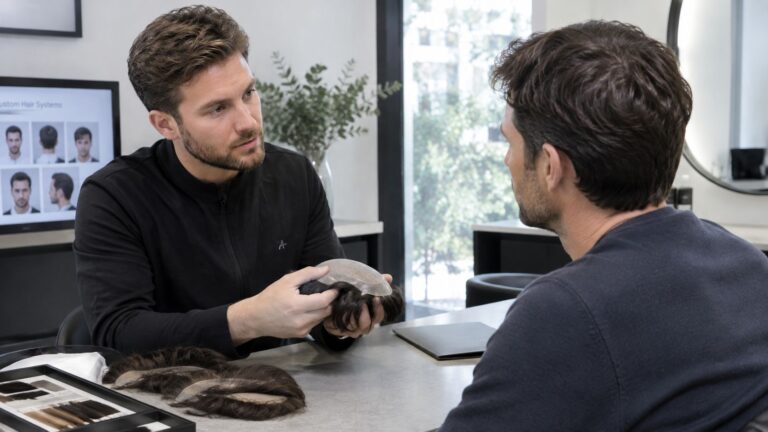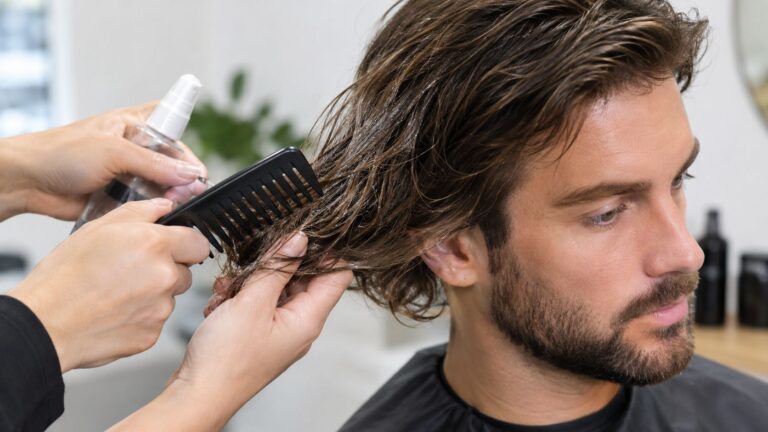

One of the first questions almost every client asks before booking a fitting is how long do hair replacement systems last understandably, since it directly affects both the upkeep routine and the long-term cost. The honest answer has two parts: the unit itself (the hairpiece) and the bond holding it to your scalp wear out on completely different timelines, and confusing the two is where most of the misconceptions come from. Here’s the full breakdown of both, a realistic look at what an actual year looks like, and how to get the most out of your system.
The two lifespans you need to know about
A hair replacement system has two separate “lifespans” running at the same time:
-
- The unit itself the physical hairpiece, including the base and the hair strands attached to it. This is what eventually needs replacing.
-
- The bond or attachment the tape, adhesive, or clips holding the unit to your scalp. This needs redoing far more often than the unit needs replacing.
Most people assume “how long does it last” means the unit, but in day-to-day life, it’s the bond that you’ll be thinking about most.
How long does the Hair replacement system itself last?
With proper care, a well-made hair replacement system typically lasts three to six months before it needs replacing, though this varies significantly based on quality and how it’s worn. Premium units made with European Remy human hair on a durable base can sometimes be serviced and stretched closer to the year mark with diligent care, while lower-quality or heavily worn units may need replacing sooner.
How long does the bond last?
This depends entirely on the attachment method:
-
- Tape typically needs reapplying every 1 to 3 weeks, as the adhesive weakens with sweat, oil, and washing
-
- Liquid adhesive can sometimes hold slightly longer than tape, often 2 to 4 weeks, depending on skin type and activity level
-
- Clips don’t use adhesive at all, so there’s no bond to redo, though the system itself is removed daily rather than worn continuously
If you sweat heavily, swim often, or work in a hot environment, expect to be on the shorter end of these windows.
A realistic first-year timeline
It helps to see this laid out rather than just as ranges. Here’s a typical first year with a single, regularly worn system:
| Timing | What happens |
| Day 0 | Initial fitting, colour match, and first bond applied |
| Week 2–3 | First re-bond appointment as the original tape/adhesive weakens |
| Month 2 | Second re-bond; first deep clean of the unit to remove product build-up |
| Month 3 | Routine check-in technician inspects base edges and hair density |
| Month 4–5 | Unit starts showing early wear (slight thinning at stress points, minor colour change); servicing keeps it presentable |
| Month 5–6 | Unit retired and replaced with a new one; the cycle restarts |
| Months 7–12 | A second and sometimes third unit cycle through the same pattern |
This means most full-time wearers go through two to three units in a typical year, alongside roughly two to four bond appointments per month. Seeing it mapped out like this is usually what makes the ongoing commitment click for people it’s a routine, not a one-off purchase.
Human hair vs synthetic hair lifespan in practice
This is where a lot of confusion comes from, because “lasts longer” means something different depending on which you choose:
-
- Human hair ages the way real hair does it can lose some shine and colour vibrancy over months of washing, heat styling, and sun exposure, but it can also be re-styled, permed, or coloured to refresh its look partway through its life. It generally degrades gradually and predictably.
-
- Synthetic hair holds its initial set style remarkably well for the first stretch of its life, since it’s manufactured with the style “baked in.” But it can’t tolerate heat tools, and once UV exposure and washing start breaking down the fibres, it tends to degrade more suddenly going from “looking fine” to noticeably frizzy or dull within a shorter window, rather than fading slowly.
In practice, this means synthetic units often need replacing on a similar or slightly shorter timeline to human hair ones, just with a different wear pattern steady decline for human hair, a more sudden drop-off for synthetic.
Does removing your system extend its life?
Clip-in or part-time wear genuinely does extend lifespan, for a simple reason: less cumulative exposure to sweat, product, washing, and sun. Clients who remove their system nightly rather than sleeping in a fully bonded unit often get noticeably more wear out of the same hairpiece. The trade-off is convenience daily removal and reattachment takes more time than a continuous bond, which is exactly why most full-time wearers choose tape or adhesive despite the slightly shorter unit lifespan it implies.
Some clients split the difference by rotating two units, wearing one while the other rests this spreads wear across both and can extend the useful life of each individually, even though you’re still maintaining two units in parallel.
What affects how long a system lasts
Beyond wear pattern and hair type, a few other factors matter:
-
- Base material lace is breathable and natural-looking but more delicate; skin (polyurethane) bases tend to be more durable and water-resistant; monofilament sits in between on both fronts. We go deeper on this in our lace vs skin vs mono comparison.
-
- Care routine using the right shampoo, avoiding harsh sulphates, and brushing correctly all extend unit life significantly.
-
- Professional servicing regular cleaning and re-bonding appointments catch small issues (a lifting edge, early shedding) before they become reasons to replace the whole unit early.
Lace vs skin vs monofilament how lifespan compares
| Base type | Typical unit lifespan | Best suited for |
| Lace | 3–5 months | Most natural look, breathability; more delicate |
| Skin (PU) | 4–6 months | Durability, water resistance, lower-maintenance bond |
| Monofilament | 3–6 months | Balance of natural look and durability |
These ranges assume regular professional servicing without it, all three base types will wear out faster, particularly at the edges where the bond sits.
Common myths about how long systems last
“More expensive always means longer-lasting.” Not necessarily durability comes from the right combination of base, hair type, and how well it’s cared for, not price alone. A mid-range unit that’s well-maintained can outlast a premium one that’s neglected.
“Once it’s bonded, you don’t need to think about it.” The opposite is true the bonding stage is when wear begins, not when it stops. Regular check-ins from that point are what actually extend the unit’s usable life.
“Synthetic hair lasts longer because it doesn’t ‘wear out’ like real hair.” It wears differently, not less. Synthetic fibres tend to hold up well initially, then decline more sharply, rather than degrading gradually like human hair.
How to extend the life of your system
A few habits make a real difference to both unit and bond lifespan:
-
- Use a sulphate-free shampoo designed for hair systems, not regular shampoo
-
- Avoid sleeping with wet hair where possible moisture trapped against the base weakens adhesive faster
-
- Brush gently from the ends, never tugging at the base or hairline
-
- Avoid heavy oil-based products near the bond area, as they break down adhesive faster
-
- Stick to your professional servicing schedule rather than stretching appointments out to save money a small lifting edge caught early is a quick fix; left too long, it can damage the base
Signs it’s time to replace your Hair system
Even with great care, every unit reaches the end of its usable life. Watch for:
-
- Visible shedding or thinning that styling can no longer hide
-
- The base becoming brittle, stretched, or starting to tear at stress points
-
- Colour fading or going brassy, especially with synthetic hair exposed to sun
-
- The bond no longer holding as long as it used to, even with fresh adhesive
-
- A noticeable change in how natural the hairline looks compared to when it was new
If you’re noticing any of these, it’s worth booking a check-in rather than waiting a technician can often tell you whether it’s a servicing fix or genuinely time for a new unit.
What to expect at The Hair Standard
We build a servicing schedule into every client relationship from the first fitting, rather than leaving you to guess when something needs attention. That typically means scheduled re-bonding matched to your attachment method and lifestyle, periodic check-ins to catch early wear, and a clear, honest recommendation when it’s genuinely time for a new unit rather than upselling early. This is also where ongoing cost becomes relevant, which we break down fully in our London pricing guide.
FAQs
How long does a hair replacement system last day to day?
The bond typically holds for 1 to 4 weeks depending on the attachment method, while the unit itself usually lasts 3 to 6 months before replacement.
Does human hair last longer than synthetic hair in a system?
They degrade differently rather than one simply lasting longer human hair fades gradually, while synthetic hair holds its style well initially before declining more suddenly.
Does removing my system at night extend its life?
Yes, generally part-time or clip-in wear reduces cumulative exposure to sweat and product, which can meaningfully extend unit lifespan compared to continuous full-time wear.
Can I make my system last longer than average?
Yes sulphate-free products, gentle brushing, avoiding wet sleep, and sticking to your servicing schedule all meaningfully extend lifespan.
Is it cheaper to maintain a system than to keep replacing it from scratch?
Generally yes sticking to a regular servicing routine extends the life of each unit, which works out more cost-effective than letting a system degrade and needing a full replacement sooner.
How do I know if it’s the bond or the unit that needs attention?
If the system is lifting or shifting but still looks good once reattached, it’s a bond issue. If the hair itself looks thin, faded, or the base feels worn even right after a re-bond, it’s likely time for a new unit.
Ready to find the right system and care routine for you?
Every hair type and lifestyle wears a system differently, which is exactly why we map out a personal servicing schedule at your first fitting rather than giving generic advice. Book a free consultation with The Hair Standard in London and we’ll help you get the longest, most natural-looking life out of your system.