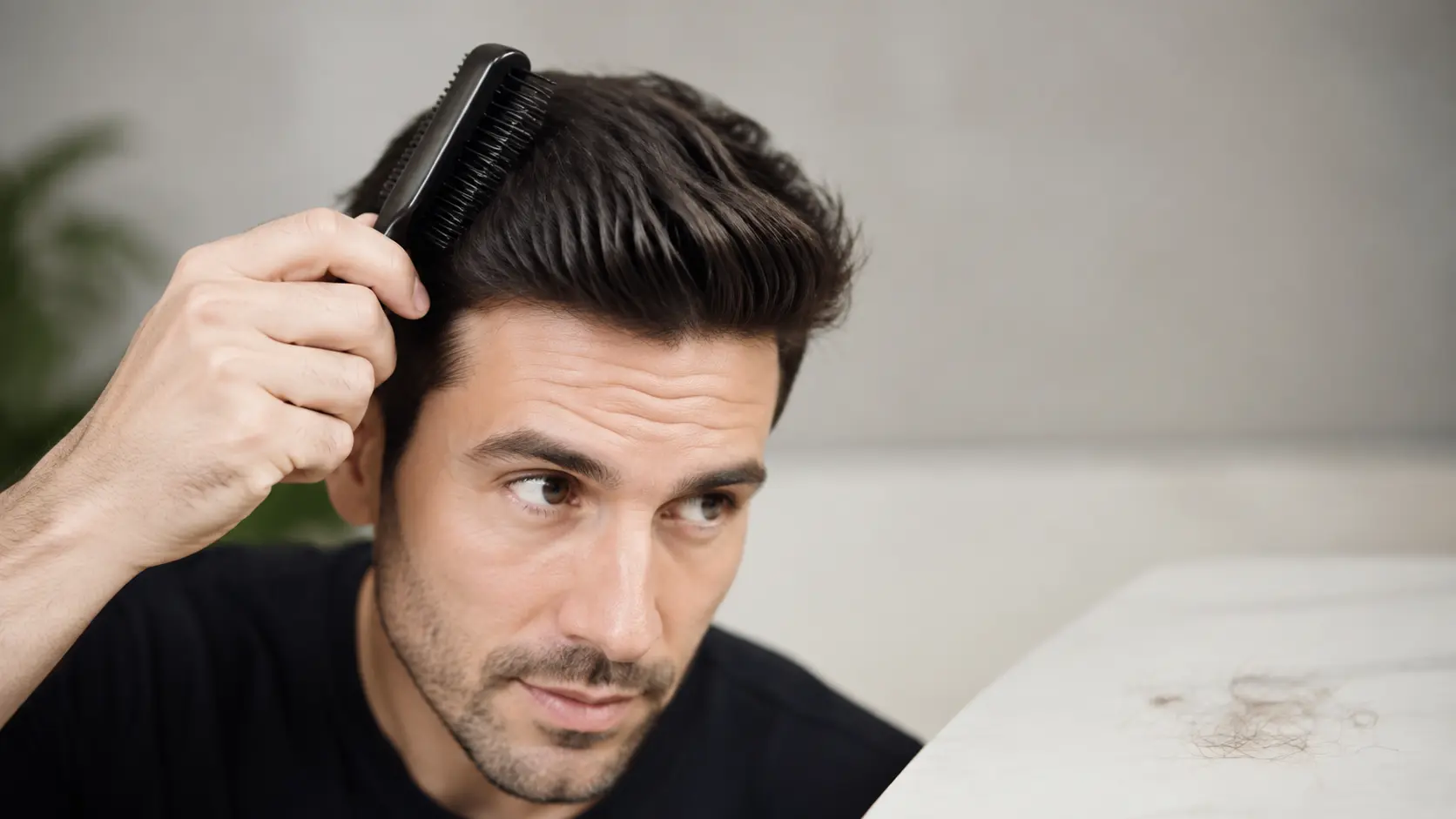

You spot a few strands on the pillow. Then a couple more in the shower tray. Then one morning you’re brushing and it looks like more is coming out than usual, and now you’re googling this at 11pm wondering if your unit is failing.
Take a breath first. Some shedding is completely normal with a hair system, and always has been. Every strand is individually knotted into the base, and knots wear loose over time from brushing, washing, and everyday movement. That’s not a fault. It’s how the product works.
What you’re really trying to figure out is whether this is ordinary wear or something that’s actually going to leave you with thin patches. That comes down to rate and pattern more than any single bad wash day.
So Is It Normal for a Hair System to Shed?
Yes, a bit. Think of it the way you’d think about natural hair loss, small numbers of strands letting go every day is baseline. The difference with a system is that once a knot releases, that hair doesn’t come back the way natural hair regrows. So a bit of shedding is fine. A steady, visible drop in density isn’t, and neither is a sudden jump from what you were used to.
If the base is starting to show through in spots where it wasn’t before, or the front hairline looks noticeably thinner than it did a month ago, that’s past normal.
How Much Is Actually Normal?
There’s no magic number here, density and hair type both change the picture. A scattering of loose strands while washing or brushing, with no real change in how the unit looks day to day, is fine. What you want to watch is the trend across two or three weeks rather than panicking over one wash. If it’s noticeably worse than it was when the system was new, or worse than last month, that’s your signal to dig into why.
The Real Causes of Hair System Shedding
Ordinary wear from washing and brushing
This is the baseline cause, and it’s unavoidable. Every wash and every brush stroke puts mechanical load on the knots, and eventually some let go. It’s the same mechanism as natural hair loss, just applied to a base instead of a scalp.
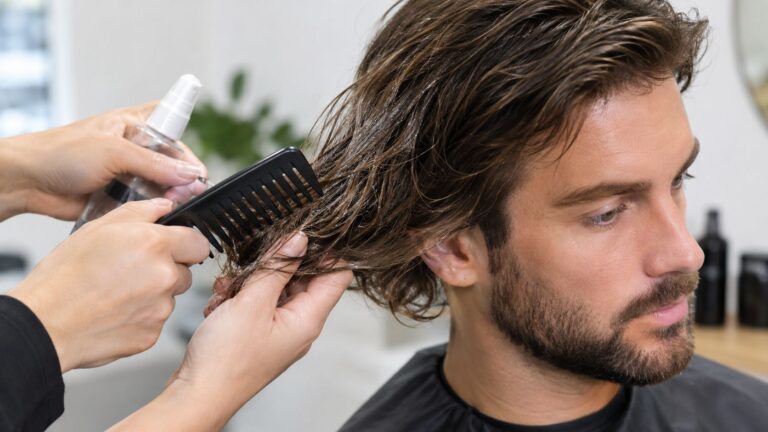
Does brushing cause shedding? To some extent, yes, and that’s expected. What isn’t expected is the extra shedding you get from bad technique. Brushing top-down through tangled hair, or using a standard paddle brush meant for natural hair, drags on the knots far more than necessary. Start at the tips, work upward in small sections, and use something soft-bristled or wide-toothed. It sounds fussy but it genuinely changes how much comes out in a session.
Washing habits and product residue
If you’re wondering why your system sheds after washing specifically, it’s almost always one of three things: scrubbing the base like you would a real scalp, using a shampoo that’s too harsh, or not rinsing out product properly.
Massaging shampoo in with any real pressure puts direct force on every knot at once, which is a fast way to loosen hairs that would otherwise have held on longer. Regular shampoos, especially anything with sulfates or heavy conditioning agents, also break down the base and any adhesive residue faster than a formula built for hair systems.
Buildup is the quieter problem. Oils, styling sprays, even minerals from hard water can coat the knots over weeks, making them stiffer and more prone to snapping loose under ordinary handling. You won’t necessarily see this happening. You’ll just notice the shedding creeping up.
What happens overnight
Cotton pillowcases are rougher than they feel, and hours of your head moving against one while you sleep adds up to real friction on the base and hairline. If you sleep on one side consistently, you’ll often see shedding concentrated right where that edge presses into the pillow rather than spread evenly.
A silk or satin pillowcase solves most of this. A soft wrap or cap works too if you don’t want to switch out bedding. Either way, it’s one of the cheapest fixes on this list for the amount of difference it makes.
The bond itself
For attached systems, the adhesive or tape is doing more than holding the unit down, it’s also determining how much the edges move throughout the day. A bond that’s degraded, even slightly, lets the perimeter lift and shift more than it should, and that extra movement wears on the knots right at the hairline. This is why shedding that’s worse specifically around the edges, rather than spread through the whole unit, often traces back to the attachment rather than the hair.
Adhesive residue left behind from a previous bonding cycle doesn’t help either. It stiffens the base near the edges, and repeated bond-and-remove cycles in that same spot are cumulative. Using the correct solvent to lift the unit, instead of just pulling it away, protects both your skin and those perimeter knots.
Base type and knotting style
Not every base is built the same, and this genuinely changes how shedding shows up. Lace is delicate by design, so it tends to show wear sooner than a skin or poly base simply because there’s less material around each knot. Single-knotted hair looks more natural and lies flatter, but it’s also more prone to working loose than double-knotted hair, which holds better at the cost of looking slightly less seamless up close.
If you’re choosing your next system and shedding has been a recurring headache, the base construction is worth understanding before you commit. We go through the trade-offs in our guide to hair system types and bases.
Heat tools
Heat weakens the hair fibre gradually, and it weakens the knots holding that hair too, whether you’re wearing human hair or synthetic. Synthetic is far less forgiving here; run a tool hotter than it’s rated for and you can lose a noticeable amount in a single session. If the shedding seems to cluster around the section you style most with a straightener or blow-dryer, that’s rarely a coincidence.
Sweat and the elements
Sweat softens adhesive and loosens knots, particularly around the hairline where it tends to pool. Chlorine and saltwater do something similar, and are harder on the fibre itself as well as the base. None of this means staying out of the gym or the pool. It means rinsing and properly drying the unit afterward instead of letting sweat or salt sit on it.
Products that aren’t built for this
Alcohol-heavy sprays, oils applied too close to the base, conditioner left on the knots longer than it should be, these all chip away at the bonding material over time. It’s a slow cause, which is exactly why it tends to get missed until the shedding has already crept up noticeably.
How to Stop Hair System Shedding
A few changes, made together rather than one at a time, usually bring shedding back under control:
- Switch to a sulfate-free shampoo made for hair systems, and work it in without scrubbing
- Brush from the tips up, in sections, with something soft
- Protect the unit overnight with a silk pillowcase or a wrap
- Rinse thoroughly after sweating, swimming, or heavy product use
- Use heat protectant, and check the manufacturer’s heat limit if there’s synthetic hair involved
- Get adhesive residue removed with proper solvent rather than pulled off
- Don’t over-wash. Washing more than you need to strips the system without any upside
If you’ve made these changes and it’s still getting worse after a few weeks, the issue probably isn’t your routine anymore. It’s more likely the base, the bond, or the unit simply reaching the end of what it can give you.
When It’s Time to Get the System Looked At
A few signs point to something a home routine won’t fix:
- Sections of the unit that look visibly thinner or patchy
- Shedding that’s clearly worse than it was recently, with nothing in your routine having changed
- Edges that feel loose, are lifting, or peeling
- Shedding concentrated in one spot rather than across the whole unit
- A base that’s gone stiff, brittle, or changed colour
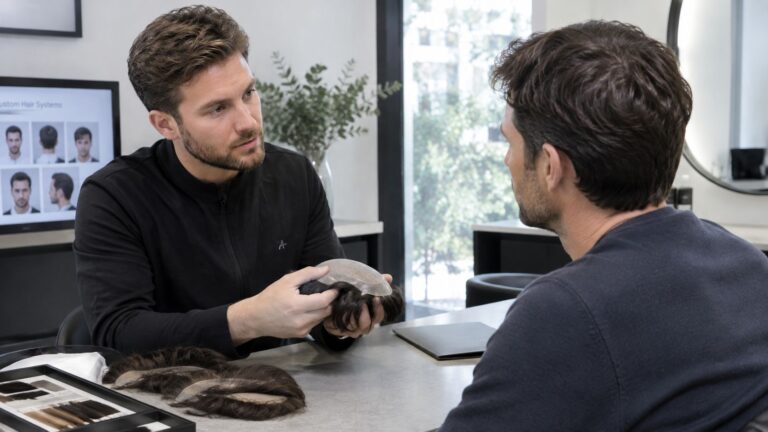
If any of that sounds familiar, it’s worth having someone actually look at the knots and base rather than trying to diagnose it from a mirror. Our hair system maintenance service covers exactly this, inspection, cleaning, re-knotting where it’s needed, and re-securing the bond if that’s what’s loosened.
Can a Shedding System Be Repaired?
Often, yes. Shedding that’s localised, say, around the perimeter or in one small section, can usually be repaired by re-knotting that area rather than replacing the whole unit. It’s a fraction of the cost of a new system and can genuinely buy you a decent amount of extra time. The catch is that this only works if the base itself is still sound. Once the material has gone stiff or torn, patching it becomes a losing game, and you end up spending more over time than just replacing it would have cost.
Does Shedding Mean I Need a Whole New System?
Not automatically. But shedding that’s spread broadly across the unit, rather than sitting in one repairable patch, is usually telling you the system is nearing the end of its natural life. Systems don’t fail all at once, they wear down gradually, and widespread shedding tends to be one of the earliest visible signs of that. If your unit is already at or past the typical age range for its base type and the shedding covers most of it, replacement is generally the more sensible route than continuing to patch things up.
How Long Can a System Last Once It Starts Shedding?
Depends entirely on what’s driving it. If the cause is fixable, harsh products, poor brushing habits, an overdue clean, you can usually get shedding back down to normal levels and the system will carry on for its expected lifespan. If it’s coming from the base or knots simply ageing, professional maintenance can slow things down but won’t undo the wear. It buys weeks or months, not a reset. Knowing roughly what lifespan to expect from your base and hair type in the first place helps set realistic expectations here, and our guide to hair system lifespan covers typical timeframes by base and hair type.
What to Actually Do Right Now
If you’re dealing with this today, work through it in this order rather than jumping straight to worst-case thinking:
- Check if the shedding is even across the unit or concentrated in one spot
- Compare your washing and brushing habits against what’s covered above
- Look at the base and edges for stiffness, lifting, or any colour change
- Hold off introducing new products until you know what’s actually different
- If it’s still going after two or three weeks of adjustments, get it looked at rather than waiting it out
A proper fitting and maintenance appointment will tell you, definitively, whether you’re looking at routine wear, a fixable habit, or a unit that’s genuinely at the end of its life. Guessing either causes needless worry or lets a real problem run longer than it should.
Shedding won’t stop on its own if the cause is structural. Let’s find out what’s really going on.
Frequently Asked Questions
Hair system shedding — causes, prevention, repair and replacement
Why is my hair system shedding?
Most of it comes down to ordinary wear at the knots, plus everyday handling, brushing, washing, sleeping friction, and heat. A small amount is normal. If shedding is sudden or getting worse, the cause is usually more specific, such as harsh products, poor technique, a weakening bond, or a base that’s reaching the end of its life.
Is some shedding normal with a hair system?
Yes. Every system loses a few strands through everyday brushing and washing, much like natural hair does. It only becomes a problem once the rate climbs noticeably or you start seeing actual thinning or gaps.
How much shedding is normal?
A light scattering during washing or brushing, without any real change in how dense the unit looks over a few weeks, is fine. If density is visibly dropping within a month, or shedding is clearly heavier than when the system was new, that’s outside the normal range.
Why is my hair system shedding after washing?
Usually, it’s related to technique or products. Scrubbing the base instead of gently working shampoo through it, using a shampoo that’s too harsh, or leaving residue behind can put extra strain on the hair and knots during and after washing.
Does brushing cause a hair system to shed?
Some shedding from brushing is expected. Excess shedding from brushing usually comes down to technique, such as using root-down strokes, a stiff brush, or forcing it through tangles. Brushing from tip to root with a soft brush can reduce unnecessary pulling on the knots.
Can sleeping in a hair system cause shedding?
Yes. A standard cotton pillowcase can create enough friction overnight to loosen knots faster than daytime wear alone. Switching to silk or satin, or wearing a soft wrap, can reduce friction and help minimise overnight shedding.
Why is my hair system shedding more than usual?
A sudden increase usually has a specific trigger, such as new products, a missed cleaning cycle, more sweat or heat exposure than normal, or a bond that is starting to weaken. If nothing in your routine has changed, it’s worth having the base and knots checked rather than assuming the shedding will settle on its own.
Can adhesive cause hair system shedding?
Indirectly, yes. Leftover adhesive can stiffen the base nearest the bond line, while repeated bonding and removal in the same area can add wear over time. Shedding concentrated around the hairline or edges can sometimes be related to the attachment method rather than the hair itself.
How can I stop my hair system from shedding?
Use a sulphate-free shampoo made for hair systems, brush gently from the tips up, protect the unit overnight, rinse properly after sweating or swimming, and use heat protectant before styling. If it continues shedding heavily after these changes, have the system professionally inspected rather than continuing to guess at the cause.
Can a shedding hair system be repaired?
Often, yes, especially if the shedding is limited to one area and the base is otherwise in good condition. Re-knotting that section can cost much less than a full replacement. Widespread shedding across a system with a stiff or degraded base is a weaker candidate for repair.
Does shedding mean I need a new hair system?
Not always. Localised or habit-related shedding can often be corrected or repaired. Shedding spread across most of the unit, particularly in a system already nearing the end of its expected life, is a stronger indication that replacing it may be more practical than continuing to repair it.
How long can a hair system last if it starts shedding?
It depends on what’s causing the shedding. Shedding caused by a fixable habit or product issue can often be brought under control, allowing the system to reach its normal lifespan. Shedding caused by base or knot degradation can be slowed with professional maintenance but cannot be reversed, so the focus becomes managing the remaining life of the unit.