
If your hair system is lifting at the hairline, the bond between the base and your scalp has weakened either because the adhesive or tape has reached the end of its holding cycle, because something has broken it down prematurely, or because the base edge was not bonded correctly at the last fitting or re-bond. The correct response is to book a professional re-bonding appointment. What you should not do is press the edges back down by hand, apply new adhesive over the existing bond, or ignore it and continue wearing the system all three of these make the situation worse, not better. Here is why lifting happens, what causes it to happen faster than it should, and exactly how it gets resolved.
Why Hairline Lifting Is the Most Common Bond Issue
The hairline is the most vulnerable part of any hair system bond and understanding why makes it easier to prevent.
The perimeter of the base, particularly at the front hairline, is where the bond is exposed to the most stress. Every facial expression, every time you wash your face, every time you pull a T-shirt over your head applies gentle but repeated tension to that front edge. Add sweat, skin oils migrating from the forehead, and the natural flexing of the scalp as you move, and the hairline edge is working harder than any other part of the bond throughout the day.
This is not a design flaw. It is physics and it is why re-bonding appointments exist. The bond at the hairline does not fail because something went wrong. It ages. Managing that ageing correctly is what the maintenance schedule is built around.
The Difference Between Normal Lifting and Premature Lifting
The first thing worth establishing is whether the lifting you are experiencing is on schedule or ahead of it.
Normal lifting happens toward the end of the bond’s expected lifespan typically one to three weeks for tape, two to four weeks for liquid adhesive. If your hairline is lifting at week two or three and you are on tape, that is the bond ageing as expected. Book a re-bond.
Premature lifting happens significantly earlier than the bond’s expected lifespan within days of a re-bond, or consistently shorter than the range your attachment method should produce. This is a signal that something specific is shortening the bond, and identifying what that matters before the next application, or the same problem will recur.
What Causes Premature Lifting at the Hairline
Scalp preparation was inadequate before the last bond
The bond will only hold as well as the surface it was applied to. If the scalp at the hairline carried any residual adhesive from the previous bond, natural skin oils, moisturiser, sunscreen, sweat, or product residue at the time of application the new adhesive bonded to that contamination rather than to clean skin. The result is a bond that lifts faster than it should because it was never properly established.
Scalp preparation cleaning the skin thoroughly with an alcohol-based scalp prep solution is the step that most determines bond longevity. It is also the step most likely to be rushed or skipped when someone is re-bonding at home rather than with a professional.
Oil-based products near the hairline
This is the most consistent cause of accelerated bond failure at the hairline. Skin oils, oil-based moisturisers, oil-based pomades, and oil-based hair products all migrate toward the bond edge and break down adhesive faster than anything else.
Many people apply moisturiser to the forehead without realising it is reaching the hairline. Others use a product on their hair that is oil-based and does not recognise the connection between the product and the lifting. The fix is not necessarily switching every product it is understanding where products are travelling and keeping oil-based formulations away from the perimeter of the bond.
The adhesive or tape was not suited to your skin type
Different skin types require different adhesive products. Oily skin types break down standard tape significantly faster than dry skin types, because the skin is continuously producing oil that works into the adhesive edge. People who have not found a tape or adhesive that performs consistently for them are usually using a product chosen without reference to their specific skin chemistry.
If you have tried multiple re-bonds and lifting consistently happens faster than expected, this is the most likely explanation. The solution is not more frequent re-bonding, it is identifying the right adhesive product for your skin type and lifestyle.
Sweating and physical activity
Sweat is water-based, and prolonged exposure to moisture accelerates adhesive breakdown. For people who exercise intensively, cycle, work in physically demanding environments, or live in warm climates, the hairline bond is under significantly more stress than for sedentary wearers.
This does not mean systems are incompatible with an active lifestyle, it means the adhesive product, application technique, and re-bonding interval need to be calibrated to your actual lifestyle rather than a generic recommendation. If you are currently using a standard tape product and training five times a week, the mismatch between the product’s design and your activity level is likely what is driving the lifting.
Sleeping with a wet system
Moisture trapped between the base and the scalp overnight is one of the most reliable ways to shorten bond life at the hairline. The warmth of the scalp combined with the trapped moisture softens adhesive and allows the base edge to lift gradually during sleep, often without the wearer realising it until the lift is already visible.
The fix is straightforward: allow the system to dry fully before sleeping. This is one of the non-negotiable rules in the complete maintenance and aftercare guide dry sleep significantly outperforms wet sleep for bond longevity regardless of adhesive type.
The base type is not suited to the lifestyle
Fine lace bases are the most natural-looking base material, but they are also the most delicate. At the hairline specifically, fine lace requires careful handling, clean application surfaces, and a lifestyle that does not subject the bond edge to excessive moisture or friction.
For people whose lifestyle consistently produces premature lace lifting, high-sweat activity, regular swimming, work that involves physical exertion, a more durable base at the perimeter, or a different base type altogether, may be the practical solution. Our types of systems guide covers how different base materials suit different lifestyles.
What Not to Do When the Hairline Is Lifting
These are the three responses that make lifting worse and all three are very common.
Do not press the edges back down by hand
Pressing a lifting base edge back down by hand does not re-bond it. The adhesive is no longer actively bonding; it has aged past its effective holding point, or something has broken it down. Pressing the edge down flattens it temporarily, but it will lift again, often within hours. Repeated pressing also picks up finger oils, which contaminate the base edge and make the surface harder to re-bond cleanly.
Do not apply new adhesive over the existing bond
Adding fresh tape or adhesive over a lifting bond without removing the existing bond first is one of the most damaging things you can do to the base. The new adhesive cannot bond properly through the old layer; it creates an uneven, lumpy surface that holds poorly and is significantly harder to remove at the next proper re-bond. On lace bases in particular, attempting to force a re-bond over existing adhesive often tears the lace when removal is eventually attempted.
Do not continue wearing the system and hope it settles
A lifting edge that is left unattended allows moisture, bacteria, and debris to work under the base. Beyond the hygiene implications, the base material particularly lace deteriorates when it is repeatedly exposed to the scalp environment without a secure bond. What started as a re-bond issue can become a base damage issue if left long enough.
The Correct Process for Addressing Hairline Lifting
Book a professional re-bonding appointment
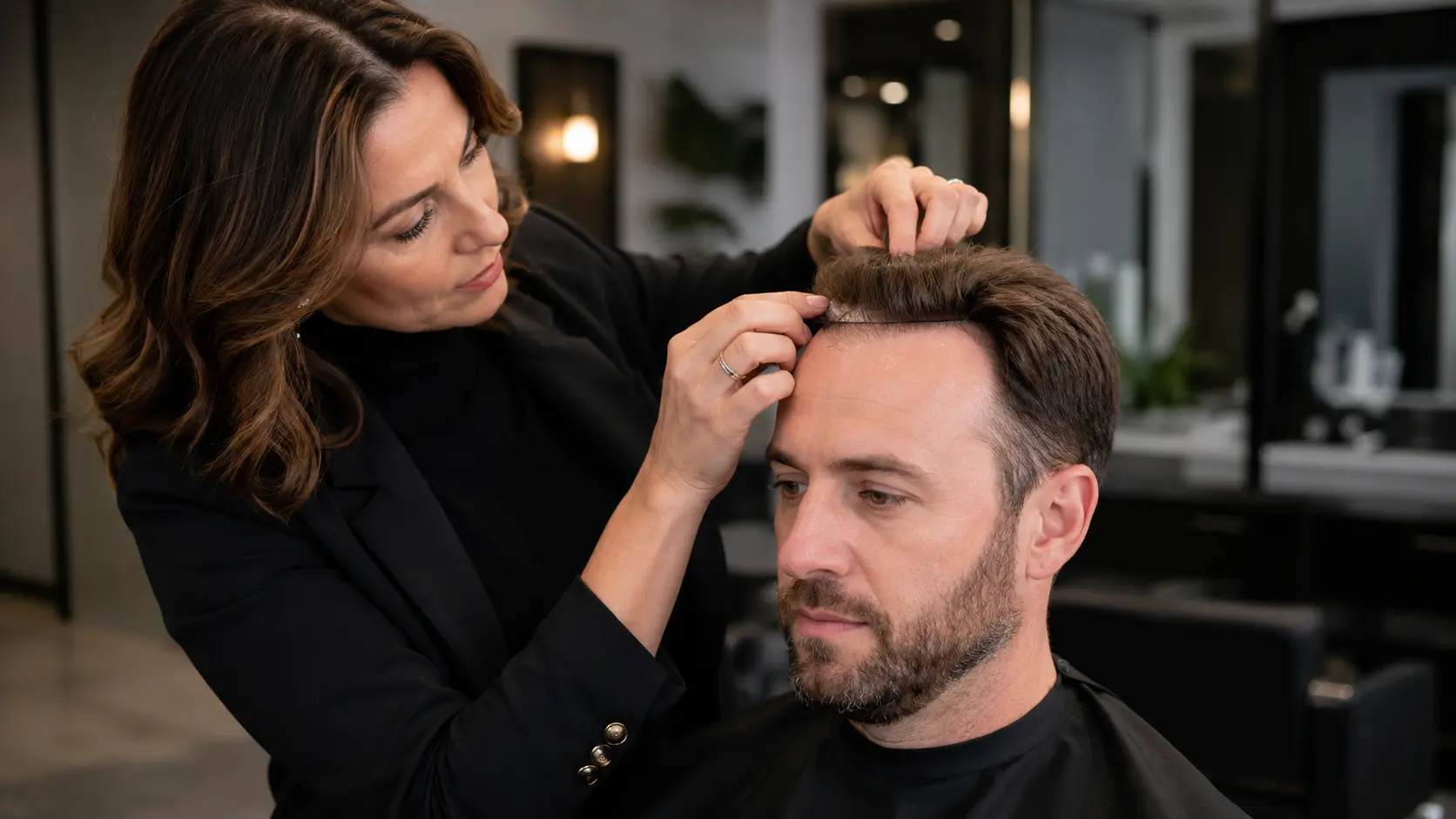
This is the correct response in almost every case of hairline lifting. A professional re-bond involves:
- Full removal of the existing bond using an appropriate citrus-based bond remover applied to the edge, allowed to penetrate, then gently lifted without forcing
- Thorough cleaning of both the base edge and the scalp to remove all adhesive residue
- Scalp preparation using an alcohol-based prep solution to ensure a clean bonding surface
- Application of the correct adhesive product for your skin type and lifestyle
- Pressing and sealing the base edge correctly to ensure full contact
The difference between a professional re-bond and an at-home patch attempt is not just technique, it is the product knowledge, the skin assessment, and the quality of the scalp preparation that determines how long the next bond holds.
Use the lifting as diagnostic information
If the hairline lifted significantly earlier than expected, use it as an opportunity to address the underlying cause rather than simply re-bond and repeat the cycle. At your re-bond appointment, describe when and where the lifting started, your activity between the last bond and the lifting, and any products you have been using near the hairline. This information allows the technician to identify whether the cause is product-related, lifestyle-related, or adhesive-related and to adjust the approach for the next bond accordingly.
If the Hairline Has Been Lifting Repeatedly
Recurring hairline lifting where the bond consistently fails faster than it should across multiple re-bonding cycles is almost always one of three things: the wrong adhesive product for the skin type, an unresolved product contamination issue, or a lifestyle factor that has not been accommodated in the bonding approach.
None of these are resolved by more frequent re-bonding. They are resolved by identifying the specific cause and changing the approach which requires an honest conversation with your technician about what is actually happening between appointments, not just at them.
If recurring lifting is producing a look you are not happy with visible edges, a hairline that looks unnatural partway through the bond cycle our guide on why a hair system looks fake and how to fix it covers lifting edges as one of the ten most common causes of an unnatural appearance, alongside the other factors that affect how the system looks day to day.
How Often Should Re-Bonding Happen?
The re-bonding interval varies by person, attachment method, and lifestyle not by a single universal schedule. For a full breakdown of typical timelines by attachment method, what shortens bond life, and how to extend it, our how long hair replacement systems last guide covers both the unit lifespan and the bond lifespan in practical detail.
The general principle: re-bond when the bond is due, not when it is visibly failing. Managing the hairline bond proactively scheduling re-bond appointments at the right interval rather than waiting for lifting to appear is what keeps the system looking natural consistently rather than only for the first two weeks of each bond cycle.
Frequently Asked Questions
Why is my hair system lifting at the hairline?
Hairline lifting happens when the adhesive or tape bond has weakened, either because it has reached the natural end of its holding cycle or because something has broken it down prematurely. Common causes include inadequate scalp preparation, oil-based products near the hairline, an adhesive that is not suited to your skin type, sweating from physical activity, or sleeping with a wet system. The correct response is a professional re-bonding appointment rather than pressing the edges down or applying new adhesive over the existing bond.
Can I fix a lifting hairline myself at home?
You may be able to manage it temporarily, but pressing the edge back down does not properly re-bond it and it is likely to lift again quickly. Applying new adhesive over an existing bond without proper removal can create an uneven surface, resulting in a weaker hold and potential base damage. For anything beyond an emergency short-term measure, a professional re-bond with full adhesive removal and proper scalp preparation provides a significantly better and longer-lasting result.
How do I stop my hairline from lifting so quickly?
The first step is identifying what is causing the premature lifting. If your scalp preparation has been thorough and the adhesive is appropriate for your skin type, common causes include oil-based products reaching the hairline, sleeping with a wet system, or physical activity that exceeds what your current adhesive is designed to handle. Adjusting these factors and using an adhesive suited to your skin type and lifestyle can often resolve premature lifting without requiring more frequent re-bonding.
What happens if I leave lifting edges unattended?
A gap between the lifting base edge and the scalp can allow moisture, bacteria, and debris to collect underneath. This may lead to scalp irritation and hygiene issues, while the base material, particularly lace, can deteriorate when repeatedly exposed to moisture and friction without a secure bond. A lifting edge should be addressed promptly with a professional re-bond to prevent a manageable bonding issue from developing into avoidable base damage.
Is hairline lifting a sign that my system needs replacing?
Usually not. Hairline lifting is generally a bonding issue rather than a sign that the entire unit needs replacing. The system itself may still be in good condition. If a professional re-bond allows the system to sit correctly and maintain a natural appearance, replacement is not normally necessary. If the hairline base has been damaged through repeated forced removal or prolonged unattended lifting, your technician can advise whether a repair or replacement unit is the better option.
How long should a bond at the hairline last?
Tape typically holds for around one to three weeks, while liquid adhesive can typically hold for around two to four weeks. These ranges assume proper scalp preparation, an adhesive suited to your skin type, and a bonding approach that accounts for your lifestyle. If you regularly train, swim, or do physical work, you may experience the shorter end of these ranges. With a less active lifestyle and consistent maintenance, a longer hold may be achievable.
Book a Re-Bonding Appointment at The Hair Standard
If your hairline is lifting whether it is ahead of schedule or simply due the most efficient next step is a professional re-bond, not a home patch attempt.
Book an appointment at The Hair Standard in London. We will remove the existing bond correctly, prepare the scalp properly, and identify any underlying cause of premature lifting so the next bond holds as long as it should.